4,4'-Biphenyldicarboxaldehyde is a chemical compound widely used as a building block in the synthesis of complex molecules. It plays a crucial role in laboratory settings where the creation of intricate organic structures is required. This compound is frequently utilized in various chemical reactions, particularly in the formation of heterocyclic compounds and complex molecular frameworks. Its versatility makes it an essential component in the toolkit of chemists working on advanced synthetic pathways.
The compound's stability and reactivity make it a preferred choice for chemical experiments. Its unique molecular structure, consisting of two phenyl rings connected by two carbonyl groups, contributes to its high reactivity. This structural feature enables it to participate in a range of reactions, including condensation, substitution, and catalytic processes. These properties make it ideal for the synthesis of organic compounds with complex architectures, supporting both academic and industrial research efforts.
In Indonesian laboratories, 4,4'-Biphenyldicarboxaldehyde is extensively used in chemical research, especially in organic synthesis and the characterization of complex compounds. It is a common material in academic institutions and research centers, where it supports the development of new chemical compounds and the study of molecular behavior. Its reliability and effectiveness have made it a standard reagent in many laboratory workflows.
TCI brochures (PDF)
- Covalent Organic Framework (COF) Linkers 2026-05-18 · p. 5
Related TCI products
- TCI A2664 7044-91-9 Anthracene-9,10-dicarboxaldehyde
- TCI T3212 37882-75-0 Thieno[3,2-b]thiophene-2,5-dicarboxaldehyde
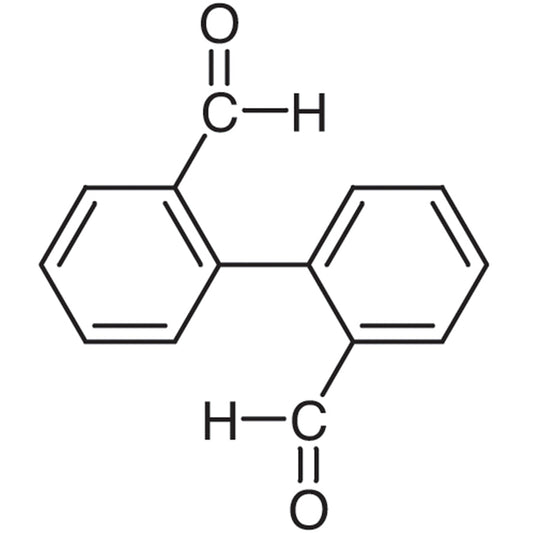
- TCI B2056 1210-05-5 Biphenyl-2,2'-dicarboxaldehyde
- TCI B1309 792-74-5 Dimethyl 4,4'-Biphenyldicarboxylate
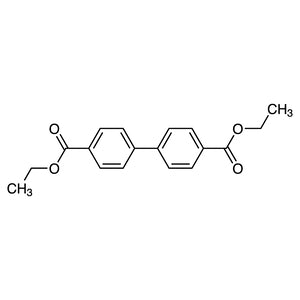
- TCI B0831 47230-38-6 Diethyl 4,4'-Biphenyldicarboxylate
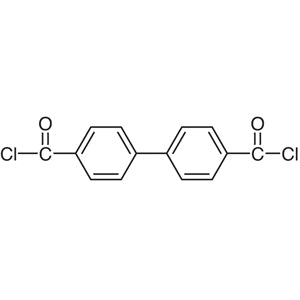
- TCI B1308 2351-37-3 4,4'-Biphenyldicarbonyl Chloride
- Organic synthesis applications benefit from this compound's ability to form complex molecular structures through various reaction mechanisms.
- It is ideal for heterocyclic compound synthesis due to its reactivity and structural versatility in forming ring systems.
- In research laboratories, it supports the development of new chemical compounds through its participation in condensation and substitution reactions.
- It is commonly used in molecular characterization studies to analyze the behavior of complex organic structures.
- Its stability and reactivity make it a valuable tool in catalytic reactions for the production of functionalized organic molecules.
| Brand | TCI |
|---|---|
| CAS number | 66-98-8 |
| Molecular formula | — |
| Purity | — |
| Category | Chemistry > Building Blocks > Non-Heterocyclic Building Blocks |
| Pack sizes | Available in various quantities as per supplier specifications |
| Physical form | Solid |
| Storage | Store in a cool, dry place away from light and moisture |
This compound should be stored in a cool, dry environment, away from direct light and moisture to maintain its stability. It is recommended to use airtight containers to prevent exposure to air and humidity, which could affect its chemical integrity. Due to its reactivity, it should be handled in a well-ventilated area, and appropriate personal protective equipment should be worn. It is important to keep it away from incompatible substances to avoid any potential chemical reactions. Regular inspection of storage conditions ensures the compound remains suitable for use in laboratory applications.
—
Product Categories
Produk Terkait
-
Anthracene-9,10-dicarboxaldehyde TCI A2664
Regular price From Rp 4.081.350,00Regular priceRp 2.853.900,00Sale price From Rp 4.081.350,00 -
Thieno[3,2-b]thiophene-2,5-dicarboxaldehyde TCI T3212
Regular price From Rp 1.351.350,00Regular priceRp 960.750,00Sale price From Rp 1.351.350,00 -
Biphenyl-2,2'-dicarboxaldehyde TCI B2056
Regular price Rp 4.028.850,00Regular priceRp 2.817.150,00Sale price Rp 4.028.850,00 -
Dimethyl4,4'-Biphenyldicarboxylate TCI B1309
Regular price From Rp 875.700,00Regular priceRp 612.150,00Sale price From Rp 875.700,00 -
Diethyl4,4'-Biphenyldicarboxylate TCI B0831
Regular price From Rp 7.844.550,00Regular priceRp 5.485.200,00Sale price From Rp 7.844.550,00 -
4,4'-BiphenyldicarbonylChloride TCI B1308
Regular price Rp 6.784.050,00Regular priceRp 4.743.900,00Sale price Rp 6.784.050,00 -
2,4,6-Trimethoxybenzene-1,3,5-tricarbaldehyde TCI T4301
Regular price From Rp 3.155.250,00Regular priceRp 2.206.050,00Sale price From Rp 3.155.250,00 -
4,4',4'',4'''-(Pyrene-1,3,6,8-tetrayl)tetrabenzaldehyde TCI T4089
Regular price Rp 5.062.050,00Regular priceRp 3.539.550,00Sale price Rp 5.062.050,00