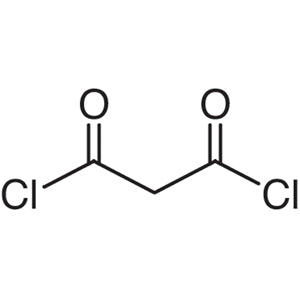
4,4'-Biphenyldicarbonyl Chloride is a chemical compound widely used as a foundational building block in the synthesis of complex organic molecules. Its role in the laboratory is critical, particularly in reactions that involve carbon-carbon bond formation or molecular structure integration. This compound serves as a versatile intermediate, enabling researchers to construct more intricate chemical structures with precision. Its presence in various synthetic pathways highlights its importance in advancing chemical research and development.
The compound’s stability and high reactivity make it a preferred choice for numerous chemical applications. It features two carbonyl groups connected by a biphenyl structure, which imparts reactivity and the ability to form bonds with diverse molecules. These characteristics allow it to participate effectively in substitution and coupling reactions. Its molecular structure ensures reliable performance under controlled laboratory conditions, making it a trusted material for synthetic chemists.
In Indonesian laboratories, 4,4'-Biphenyldicarbonyl Chloride is commonly used in scientific research and product development. Its stable nature and reactivity make it a top choice for researchers aiming to create complex compounds with broad applications. It is especially valuable in fields such as pharmacology and chemical materials, where the development of new substances is essential. Its use supports innovation and contributes to the advancement of scientific knowledge in the region.
TCI brochures (PDF)
- Monomers 2025-05-28 · p. 37
- Organic synthesis applications benefit from its reactivity and ability to form complex molecular structures.
- Pharmaceutical research utilizes it for the development of new drug compounds through structural modification.
- Material science experiments leverage its stability and reactivity to create advanced chemical materials.
- Analytical chemistry uses it as a reference standard for identifying and quantifying other compounds.
- Industrial chemical processes incorporate it to produce intermediates for a wide range of commercial products.
| Brand | TCI |
|---|---|
| CAS number | 2351-37-3 |
| Molecular formula | — |
| Purity | — |
| Category | Chemistry > Building Blocks > Non-Heterocyclic Building Blocks |
| Pack sizes | 25 g, 100 g |
| Physical form | Solid |
| Storage | Store in a cool, dry place away from light and moisture. |
This compound should be stored in a cool, dry environment, away from direct light and moisture to maintain its stability and reactivity. It is recommended to use airtight containers to prevent exposure to humidity and air, which may affect its chemical integrity. Laboratory personnel should handle it with care, using appropriate personal protective equipment such as gloves and safety goggles. Due to its chemical nature, it should be stored separately from incompatible substances to avoid any potential reactions. Proper labeling and storage conditions are essential to ensure safe handling and long-term usability in research settings.
—
Produk Terkait
-
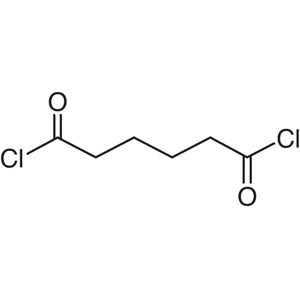
AdipoylChloride TCI A0169
Regular price From Rp 1.272.600,00Regular priceRp 905.100,00Sale price From Rp 1.272.600,00 -
AzelaoylChloride TCI A0562
Regular price Rp 2.464.350,00Regular priceRp 1.738.800,00Sale price Rp 2.464.350,00 -
TerephthaloylChloride TCI T0017
Regular price From Rp 505.050,00Regular priceRp 352.800,00Sale price From Rp 505.050,00 -
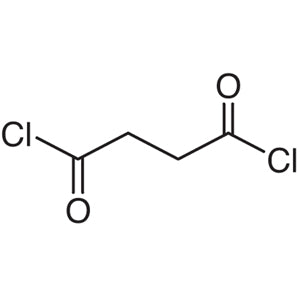
SuccinylChloride TCI S0110
Regular price From Rp 1.220.100,00Regular priceRp 868.350,00Sale price From Rp 1.220.100,00 -
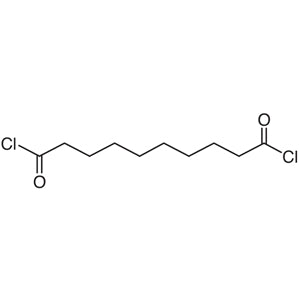
SebacoylChloride TCI S0030
Regular price From Rp 1.298.850,00Regular priceRp 924.000,00Sale price From Rp 1.298.850,00 -
PhthaloylChloride TCI P0405
Regular price From Rp 769.650,00Regular priceRp 537.600,00Sale price From Rp 769.650,00 -
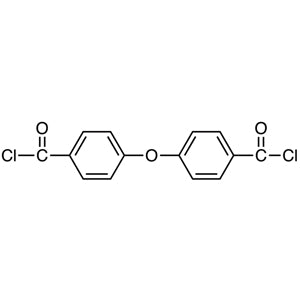
4,4'-Oxybis(benzoylChloride) TCI O0399
Regular price Rp 3.472.350,00Regular priceRp 2.443.350,00Sale price Rp 3.472.350,00 -
MalonylChloride TCI M0882
Regular price From Rp 1.749.300,00Regular priceRp 1.239.000,00Sale price From Rp 1.749.300,00