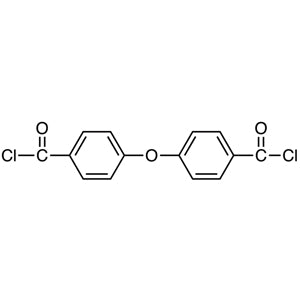
4,4'-Oxybis(benzoyl Chloride) is a chemical compound widely used in laboratory settings for the synthesis of complex molecules. This compound serves as a versatile building block in organic chemistry, particularly in reactions that require high reactivity and structural stability. Its unique molecular structure, consisting of two benzoyl groups connected by an oxygen bridge, makes it a valuable reagent in the development of heterocyclic compounds, polymers, and resins. Due to its chemical reactivity, it is frequently employed in nucleophilic and electrophilic reactions, contributing to the formation of new chemical bonds.
The compound's reactivity stems from its molecular structure, which includes two chloro groups and an oxygen linkage. These features enable it to participate in a variety of chemical reactions, such as condensation, substitution, and cross-linking. Its ability to engage in multiple synthetic pathways makes it a preferred choice for researchers aiming to create complex organic molecules. The compound's stability under controlled conditions further enhances its utility in laboratory environments where precision and reproducibility are essential.
In Indonesian laboratories, 4,4'-Oxybis(benzoyl Chloride) is commonly used in organic chemistry research, especially in the synthesis of pharmaceutical compounds and polymer materials. Researchers in academic institutions and research centers rely on this compound for experiments that demand high reactivity and structural integrity. Its role in advancing chemical synthesis makes it a key component in the development of new materials and drug compounds within the scientific community.
- Organic synthesis of heterocyclic compounds due to its reactivity and structural versatility
- Polymer and resin production as a building block for cross-linking and functional group introduction
- Development of pharmaceutical compounds through nucleophilic and electrophilic reaction pathways
- Condensation reactions for the formation of complex organic molecules with high structural stability
- Research in material science for the creation of advanced polymers and functional materials
| Brand | TCI |
|---|---|
| CAS number | 7158-32-9 |
| Molecular formula | — |
| Purity | — |
| Category | Chemistry > Building Blocks > Non-Heterocyclic Building Blocks |
| Pack sizes | Available in various quantities as per supplier specifications |
| Physical form | Solid, crystalline appearance |
| Storage | Store in a cool, dry place away from moisture and direct sunlight |
This compound should be stored in a cool, dry environment to maintain its chemical integrity. It is recommended to use airtight containers to prevent exposure to moisture and air, which can affect its reactivity. Due to its chemical nature, it should be handled with appropriate personal protective equipment, including gloves and safety goggles. Storage should be in a well-ventilated area to minimize the risk of inhalation. Avoid contact with incompatible materials such as strong bases or reducing agents. Regular inspection of storage conditions is advised to ensure long-term stability and safety in the laboratory setting.
—
Produk Terkait
-
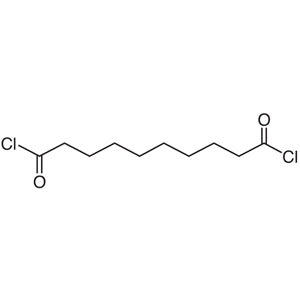
SebacoylChloride TCI S0030
Regular price From Rp 1.246.350,00Regular price -
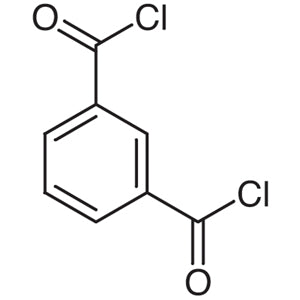
IsophthaloylChloride TCI I0159
Regular price From Rp 505.050,00Regular price -
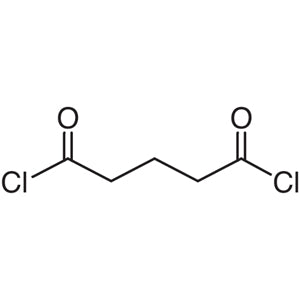
GlutarylChloride TCI G0202
Regular price Rp 2.837.100,00Regular price -
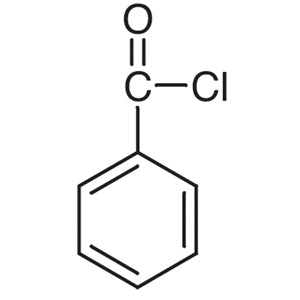
BenzoylChloride TCI B0105
Regular price Rp 505.050,00Regular price -
2-(Chloromethyl)benzoylChloride TCI C3152
Regular price Rp 2.094.750,00Regular price -
3-(Chloromethyl)benzoylChloride TCI C2314
Regular price Rp 1.246.350,00Regular price -
4-(Chloromethyl)benzoylChloride TCI C1283
Regular price From Rp 875.700,00Regular price -
AdipoylChloride TCI A0169
Regular price From Rp 1.220.100,00Regular price