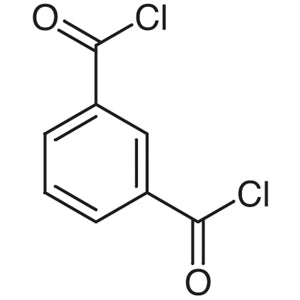
Isophthaloyl Chloride (TCI I0159), with the CAS number 99-63-8, is a chemical compound widely used in organic synthesis as a building block. It serves as a key reagent in the formation of complex organic structures, particularly in reactions involving heterocyclic compounds. This compound is derived from isophthalic acid and is known for its high reactivity, making it a valuable tool for chemists in various research settings. Its ability to undergo substitution and condensation reactions makes it essential in the development of pharmaceuticals, polymers, and industrial chemicals.
The chemical properties of Isophthaloyl Chloride, including its stability under certain conditions and reactivity towards strong bases and organic solvents, make it a preferred choice for laboratory use. Its solid form and resistance to degradation under normal conditions simplify storage and handling. These characteristics ensure consistent performance in chemical reactions, contributing to the reliability of experimental outcomes. The compound's versatility allows it to be adapted to a wide range of synthetic strategies, enhancing its utility in both academic and industrial research environments.
In Indonesian laboratories, Isophthaloyl Chloride is commonly used in organic chemistry research, particularly in academic institutions and research centers. It is a staple in the synthesis of new compounds and the development of advanced materials. Its role in supporting scientific innovation makes it an essential component of the chemical supply chain in the region. Researchers rely on its predictable behavior and effectiveness to achieve precise and reproducible results in their experiments.
TCI brochures (PDF)
- Biomaterials Research Reagents 2025-02-19 · p. 20
- Monomers 2025-05-28 · p. 37
- Organic Synthesis: Isophthaloyl Chloride is widely used in the synthesis of heterocyclic compounds due to its reactivity and ability to form complex molecular structures.
- Pharmaceutical Development: It plays a crucial role in the creation of new drug compounds by facilitating the formation of essential chemical bonds.
- Polymer Chemistry: The compound is utilized in the development of polymers, where its reactivity aids in cross-linking and chain formation.
- Industrial Chemical Production: It is employed in the manufacturing of various industrial chemicals, contributing to the synthesis of functional materials.
- Research and Development: Its versatility makes it an essential reagent in R&D settings, supporting innovation in multiple scientific fields.
| Brand | TCI |
|---|---|
| CAS number | 99-63-8 |
| Molecular formula | — |
| Purity | — |
| Category | Chemistry > Building Blocks > Non-Heterocyclic Building Blocks |
| Pack sizes | Available in standard laboratory quantities |
| Physical form | Solid |
| Storage | Store in a cool, dry place away from moisture and strong bases |
Isophthaloyl Chloride should be stored in a cool, dry environment to maintain its chemical stability. It is recommended to keep it in a sealed container to prevent exposure to moisture and air. Due to its reactivity with strong bases and organic solvents, it should be handled with care and stored separately from incompatible substances. Proper ventilation is essential when working with this compound to ensure a safe laboratory environment. Always use appropriate personal protective equipment when handling or storing Isophthaloyl Chloride to minimize potential risks.
—
Product Categories
- Polymer/Macromolecule ReagentsMonomersDicarboxylic Acid Chloride Monomers
- Polymer/Macromolecule ReagentsPolybenzoxazole Raw MaterialsDicarbonyl Chlorides and Dicarboxylic Acids [Polybenzoxazole Raw Materials]
- Biomaterials/Biocompatible Materials Research ReagentsMonomers and Macromonomers [Biomaterials/Biocompatible Materials Research Reagents]Dicarboxylic Acid Chloride Monomers [Biomaterials/Biocompatible Materials Research Reagents]
Produk Terkait
-
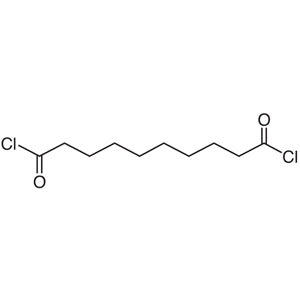
SebacoylChloride TCI S0030
Regular price From Rp 1.298.850,00Regular priceRp 924.000,00Sale price From Rp 1.298.850,00 -
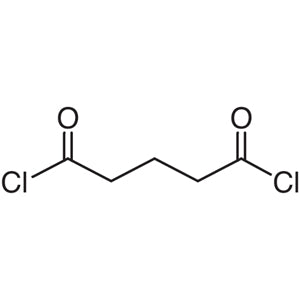
GlutarylChloride TCI G0202
Regular price Rp 2.889.600,00Regular priceRp 2.035.950,00Sale price Rp 2.889.600,00 -
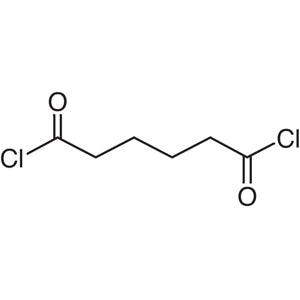
AdipoylChloride TCI A0169
Regular price From Rp 1.272.600,00Regular priceRp 905.100,00Sale price From Rp 1.272.600,00 -
AzelaoylChloride TCI A0562
Regular price Rp 2.464.350,00Regular priceRp 1.738.800,00Sale price Rp 2.464.350,00 -
TerephthaloylChloride TCI T0017
Regular price From Rp 505.050,00Regular priceRp 352.800,00Sale price From Rp 505.050,00 -
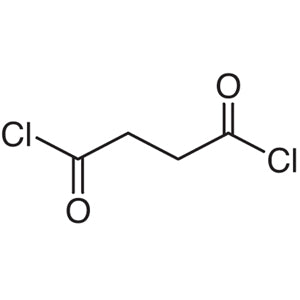
SuccinylChloride TCI S0110
Regular price From Rp 1.220.100,00Regular priceRp 868.350,00Sale price From Rp 1.220.100,00 -
PhthaloylChloride TCI P0405
Regular price From Rp 769.650,00Regular priceRp 537.600,00Sale price From Rp 769.650,00 -
4,4'-Oxybis(benzoylChloride) TCI O0399
Regular price Rp 3.472.350,00Regular priceRp 2.443.350,00Sale price Rp 3.472.350,00