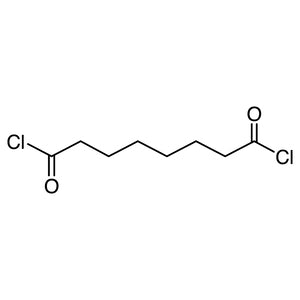
Succinyl Chloride from TCI (CAS 543-20-4) is the diacid chloride of succinic acid: a compound with two acyl chloride groups on a four-carbon chain. TCI lists it as a non-heterocyclic building block, and it is a highly reactive acylating reagent. In the laboratory, chemists use succinyl chloride to place a succinyl unit between two nucleophiles. Typical products are diesters and diamides, and the reagent can also join two molecules into one larger structure. Because it is bifunctional, it is also important in condensation polymer synthesis.
The main reason to choose succinyl chloride is that it is far more reactive than succinic acid or succinic anhydride. Its acyl chloride groups react quickly with alcohols and amines, often at low temperatures and without an extra activating agent. Both ends of the molecule are reactive, so it works well as a crosslinker or as a monomer in polycondensation. The trade-off is that it is very sensitive to water and releases hydrogen chloride when it hydrolyzes. It must therefore be handled under dry conditions.
In Indonesian laboratories, succinyl chloride is needed by research groups working in organic synthesis, polymer development, and materials chemistry. University research labs use it to prepare diester and diamide derivatives and to build larger molecules by linking two fragments through a succinyl unit. Polymer and materials groups use it as a bifunctional monomer or crosslinking agent when studying condensation polymers. These groups value a reagent that reacts reliably and quickly under mild conditions, as long as their lab can keep the work strictly free of moisture.
TCI brochures (PDF)
- Lipids 2025-12-17 · p. 7
- Biomaterials Research Reagents 2025-02-19 · p. 21
- Monomers 2025-05-28 · p. 37
- Diester synthesis: the two acyl chloride groups react quickly with alcohols, often at low temperature and without extra activators, so a succinyl diester forms efficiently.
- Diamide formation: succinyl chloride reacts readily with amines at both ends, so it can bridge two amine-bearing molecules through a succinyl unit in one straightforward step.
- Molecular linking and coupling: because the reagent is bifunctional, it can join two separate molecules into one larger structure, which is useful when assembling more complex synthetic targets.
- Condensation polymer synthesis: as a reactive bifunctional monomer, succinyl chloride takes part in polycondensation with diols or diamines, which supports polymer development and research on new materials.
- Crosslinking studies: with reactive groups at both ends, it can act as a crosslinker between nucleophilic sites, helping materials chemists change network structure and material properties.
| Brand | TCI (product code S0110) |
|---|---|
| CAS number | 543-20-4 |
| Molecular formula | — |
| Purity | — |
| Category | Chemistry > Building Blocks > Non-Heterocyclic Building Blocks |
| Pack sizes | available in the pack sizes TCI offers for this product; please see the product listing for current options |
| Physical form | liquid acid chloride reagent |
| Storage | moisture-sensitive; keep tightly sealed under dry conditions |
Succinyl chloride is very sensitive to water and releases hydrogen chloride when it hydrolyzes, so keep it away from moisture at all times. Store it in its original, tightly closed container in a cool, dry, well-ventilated place, preferably under an inert atmosphere such as nitrogen or argon once the bottle has been opened. Keep it away from water, alcohols, amines, and bases unless they are part of the intended reaction. Use dry glassware and anhydrous solvents. Work in a fume hood and wear chemical-resistant gloves, safety goggles, and a lab coat. Follow the TCI safety data sheet and your laboratory's safety procedures for handling and disposal.
—
Product Categories
- Polymer/Macromolecule ReagentsMonomersDicarboxylic Acid Chloride Monomers
- Biomaterials/Biocompatible Materials Research ReagentsMonomers and Macromonomers [Biomaterials/Biocompatible Materials Research Reagents]Dicarboxylic Acid Chloride Monomers [Biomaterials/Biocompatible Materials Research Reagents]
Produk Terkait
-
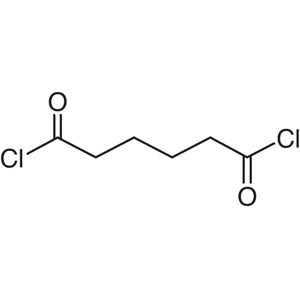
AdipoylChloride TCI A0169
Regular price From Rp 1.272.600,00Regular priceRp 905.100,00Sale price From Rp 1.272.600,00 -
AzelaoylChloride TCI A0562
Regular price Rp 2.464.350,00Regular priceRp 1.738.800,00Sale price Rp 2.464.350,00 -
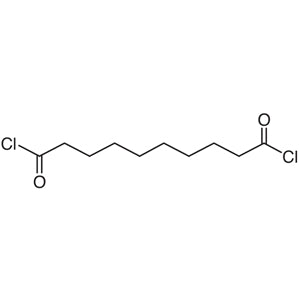
SebacoylChloride TCI S0030
Regular price From Rp 1.298.850,00Regular priceRp 924.000,00Sale price From Rp 1.298.850,00 -
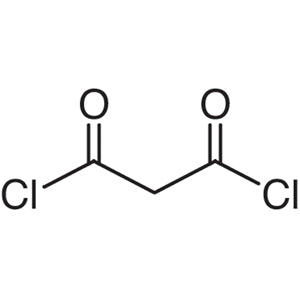
MalonylChloride TCI M0882
Regular price From Rp 1.749.300,00Regular priceRp 1.239.000,00Sale price From Rp 1.749.300,00 -
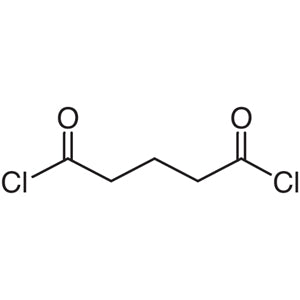
GlutarylChloride TCI G0202
Regular price Rp 2.889.600,00Regular priceRp 2.035.950,00Sale price Rp 2.889.600,00 -
TerephthaloylChloride TCI T0017
Regular price From Rp 505.050,00Regular priceRp 352.800,00Sale price From Rp 505.050,00 -
SuberoylChloride TCI S0420
Regular price Rp 3.658.200,00Regular priceRp 2.573.550,00Sale price Rp 3.658.200,00 -
PhthaloylChloride TCI P0405
Regular price From Rp 769.650,00Regular priceRp 537.600,00Sale price From Rp 769.650,00