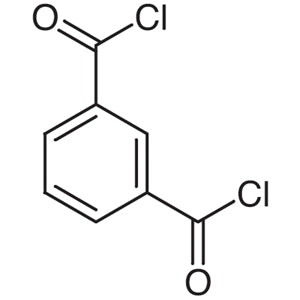
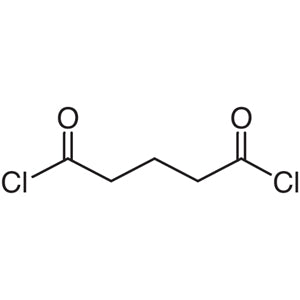
Terephthaloyl Chloride (TCI T0017), with CAS number 100-20-9, is a key chemical compound used as a building block in organic synthesis. It serves as an essential reagent in laboratory settings, particularly in coupling reactions where it facilitates the formation of complex organic molecules. Its unique structure, featuring two chlorine atoms attached to a 1,4-phenylene ring, enables it to participate in various chemical reactions, making it a versatile tool for chemists. This compound is widely utilized in both academic and industrial research due to its reactivity and compatibility with a range of functional groups.
Terephthaloyl Chloride is preferred for its chemical stability and reactivity under controlled conditions. Its ability to engage in nucleophilic and electrophilic reactions makes it suitable for a wide array of synthetic pathways. The compound’s reliability in maintaining consistent performance across different reaction environments ensures reproducibility in experimental outcomes. Additionally, its availability in various packaging formats supports ease of use in both small and medium-scale laboratory operations.
In Indonesian laboratories, Terephthaloyl Chloride is commonly used in organic chemistry research, especially in the development of new materials and the synthesis of complex compounds. Its role in industrial chemical production and pharmaceutical precursor manufacturing further highlights its importance in both academic and applied research settings. The compound’s versatility and effectiveness make it a valuable resource for researchers in Indonesia.
TCI brochures (PDF)
- Biomaterials Research Reagents 2025-02-19 · p. 21
- Monomers 2025-05-28 · p. 37
- Organic synthesis reactions where Terephthaloyl Chloride is used to form ester and amide linkages in polymeric materials.
- Coupling reactions that require a reactive chlorinated aromatic compound for the formation of heterocyclic structures.
- Industrial chemical production processes that rely on Terephthaloyl Chloride as a key intermediate in polyester and polyamide manufacturing.
- Pharmaceutical research applications where the compound is used in the synthesis of drug precursors and active pharmaceutical ingredients.
- Material science experiments involving the creation of advanced polymers and composite materials through controlled chemical reactions.
| Brand | TCI |
|---|---|
| CAS number | 100-20-9 |
| Molecular formula | — |
| Purity | — |
| Category | Chemistry > Building Blocks > Non-Heterocyclic Building Blocks |
| Pack sizes | Available in various sizes to accommodate different laboratory scales |
| Physical form | Solid |
| Storage | Store in a cool, dry place away from moisture and direct sunlight |
Terephthaloyl Chloride should be stored in a cool, dry environment to prevent degradation. It is recommended to keep the compound in a sealed container to minimize exposure to moisture and air. Due to its reactivity, it should be handled in a well-ventilated area, preferably with appropriate personal protective equipment. Avoid contact with incompatible substances such as strong bases or reducing agents. The compound should be stored away from heat sources and direct sunlight to maintain its chemical integrity. Proper labeling of storage containers is essential for safety and identification purposes.
—
Product Categories
- Polymer/Macromolecule ReagentsMonomersDicarboxylic Acid Chloride Monomers
- Biomaterials/Biocompatible Materials Research ReagentsMonomers and Macromonomers [Biomaterials/Biocompatible Materials Research Reagents]Dicarboxylic Acid Chloride Monomers [Biomaterials/Biocompatible Materials Research Reagents]
Produk Terkait
-
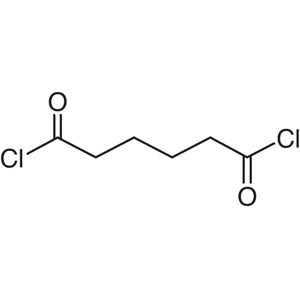
AdipoylChloride TCI A0169
Regular price From Rp 1.272.600,00Regular priceRp 905.100,00Sale price From Rp 1.272.600,00 -
AzelaoylChloride TCI A0562
Regular price Rp 2.464.350,00Regular priceRp 1.738.800,00Sale price Rp 2.464.350,00 -
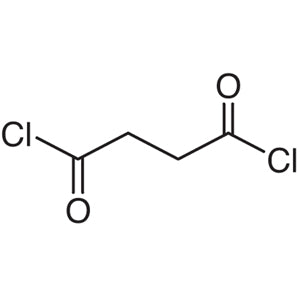
SuccinylChloride TCI S0110
Regular price From Rp 1.220.100,00Regular priceRp 868.350,00Sale price From Rp 1.220.100,00 -
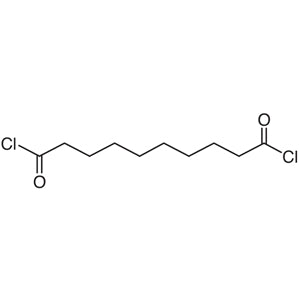
SebacoylChloride TCI S0030
Regular price From Rp 1.298.850,00Regular priceRp 924.000,00Sale price From Rp 1.298.850,00 -
PhthaloylChloride TCI P0405
Regular price From Rp 769.650,00Regular priceRp 537.600,00Sale price From Rp 769.650,00 -
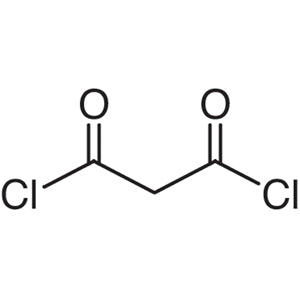
MalonylChloride TCI M0882
Regular price From Rp 1.749.300,00Regular priceRp 1.239.000,00Sale price From Rp 1.749.300,00 -
IsophthaloylChloride TCI I0159
Regular price From Rp 505.050,00Regular priceRp 352.800,00Sale price From Rp 505.050,00 -
GlutarylChloride TCI G0202
Regular price Rp 2.889.600,00Regular priceRp 2.035.950,00Sale price Rp 2.889.600,00