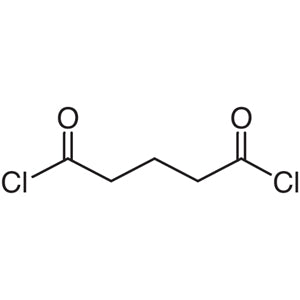
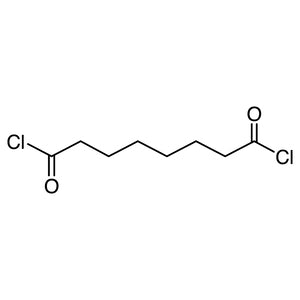
Azelaoyl Chloride (TCI A0562), with CAS number 123-98-8, is a chemical compound widely used in laboratory settings for its versatility in organic synthesis. As a key building block in chemistry, it plays a crucial role in the development of complex organic molecules and heteroaromatic compounds. Its reactivity makes it an essential reagent in various synthetic pathways, particularly in nucleophilic substitution and coupling reactions. This compound is highly valued for its ability to facilitate the formation of new chemical bonds, contributing to the advancement of chemical research and development.
Azelaoyl Chloride is known for its chemical stability under controlled conditions, which ensures consistent performance in laboratory experiments. However, it is highly reactive towards strong bases and water, necessitating careful handling and precise reaction conditions. Its availability in pure liquid form simplifies its incorporation into chemical reactions without compromising the integrity of the process. These properties make it a reliable and efficient reagent for both academic and industrial research applications.
In Indonesian laboratories, Azelaoyl Chloride is commonly used in organic chemistry research, particularly in higher education institutions and research centers. Its consistent quality and ease of access through local distributors make it a preferred choice for researchers. Its role in accelerating the synthesis of complex compounds supports the growth of scientific innovation in the region.
TCI brochures (PDF)
- Lipids 2025-12-17 · p. 8
- Biomaterials Research Reagents 2025-02-19 · p. 20
- Monomers 2025-05-28 · p. 36
- Organic synthesis applications benefit from Azelaoyl Chloride’s ability to form new chemical bonds through nucleophilic substitution and coupling reactions.
- Heteroaromatic compound development relies on its reactivity, enabling the synthesis of complex aromatic structures in controlled environments.
- Coupling reactions in pharmaceutical research utilize its stability and reactivity to create diverse molecular frameworks.
- Nucleophilic substitution processes in academic labs depend on its effectiveness in forming stable intermediates.
- Chemical research in Indonesian institutions uses it for its consistent performance and reliability in synthetic pathways.
| Brand | TCI |
|---|---|
| CAS number | 123-98-8 |
| Molecular formula | — |
| Purity | — |
| Category | Chemistry > Building Blocks > Non-Heterocyclic Building Blocks |
| Pack sizes | Available in standard laboratory quantities |
| Physical form | Pure liquid |
| Storage | Requires dry, cool, and well-ventilated conditions |
Azelaoyl Chloride should be stored in a dry, cool, and well-ventilated area away from moisture and strong bases. It is recommended to use sealed containers made of materials resistant to chemical attack, such as glass or high-density polyethylene. Due to its reactivity with water and strong bases, it must be handled with care, using appropriate personal protective equipment. Storage conditions should prevent exposure to air and light to maintain its chemical integrity. In laboratory settings, it should be kept in a designated chemical storage cabinet to ensure safety and accessibility. Regular monitoring of storage conditions is essential to prevent degradation and ensure safe usage.
—
Product Categories
- Polymer/Macromolecule ReagentsMonomersDicarboxylic Acid Chloride Monomers
- Biomaterials/Biocompatible Materials Research ReagentsMonomers and Macromonomers [Biomaterials/Biocompatible Materials Research Reagents]Dicarboxylic Acid Chloride Monomers [Biomaterials/Biocompatible Materials Research Reagents]
Produk Terkait
-
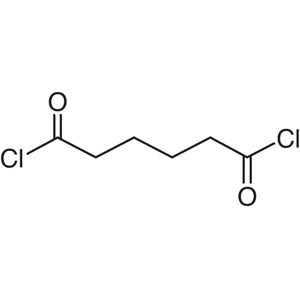
AdipoylChloride TCI A0169
Regular price From Rp 1.272.600,00Regular priceRp 905.100,00Sale price From Rp 1.272.600,00 -
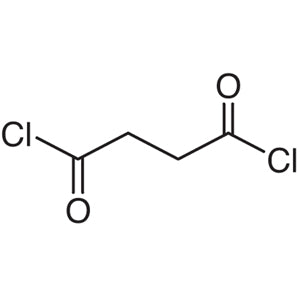
SuccinylChloride TCI S0110
Regular price From Rp 1.220.100,00Regular priceRp 868.350,00Sale price From Rp 1.220.100,00 -
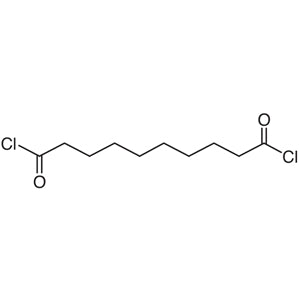
SebacoylChloride TCI S0030
Regular price From Rp 1.298.850,00Regular priceRp 924.000,00Sale price From Rp 1.298.850,00 -
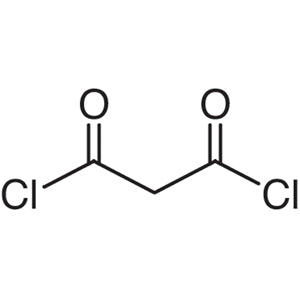
MalonylChloride TCI M0882
Regular price From Rp 1.749.300,00Regular priceRp 1.239.000,00Sale price From Rp 1.749.300,00 -
GlutarylChloride TCI G0202
Regular price Rp 2.889.600,00Regular priceRp 2.035.950,00Sale price Rp 2.889.600,00 -
TerephthaloylChloride TCI T0017
Regular price From Rp 505.050,00Regular priceRp 352.800,00Sale price From Rp 505.050,00 -
SuberoylChloride TCI S0420
Regular price Rp 3.658.200,00Regular priceRp 2.573.550,00Sale price Rp 3.658.200,00 -
PhthaloylChloride TCI P0405
Regular price From Rp 769.650,00Regular priceRp 537.600,00Sale price From Rp 769.650,00