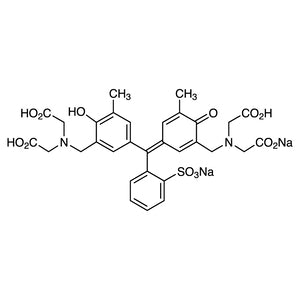
TAR, or 4-(2-Thiazolylazo)resorcinol, is a chemical compound widely used in analytical chemistry, particularly in spectroscopy applications. It serves as a reagent in qualitative and quantitative analysis of various metal ions, especially in complexometric and spectrophotometric techniques. In the laboratory, TAR functions as an indicator or reagent that helps detect the presence of specific ions through color changes or chemical reactions. Its role is critical in ensuring accurate and reliable results in analytical procedures.
The properties that make TAR a preferred choice include its ability to form stable complexes with metal ions such as copper, silver, and zinc. This characteristic allows for high sensitivity in analytical processes, making TAR an essential tool for precise detection. Additionally, TAR exhibits good stability under certain conditions, enabling repeated use in various experiments. Its reliability and consistency contribute to its popularity among researchers and laboratory professionals.
In Indonesian laboratories, TAR is commonly used in scientific research conducted at universities and research institutions. It is frequently found in chemistry practical sessions, environmental analysis, and qualitative studies. Its availability and effectiveness make it a top choice for meeting the demands of chemical analysis in both academic and industrial settings.
TCI brochures (PDF)
- Titration Reagents and TLC Stains 2026-05-07 · p. 10
Related TCI products
- TCI A5003 1147-56-4 TAN [=1-(2-Thiazolylazo)-2-naphthol] [Spectrophotometric reagent for transition metals]
- TCI A5017 3627-01-8 H-Resorcinol [Spectrophotometric reagent for the determination of B by FIA]
- TCI B0477 1202864-39-8 Xylenol Orange
- TCI A5010 68504-35-8 Sulfonazo III [Spectrophotometric reagent for alkaline earth metals and indicator for the precipitation titration of SO4 with Ba]
- TCI A5008 14979-11-4 Dimethylsulfonazo III [Spectrophotometric reagent for alkaline earth metals and indicator for the precipitation titration of SO4 with Ba]
- TCI P0568 115-41-3 Pyrocatechol Violet
- Metal ion analysis in environmental and industrial samples due to its ability to form complexes with copper, silver, and zinc.
- Spectrophotometric and complexometric techniques for accurate detection of trace metal ions in solution.
- Qualitative analysis in educational settings to demonstrate chemical reactions and ion detection methods.
- Research applications in analytical chemistry for studying metal ion interactions and complex formation.
- Laboratory testing for quality control in chemical and pharmaceutical industries requiring precise analytical methods.
| Brand | TCI |
|---|---|
| CAS number | 2246-46-0 |
| Molecular formula | — |
| Purity | — |
| Category | Analytical Chemistry > Analytical Reagents > Spectroscopy Reagents |
| Pack sizes | Available in standard laboratory quantities |
| Physical form | Solid powder |
| Storage | Store in a cool, dry place away from light |
TAR should be stored in a cool, dry place, away from direct light to maintain its stability and effectiveness. It is recommended to use airtight containers to prevent moisture absorption and contamination. Laboratory personnel should handle TAR with care, using appropriate personal protective equipment such as gloves and safety goggles. Since TAR is a chemical reagent, it should be kept out of reach of children and not exposed to incompatible substances. Regular inspection of storage conditions is advised to ensure the material remains in optimal condition for use. Proper labeling of containers is essential to prevent accidental misuse or exposure.
—
Produk Terkait
-
TAN[=1-(2-Thiazolylazo)-2-naphthol][Spectrophotometricreagentfortransitionmetals] TCI A5003
Regular price From Rp 1.881.600,00Regular priceRp 1.331.400,00Sale price From Rp 1.881.600,00 -
H-Resorcinol[SpectrophotometricreagentforthedeterminationofBbyFIA] TCI A5017
Regular price Rp 3.232.950,00Regular priceRp 2.260.650,00Sale price Rp 3.232.950,00 -
XylenolOrange TCI B0477
Regular price From Rp 928.200,00Regular priceRp 664.650,00Sale price From Rp 928.200,00 -
SulfonazoIII[SpectrophotometricreagentforalkalineearthmetalsandindicatorfortheprecipitationtitrationofSO4withBa] TCI A5010
Regular price From Rp 1.193.850,00Regular priceRp 834.750,00Sale price From Rp 1.193.850,00 -
DimethylsulfonazoIII[SpectrophotometricreagentforalkalineearthmetalsandindicatorfortheprecipitationtitrationofSO4withBa] TCI A5008
Regular price From Rp 2.094.750,00Regular priceRp 1.464.750,00Sale price From Rp 2.094.750,00 -
PyrocatecholViolet TCI P0568
Regular price From Rp 717.150,00Regular priceRp 516.600,00Sale price From Rp 717.150,00