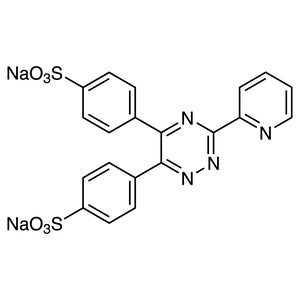
Pyrocatechol Violet is a chemical compound widely used as a reagent in analytical chemistry. It plays a crucial role in laboratory settings by enabling the detection and identification of specific metal ions through complexation reactions. This reagent is particularly valuable in spectroscopy and qualitative analysis, where it serves as an indicator for various chemical reactions. Its ability to form colored complexes with metal ions makes it an essential tool for determining the presence and concentration of elements such as copper, silver, and zinc in solution.
The properties of Pyrocatechol Violet that make it a preferred choice include its stability under normal conditions and controlled reactivity. It exhibits a color change depending on the environmental conditions and the type of ion involved in the reaction, which enhances its utility in analytical procedures. Additionally, it dissolves well in organic solvents like ethanol and acetone, making it versatile for a wide range of chemical applications. Its chemical stability ensures reliable results and long shelf life, contributing to its popularity in laboratory environments.
In Indonesian laboratories, Pyrocatechol Violet is commonly used in analytical and spectroscopic studies. It is a key component in qualitative analysis and metal ion detection, supporting research and quality control in various scientific fields. Its consistent performance and reliability make it a trusted reagent for both academic and industrial applications in Indonesia.
- Metal ion detection in qualitative analysis due to its ability to form colored complexes with specific ions.
- Spectroscopic analysis for identifying and quantifying metal ions in solution through color changes.
- Complexation reactions in analytical chemistry for determining the presence of copper, silver, and zinc.
- Indicator in chemical reactions to monitor the progress and completion of metal ion interactions.
- Routine testing in environmental and industrial laboratories for metal contamination analysis.
| Brand | TCI |
|---|---|
| CAS number | 115-41-3 |
| Molecular formula | — |
| Purity | — |
| Category | Analytical Chemistry > Analytical Reagents > Spectroscopy Reagents |
| Pack sizes | Available in various quantities as per standard reagent packaging |
| Physical form | Solid or powder, depending on the formulation |
| Storage | Store in a cool, dry place away from direct sunlight |
Pyrocatechol Violet should be stored in a cool, dry location, away from direct sunlight and sources of heat. It is recommended to use airtight containers to prevent moisture absorption and maintain its chemical integrity. Proper labeling of containers is essential to ensure safe handling and prevent accidental exposure. As a chemical reagent, it should be handled with care, using appropriate personal protective equipment such as gloves and safety goggles. Avoid contact with skin and eyes, and ensure good ventilation when working with this substance. Its stable nature allows for long-term storage, provided the environmental conditions remain consistent.
—
Produk Terkait
-
XylylazoVioletI[SpectrophotometricreagentforMg] TCI A5007
Regular price From Rp 1.538.250,00Regular price -
XylylazoVioletII[SpectrophotometricreagentforMg] TCI A5006
Regular price From Rp 3.710.700,00Regular price -
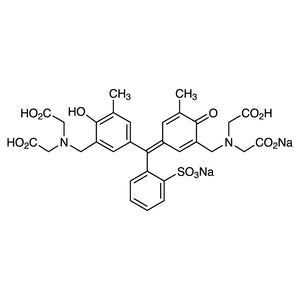
XylenolOrange TCI B0477
Regular price From Rp 875.700,00Regular price -
SulfonazoIII[SpectrophotometricreagentforalkalineearthmetalsandindicatorfortheprecipitationtitrationofSO4withBa] TCI A5010
Regular price From Rp 1.193.850,00Regular price -
DimethylsulfonazoIII[SpectrophotometricreagentforalkalineearthmetalsandindicatorfortheprecipitationtitrationofSO4withBa] TCI A5008
Regular price From Rp 2.094.750,00Regular price -
TAN[=1-(2-Thiazolylazo)-2-naphthol][Spectrophotometricreagentfortransitionmetals] TCI A5003
Regular price From Rp 1.829.100,00Regular price -
TAR[=4-(2-Thiazolylazo)resorcinol] TCI A5002
Regular price From Rp 1.856.400,00Regular price -
3-(2-Pyridyl)-5,6-bis(4-sulfophenyl)-1,2,4-triazineDisodiumSalt TCI P0830
Regular price Rp 1.035.300,00Regular price
![14936-97-1 Xylylazo Violet I [Spectrophotometric reagent for Mg] - AMI Scientific](http://amiscientific.com/cdn/shop/files/TCI2510A5007.jpg?v=1769179450&width=533)
![523-67-1 Xylylazo Violet II [Spectrophotometric reagent for Mg] - AMI Scientific](http://amiscientific.com/cdn/shop/files/TCI2510A5006.jpg?v=1768358962&width=533)
![68504-35-8 Sulfonazo III [Spectrophotometric reagent for alkaline earth metals and indicator for the precipitation titration of SO4 with Ba] - AMI Scientific](http://amiscientific.com/cdn/shop/files/TCI2510A5010.jpg?v=1769179452&width=533)
![14979-11-4 Dimethylsulfonazo III [Spectrophotometric reagent for alkaline earth metals and indicator for the precipitation titration of SO4 with Ba] - AMI Scientific](http://amiscientific.com/cdn/shop/files/TCI2510A5008.jpg?v=1768358964&width=533)
![2246-46-0 TAR [=4-(2-Thiazolylazo)resorcinol] - AMI Scientific](http://amiscientific.com/cdn/shop/files/TCI_755a57a1-c262-4e66-ab3d-595087b9034b.png?v=1766991254&width=533)