TCI A5440, also known as PTIO (2-Phenyl-4,4,5,5-tetramethylimidazoline-1-oxyl), is a stable free radical reagent widely used in environmental and analytical chemistry for the simultaneous detection of nitrogen monoxide (NO) and nitrogen dioxide (NO₂) in the atmosphere. This compound plays a crucial role in laboratory settings where accurate and reliable measurement of trace gases is essential. It is particularly valuable for monitoring air quality and assessing environmental pollution levels. Its unique chemical properties allow it to interact selectively with these gases, making it an indispensable tool for researchers and environmental scientists.
The stability and reactivity of PTIO make it a preferred choice for analytical applications. It maintains its chemical integrity under various conditions, ensuring consistent and reproducible results. Its high sensitivity and specificity enable precise quantification of NO and NO₂, even at low concentrations. Additionally, PTIO does not react with other atmospheric compounds, minimizing interference and enhancing the accuracy of measurements. These characteristics make it a reliable and efficient reagent for both qualitative and quantitative analysis in laboratory environments.
In Indonesian laboratories, PTIO is commonly used in environmental studies, air quality assessments, and public health research. It is particularly relevant for monitoring urban and industrial air pollution, supporting evidence-based environmental policies. Its application in these contexts ensures that scientific data can be used to inform decisions related to pollution control and public health initiatives. The compound’s reliability and performance make it a key component in the analytical toolkit of Indonesian research institutions.
Advantages (TCI brochure)
- Spin trap agent that selectively oxidizes NO
- Converts NO to NO2
TCI brochures (PDF)
- Organic Radical Magnets 2024-11-27 · p. 1
- Reactive Oxygen Species (ROS) and Oxidative Stress Research Reagents 2026-04-23 · p. 1
- Reagents for Biological Research 2025-03-11 · p. 36
Related TCI products
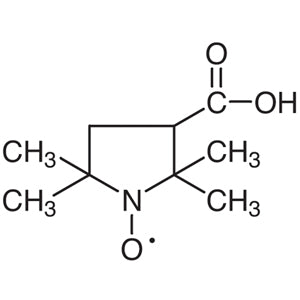
- TCI C1406 2154-68-9 3-Carboxy-2,2,5,5-tetramethylpyrrolidine 1-Oxyl Free Radical
- TCI D2295 38582-73-9 2-(4-Nitrophenyl)-4,4,5,5-tetramethylimidazoline-3-oxide-1-oxyl Free Radical
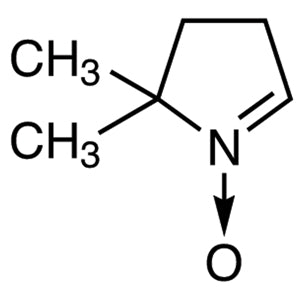
- TCI D2362 3317-61-1 5,5-Dimethyl-1-pyrroline N-Oxide
- TCI A5015 14609-54-2 TCPP [=Tetrakis(4-carboxyphenyl)porphyrin] [Ultra-high sensitive spectrophotometric reagent for Cu, Cd] [For the simultaneous determination of metals by HPLC]
- TCI A5014 36951-72-1 TMPyP [=alpha,beta,gamma,delta-Tetrakis(1-methylpyridinium-4-yl)porphyrin p-Toluenesulfonate] [Ultra-high sensitive spectrophotometric reagent for Cu, Mg] [For the simultaneous determination of metals by HPLC]
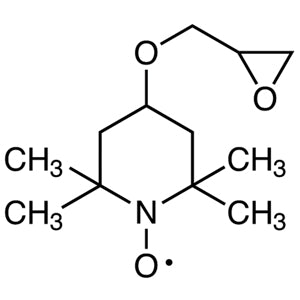
- TCI G0555 122413-85-8 4-Glycidyloxy-2,2,6,6-tetramethylpiperidine 1-Oxyl Free Radical
- Environmental Monitoring for detecting NO and NO₂ levels in urban and industrial areas, ensuring accurate data for pollution control strategies.
- Air Quality Assessment to evaluate atmospheric composition and identify sources of nitrogen oxides, supporting regulatory compliance.
- Public Health Research for studying the impact of air pollution on respiratory health, providing critical data for health policy development.
- Atmospheric Chemistry Studies to analyze the behavior of nitrogen oxides in the environment, contributing to climate and environmental science.
- Industrial Emissions Testing to measure and monitor emissions from factories and power plants, aiding in environmental impact assessments.
From the TCI brochure
- NO concentration determined from the ESR spectrum of PTIO and PTI
| Brand | TCI |
|---|---|
| CAS number | 18390-00-6 |
| Molecular formula | — |
| Purity | — |
| Category | Materials Science > Magnetic Materials > Organic Radicals |
| Pack sizes | — |
| Physical form | — |
| Storage | Store in a cool, dry place away from light and incompatible materials |
PTIO should be stored in a cool, dry environment, away from direct sunlight and sources of heat. It is recommended to keep the reagent in a tightly sealed container to prevent exposure to air and moisture. Due to its chemical nature, it should be handled with care, using appropriate personal protective equipment such as gloves and safety goggles. Avoid contact with incompatible substances to ensure stability and safety. In laboratory settings, PTIO should be stored in a designated chemical storage area that complies with standard safety protocols. Proper labeling and documentation are essential to maintain a safe and organized laboratory environment.
—
Produk Terkait
-
3-Carboxy-2,2,5,5-tetramethylpyrrolidine1-OxylFreeRadical TCI C1406
Regular price Rp 5.460.000,00Regular priceRp 3.833.550,00Sale price Rp 5.460.000,00 -
2-(4-Nitrophenyl)-4,4,5,5-tetramethylimidazoline-3-oxide-1-oxylFreeRadical TCI D2295
Regular price Rp 7.446.600,00Regular priceRp 5.222.700,00Sale price Rp 7.446.600,00 -
5,5-Dimethyl-1-pyrrolineN-Oxide TCI D2362
Regular price From Rp 3.815.700,00Regular priceRp 2.683.800,00Sale price From Rp 3.815.700,00 -
TCPP[=Tetrakis(4-carboxyphenyl)porphyrin][Ultra-highsensitivespectrophotometricreagentforCu,Cd][ForthesimultaneousdeterminationofmetalsbyHPLC] TCI A5015
Regular price From Rp 955.500,00Regular priceRp 683.550,00Sale price From Rp 955.500,00 -
TMPyP[=alpha,beta,gamma,delta-Tetrakis(1-methylpyridinium-4-yl)porphyrinp-Toluenesulfonate][Ultra-highsensitivespectrophotometricreagentforCu,Mg][ForthesimultaneousdeterminationofmetalsbyHPLC] TCI A5014
Regular price From Rp 1.351.350,00Regular priceRp 960.750,00Sale price From Rp 1.351.350,00 -
4-Glycidyloxy-2,2,6,6-tetramethylpiperidine1-OxylFreeRadical TCI G0555
Regular price From Rp 1.378.650,00Regular priceRp 979.650,00Sale price From Rp 1.378.650,00 -
GalvinoxylFreeRadical TCI G0020
Regular price From Rp 3.922.800,00Regular priceRp 2.742.600,00Sale price From Rp 3.922.800,00