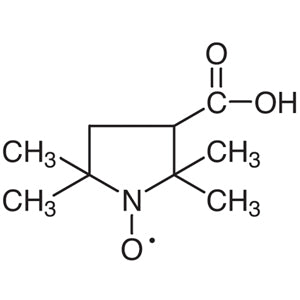
3-Carboxy-2,2,5,5-tetramethylpyrrolidine 1-Oxyl Free Radical, commonly known as 3-carboxy-PROXYL, is a nitroxide free radical compound that remains stable at room temperature. Unlike ordinary free radicals, which are extremely short-lived, the unpaired electron on the nitroxide group of this compound is shielded by four surrounding methyl groups, allowing the material to be stored and handled like any conventional laboratory chemical. In the laboratory it serves as a spin probe and spin label in electron spin resonance spectroscopy, as well as a reagent in radical chemistry studies and oxidative stress research.
The principal characteristic that makes this compound a preferred choice is its distinctive and easily recognisable electron spin resonance signal, which arises from the interaction between the unpaired electron and the nitrogen nucleus. This signal pattern is highly sensitive to the surrounding environment, so that changes in viscosity, polarity, oxygen content, or molecular motion can be read directly from the shape of the spectrum. The carboxyl group at position 3 adds two further advantages: it improves solubility in aqueous media and provides a chemical attachment point for covalently binding the probe to proteins, lipids, polymers, and other molecules of interest.
In Indonesian laboratories, this reagent is typically used in university research groups, government research institutes, and industrial laboratories that operate electron spin resonance instrumentation or conduct work on radical chemistry. It is generally handled in small quantities for spectroscopic measurement, method development, and comparative studies, and is requested alongside other analytical-grade reagents by teams working on oxidative stress, materials characterisation, and biomolecular labelling.
TCI brochures (PDF)
- Organic Radical Magnets 2024-11-27 · p. 1
- Reactive Oxygen Species (ROS) and Oxidative Stress Research Reagents 2026-04-23 · p. 1
- Battery Research Reagents 2026-09-18 · p. 7
- Reagents for Biological Research 2025-03-11 · p. 36
Related TCI products
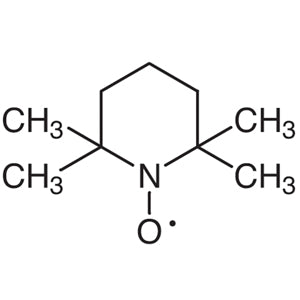
- TCI T1560 2564-83-2 2,2,6,6-Tetramethylpiperidine 1-Oxyl Free Radical
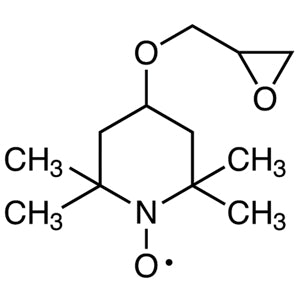
- TCI G0555 122413-85-8 4-Glycidyloxy-2,2,6,6-tetramethylpiperidine 1-Oxyl Free Radical
- TCI G0020 2370-18-5 Galvinoxyl Free Radical
- TCI A5440 18390-00-6 PTIO (=2-Phenyl-4,4,5,5-tetramethylimidazoline-3-oxide-1-oxyl) [Stable free radical reagent for the simultaneous determination of NO and NO2 in the atmosphere]
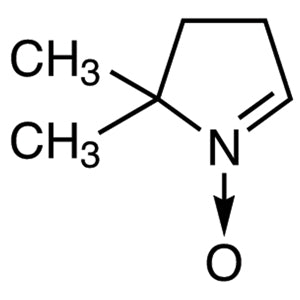
- TCI D2362 3317-61-1 5,5-Dimethyl-1-pyrroline N-Oxide
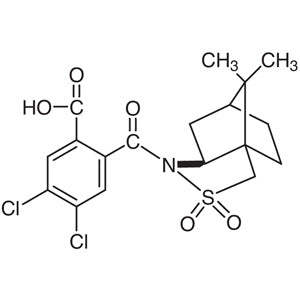
- TCI C1767 1820575-29-8 N-(2-Carboxy-4,5-dichlorobenzoyl)-(+)-10,2-camphorsultam
- Electron spin resonance spectroscopy — the compound produces a characteristic, easily identified signal from the unpaired electron interacting with the nitrogen nucleus, making it a dependable reference probe for instrument work.
- Spin probe measurement of the local environment — because the signal pattern responds to viscosity, polarity, and molecular motion, changes in the surrounding medium can be read directly from the spectral shape.
- Oxygen-sensitive measurements — the sensitivity of the resonance signal to oxygen content allows researchers to follow variations in oxygen levels within a sample system under study.
- Spin labelling of biomolecules and polymers — the carboxyl group at position 3 provides a chemical attachment point for covalently binding the probe to proteins, lipids, and polymers.
- Radical chemistry and oxidative stress research — as a stable nitroxide radical that can be stored and handled conventionally, it serves as a practical reagent for studies involving radical species.
| Brand | TCI |
|---|---|
| CAS number | 2154-68-9 |
| Molecular formula | — |
| Purity | — |
| Category | Chemistry > Synthetic Reagents > Radical Chemistry |
| Pack sizes | available in standard catalogue pack sizes; please confirm the size required when ordering |
| Physical form | — |
| Storage | store according to the conditions stated on the manufacturer's label and safety data sheet |
- Product code: C1406
Store the compound in its original tightly closed container, kept in a cool, dry, and well-ventilated area away from direct sunlight and sources of heat or ignition. Follow the storage temperature stated on the manufacturer's label and safety data sheet. Use chemically compatible containers and keep them clearly labelled. Handle the material in a fume hood where appropriate, wearing a laboratory coat, safety glasses, and suitable gloves. Avoid contact with skin and eyes and avoid inhaling any dust. Transfer only the amount needed for the work at hand, close the container promptly after use, and consult the safety data sheet before handling and for disposal guidance.
—
Product Categories
Produk Terkait
-
2,2,6,6-Tetramethylpiperidine1-OxylFreeRadical TCI T1560
Regular price From Rp 1.590.750,00Regular priceRp 1.111.950,00Sale price From Rp 1.590.750,00 -
4-Glycidyloxy-2,2,6,6-tetramethylpiperidine1-OxylFreeRadical TCI G0555
Regular price From Rp 1.378.650,00Regular priceRp 979.650,00Sale price From Rp 1.378.650,00 -
GalvinoxylFreeRadical TCI G0020
Regular price From Rp 3.922.800,00Regular priceRp 2.742.600,00Sale price From Rp 3.922.800,00 -
PTIO(=2-Phenyl-4,4,5,5-tetramethylimidazoline-3-oxide-1-oxyl)[StablefreeradicalreagentforthesimultaneousdeterminationofNOandNO2intheatmosphere] TCI A5440
Regular price From Rp 3.710.700,00Regular priceRp 2.610.300,00Sale price From Rp 3.710.700,00 -
5,5-Dimethyl-1-pyrrolineN-Oxide TCI D2362
Regular price From Rp 3.815.700,00Regular priceRp 2.683.800,00Sale price From Rp 3.815.700,00 -
N-(2-Carboxy-4,5-dichlorobenzoyl)-(+)-10,2-camphorsultam TCI C1767
Regular price Rp 6.518.400,00Regular priceRp 4.573.800,00Sale price Rp 6.518.400,00 -
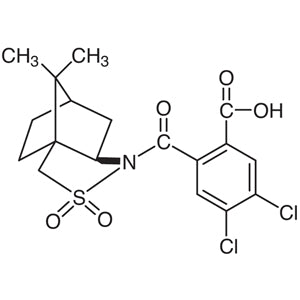
N-(2-Carboxy-4,5-dichlorobenzoyl)-(-)-10,2-camphorsultam TCI C1683
Regular price Rp 8.850.450,00Regular priceRp 6.204.450,00Sale price Rp 8.850.450,00 -
1-Hexyl-1-methylpyrrolidin-1-iumBis((trifluoromethyl)sulfonyl)amide TCI H1824
Regular price From Rp 2.068.500,00Regular priceRp 1.461.600,00Sale price From Rp 2.068.500,00




![18390-00-6 PTIO (=2-Phenyl-4,4,5,5-tetramethylimidazoline-3-oxide-1-oxyl) [Stable free radical reagent for the simultaneous determination of NO and NO2 in the atmosphere] - AMI Scientific](http://amiscientific.com/cdn/shop/files/TCI2510A5440.jpg?v=1769144865&width=533)