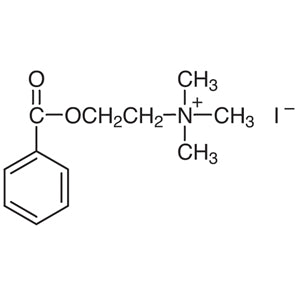
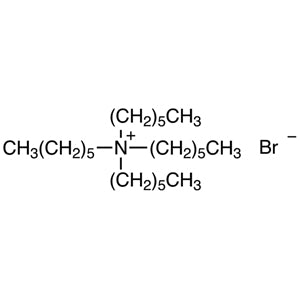
Benzoylcholine Bromide is a chemical compound widely used as a phase transfer catalyst in synthetic chemistry reactions. It plays a crucial role in facilitating reactions that involve electron or proton transfer between different phases. This compound is particularly valuable in laboratory settings where reactions require interaction between liquid and solid phases. Its ability to bridge these phases enhances the efficiency of chemical processes, making it a key component in various experimental setups.
The unique molecular structure of Benzoylcholine Bromide, featuring a bromide group and a benzoic acid moiety, contributes to its reactivity and polarity. These properties allow it to interact effectively with a wide range of solvents and reactive phases. The compound's chemical stability under standard laboratory conditions further supports its reliability and ease of use. This stability ensures consistent performance, which is essential for accurate and reproducible results in chemical experiments.
In Indonesian laboratories, Benzoylcholine Bromide is extensively used in synthetic and analytical research. It is a preferred choice for experiments requiring efficient phase transfer catalysis, especially in industrial and academic settings. Its effectiveness and stability make it a valuable tool for researchers aiming to optimize chemical reactions and improve experimental outcomes.
TCI brochures (PDF)
- Quaternary Ammonium Salts 2025-11-10 · p. 6
Related TCI products
- Synthetic Organic Chemistry - Benzoylcholine Bromide is ideal for promoting reactions between immiscible phases, enhancing reaction efficiency and yield in organic synthesis.
- Analytical Chemistry - Its ability to facilitate phase transfer makes it useful in analytical procedures requiring precise interaction between different chemical phases.
- Industrial Catalysis - The compound is applied in industrial processes where phase transfer catalysis is essential for improving reaction rates and product purity.
- Polymer Science - It supports the synthesis of polymers by enabling effective interaction between monomers and catalysts in different phases.
- Environmental Chemistry - Benzoylcholine Bromide is used in studies involving the degradation of pollutants, where phase transfer is necessary for reaction mechanisms.
| Brand | TCI |
|---|---|
| CAS number | 24943-60-0 |
| Molecular formula | — |
| Purity | — |
| Category | Chemistry > Synthetic Reagents > Phase Transfer Catalysts |
| Pack sizes | Available in various quantities as per supplier specifications |
| Physical form | Solid powder |
| Storage | Store in a cool, dry place away from moisture and direct sunlight |
Benzoylcholine Bromide should be stored in a cool, dry environment to maintain its chemical stability. It is recommended to keep the compound in airtight containers to prevent exposure to moisture and air. Due to its reactivity, it should be handled with care, using appropriate personal protective equipment such as gloves and safety goggles. Storage should be away from incompatible substances to avoid any potential chemical interactions. Regular inspection of storage conditions ensures the compound remains in optimal condition for laboratory use. Proper labeling and safe handling practices are essential to ensure the safety of laboratory personnel and the integrity of the compound.
—
Produk Terkait
-
BenzoylcholineIodide TCI B0108
Regular price Rp 2.227.050,00Regular priceRp 1.572.900,00Sale price Rp 2.227.050,00 -
BenzoylcholineChloride TCI B0107
Regular price Rp 4.293.450,00Regular priceRp 3.017.700,00Sale price Rp 4.293.450,00 -
TrimethylpropylammoniumBromide TCI T2762
Regular price Rp 6.704.250,00Regular priceRp 4.704.000,00Sale price Rp 6.704.250,00 -
TrimethylnonylammoniumBromide TCI T2734
Regular price Rp 1.801.800,00Regular priceRp 1.275.750,00Sale price Rp 1.801.800,00 -
Tetra-n-octylammoniumBromide TCI T1603
Regular price From Rp 1.618.050,00Regular priceRp 1.146.600,00Sale price From Rp 1.618.050,00 -
TetraheptylammoniumBromide TCI T1602
Regular price From Rp 1.298.850,00Regular priceRp 924.000,00Sale price From Rp 1.298.850,00 -
TetrahexylammoniumBromide TCI T1599
Regular price Rp 2.889.600,00Regular priceRp 2.035.950,00Sale price Rp 2.889.600,00 -
TetraamylammoniumBromide TCI T1432
Regular price From Rp 1.326.150,00Regular priceRp 942.900,00Sale price From Rp 1.326.150,00