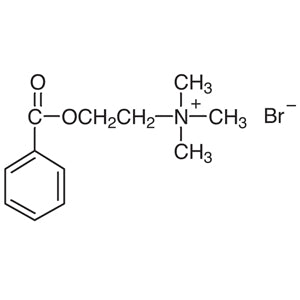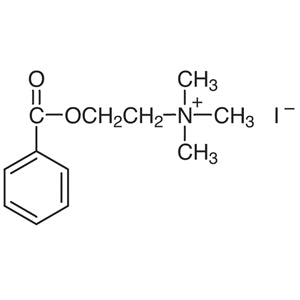
Benzoylcholine Iodide is a chemical compound widely used as a phase transfer catalyst in various chemical reactions. It plays a crucial role in laboratory settings by facilitating the transfer of ions or electrons between different phases, such as polar and non-polar environments. This ability makes it an essential tool for chemists working on complex reactions that require efficient interfacial interactions. Its presence in the lab enhances the overall efficiency of chemical processes without being consumed in the reaction itself.
One of the key properties that make Benzoylcholine Iodide a preferred choice is its chemical stability and reactivity. It maintains its effectiveness under a range of experimental conditions, making it reliable for repeated use. Additionally, its molecular structure allows it to interact with a wide variety of reactants, enhancing its versatility. These characteristics ensure that it can be applied in diverse chemical applications, contributing to the success of many laboratory experiments.
In Indonesian laboratories, Benzoylcholine Iodide is commonly used in chemical research, particularly in organic synthesis and separation processes. Its ability to act as a mediator between different phases makes it valuable in reactions where traditional methods may be less effective. As a result, it is a favored reagent among researchers and technicians working in the field of synthetic chemistry and analytical processes.
TCI brochures (PDF)
- Quaternary Ammonium Salts 2025-11-10 · p. 7
- Organic synthesis reactions benefit from Benzoylcholine Iodide as it enhances the efficiency of interfacial reactions by promoting ion transfer between phases.
- It is ideal for separation processes where the need to transfer ions or molecules between immiscible solvents is critical.
- In catalytic systems, Benzoylcholine Iodide improves reaction rates by reducing the energy required for interfacial interactions.
- It supports electrochemical studies by facilitating electron transfer across different phases in experimental setups.
- Its use in analytical chemistry helps in the detection and quantification of specific ions in complex matrices through improved phase interactions.
| Brand | TCI |
|---|---|
| CAS number | 17518-43-3 |
| Molecular formula | — |
| Purity | — |
| Category | Chemistry > Synthetic Reagents > Phase Transfer Catalysts |
| Pack sizes | Available in various quantities as per standard laboratory supply |
| Physical form | Solid or liquid, depending on the specific formulation |
| Storage | Store in a cool, dry place away from direct sunlight and moisture |
Benzoylcholine Iodide should be stored in a cool, dry environment to maintain its chemical stability. It is recommended to keep it in a tightly sealed container to prevent exposure to moisture and air, which could affect its performance. The substance is typically handled in well-ventilated areas to minimize inhalation risks. Laboratory personnel should wear appropriate personal protective equipment, such as gloves and safety goggles, when working with this compound. Proper disposal methods must be followed to ensure compliance with environmental and safety regulations. Regular monitoring of storage conditions is essential to maintain the integrity of the material for laboratory use.
—
Produk Terkait
-
BenzoylcholineChloride TCI B0107
Regular price Rp 4.293.450,00Regular priceRp 3.017.700,00Sale price Rp 4.293.450,00 -
BenzoylcholineBromide TCI B0106
Regular price Rp 1.696.800,00Regular priceRp 1.202.250,00Sale price Rp 1.696.800,00 -
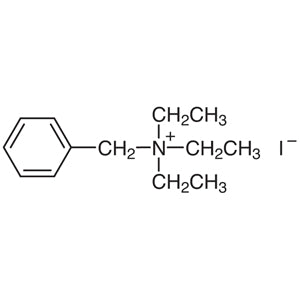
BenzyltriethylammoniumIodide TCI B0446
Regular price From Rp 1.510.950,00Regular priceRp 1.072.050,00Sale price From Rp 1.510.950,00 -
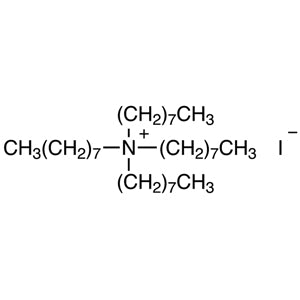
Tetra-n-octylammoniumIodide TCI T1155
Regular price Rp 6.598.200,00Regular priceRp 4.629.450,00Sale price Rp 6.598.200,00 -
TetrahexylammoniumIodide TCI T1010
Regular price From Rp 1.167.600,00Regular priceRp 831.600,00Sale price From Rp 1.167.600,00 -
TetrapropylammoniumIodide TCI T0172
Regular price From Rp 1.405.950,00Regular priceRp 998.550,00Sale price From Rp 1.405.950,00 -
TetramethylammoniumIodide TCI T0139
Regular price From Rp 900.900,00Regular priceRp 645.750,00Sale price From Rp 900.900,00 -
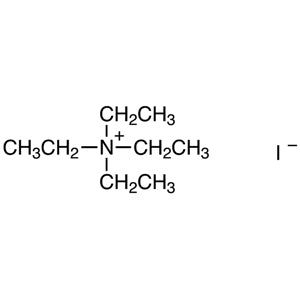
TetraethylammoniumIodide TCI T0097
Regular price From Rp 1.033.200,00Regular priceRp 738.150,00Sale price From Rp 1.033.200,00