Benzyltriethylammonium Iodide (BTEAI), with the CAS number 5400-94-2, is a chemical compound widely used as a phase transfer catalyst in various chemical reactions. It plays a crucial role in organic synthesis, particularly in reactions that require ion transfer between immiscible phases. As a phase transfer catalyst, BTEAI facilitates interactions between reactants that are otherwise insoluble in each other, thereby enhancing the efficiency and speed of the reaction. This compound is essential in laboratory settings where the goal is to optimize reaction conditions and improve yield. Its effectiveness in promoting such reactions makes it a valuable tool for chemists working on complex synthesis processes.
BTEAI is chemically stable and exhibits solubility in organic solvents such as ethyl acetate and chloroform. These properties make it a preferred choice for applications requiring a catalyst that can move between phases. Its stability ensures consistent performance across multiple reaction cycles, while its solubility allows for easy incorporation into reaction mixtures. Additionally, BTEAI has low reactivity, which contributes to its safety profile in laboratory environments. This combination of stability, solubility, and low reactivity makes it a reliable and versatile reagent for a wide range of chemical processes.
In Indonesian laboratories, BTEAI is commonly used in both fundamental and applied chemical research. It is particularly favored for its ability to enhance reaction efficiency and reliability. Its availability in solid form simplifies handling and storage, making it a practical choice for researchers. The compound's role in accelerating synthesis processes and improving reaction outcomes makes it a staple in many chemical laboratories across Indonesia.
TCI brochures (PDF)
- Quaternary Ammonium Salts 2025-11-10 · p. 7
Related TCI products
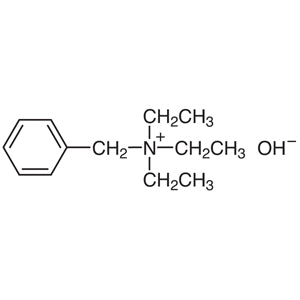
- TCI B0445 1836-42-6 Benzyltriethylammonium Hydroxide (10% in Water)
- TCI B0444 56-37-1 Benzyltriethylammonium Chloride
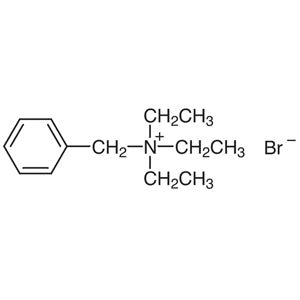
- TCI B0443 5197-95-5 Benzyltriethylammonium Bromide
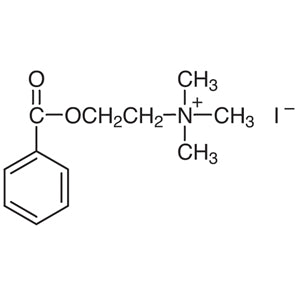
- TCI B0108 17518-43-3 Benzoylcholine Iodide
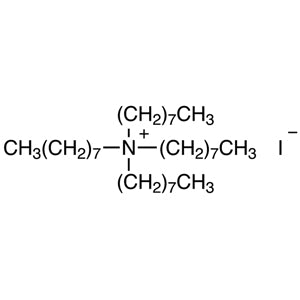
- TCI T1155 16829-91-7 Tetra-n-octylammonium Iodide
- TCI T1010 2138-24-1 Tetrahexylammonium Iodide
- Organic synthesis reactions benefit from BTEAI's ability to facilitate ion transfer between immiscible phases, enhancing reaction efficiency and yield.
- Phase transfer catalysis in heterogeneous systems relies on BTEAI's solubility and stability to promote effective interfacial reactions.
- Industrial chemical processes utilize BTEAI to improve the rate of reactions that require phase-specific interactions, reducing processing time.
- Research in analytical chemistry employs BTEAI to optimize reaction conditions for accurate and reproducible results.
- Environmental chemistry studies use BTEAI to model and improve the efficiency of pollutant degradation processes in multi-phase systems.
| Brand | TCI |
|---|---|
| CAS number | 5400-94-2 |
| Molecular formula | — |
| Purity | — |
| Category | Chemistry > Synthetic Reagents > Phase Transfer Catalysts |
| Pack sizes | Available in various quantities as per standard laboratory requirements |
| Physical form | Solid |
| Storage | Store in a cool, dry place away from moisture and direct sunlight |
BTEAI should be stored in a cool, dry environment, away from moisture and direct sunlight to maintain its chemical stability. It is recommended to use airtight containers to prevent exposure to humidity, which could affect its performance. As a solid, it is easy to handle and measure, making it suitable for routine laboratory use. General laboratory precautions include avoiding contact with skin and eyes, and ensuring proper ventilation when working with the compound. Its low reactivity ensures that it is relatively safe to handle, but standard safety protocols should still be followed to ensure a secure working environment.
—
Produk Terkait
-
BenzyltriethylammoniumHydroxide(10%inWater) TCI B0445
Regular price From Rp 1.643.250,00Regular priceRp 1.164.450,00Sale price From Rp 1.643.250,00 -
BenzyltriethylammoniumChloride TCI B0444
Regular price From Rp 505.050,00Regular priceRp 368.550,00Sale price From Rp 505.050,00 -
BenzyltriethylammoniumBromide TCI B0443
Regular price From Rp 795.900,00Regular priceRp 572.250,00Sale price From Rp 795.900,00 -
BenzoylcholineIodide TCI B0108
Regular price Rp 2.227.050,00Regular priceRp 1.572.900,00Sale price Rp 2.227.050,00 -
Tetra-n-octylammoniumIodide TCI T1155
Regular price Rp 6.598.200,00Regular priceRp 4.629.450,00Sale price Rp 6.598.200,00 -
TetrahexylammoniumIodide TCI T1010
Regular price From Rp 1.167.600,00Regular priceRp 831.600,00Sale price From Rp 1.167.600,00 -
TetrapropylammoniumIodide TCI T0172
Regular price From Rp 1.405.950,00Regular priceRp 998.550,00Sale price From Rp 1.405.950,00 -
TetramethylammoniumIodide TCI T0139
Regular price From Rp 900.900,00Regular priceRp 645.750,00Sale price From Rp 900.900,00