Benzoyl Leuco Methylene Blue, with CAS number 1249-97-4, is a chemical compound widely used in scientific and industrial applications, particularly in the field of optical and photonic materials. This compound is known for its sensitivity to heat and light, making it a valuable tool in laboratories where environmental changes need to be visually monitored. Its ability to undergo color or structural changes in response to thermal or photonic stimuli allows researchers to observe chemical reactions or material transformations with precision.
The unique properties of Benzoyl Leuco Methylene Blue make it a preferred choice for various analytical and experimental purposes. It exhibits stability under specific conditions, yet it responds reliably to external stimuli, ensuring consistent and observable results. This compound is also resistant to non-relevant chemical reactions, which minimizes interference from external factors. Its visual clarity and predictable behavior make it an essential component in experiments that require accurate and reproducible observations.
In Indonesian laboratories, Benzoyl Leuco Methylene Blue is commonly used in optical material research, thermal sensor development, and environmental response studies. Its role as a visual indicator enables scientists to track changes in chemical or physical processes effectively. Due to its reliability and ease of use, it is a favored material in both academic and industrial research settings within Indonesia.
Related TCI products
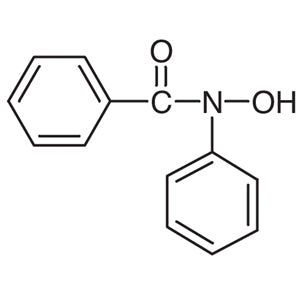
- TCI P0158 304-88-1 N-Benzoyl-N-phenylhydroxylamine
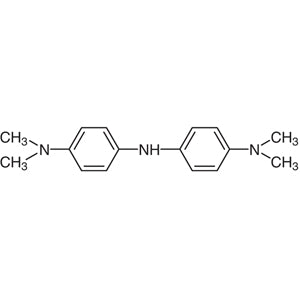
- TCI B0482 637-31-0 Bindschedler's Green Leuco Base
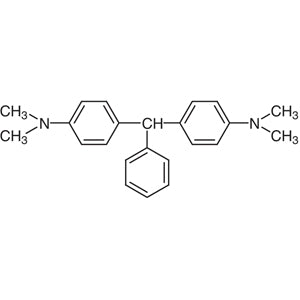
- TCI B0419 129-73-7 Leuco Malachite Green
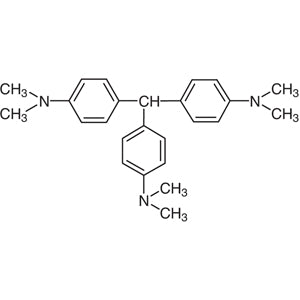
- TCI M0344 603-48-5 Leuco Crystal Violet
- TCI B5474 1335150-10-1 2-[(7-Bromo-2,1,3-benzothiadiazol-4-yl)methylene]malononitrile
- TCI B5458 704890-84-6 2-[(5'-Bromo-[2,2'-bithiophen]-5-yl)methylene]malononitrile
- Optical material research where visual response to heat or light is required for tracking material behavior.
- Thermal sensor development due to its sensitivity to temperature changes and color response.
- Environmental response studies to monitor how materials react to external stimuli in controlled settings.
- Chemical reaction monitoring in experiments that require visual indicators for thermal or photonic changes.
- Educational and research applications in Indonesian universities and research institutions for teaching and experimentation.
| Brand | TCI |
|---|---|
| CAS number | 1249-97-4 |
| Molecular formula | — |
| Purity | — |
| Category | Materials Science > Photonic Materials and Optical Materials > Heat Sensitive Dyes, Pressure Sensitive Dyes |
| Pack sizes | Available in standard laboratory quantities as per supplier specifications |
| Physical form | Solid or powder, depending on formulation |
| Storage | Store in a cool, dry place away from direct light |
Benzoyl Leuco Methylene Blue should be stored in a cool, dry environment, away from direct sunlight and sources of heat. It is recommended to use airtight containers to prevent moisture absorption and contamination. Due to its sensitivity to light, it is best kept in dark-colored or light-protected packaging. In laboratory settings, it should be handled with appropriate personal protective equipment, such as gloves and safety goggles, to ensure safety during use and storage. Regular checks for contamination or degradation are advised to maintain its effectiveness in experimental applications.
—
Produk Terkait
-
N-Benzoyl-N-phenylhydroxylamine TCI P0158
Regular price From Rp 1.483.650,00Regular priceRp 1.053.150,00Sale price From Rp 1.483.650,00 -
Bindschedler'sGreenLeucoBase TCI B0482
Regular price From Rp 6.175.050,00Regular priceRp 4.333.350,00Sale price From Rp 6.175.050,00 -
LeucoMalachiteGreen TCI B0419
Regular price From Rp 955.500,00Regular priceRp 683.550,00Sale price From Rp 955.500,00 -
LeucoCrystalViolet TCI M0344
Regular price From Rp 2.041.200,00Regular priceRp 1.442.700,00Sale price From Rp 2.041.200,00 -
2-[(7-Bromo-2,1,3-benzothiadiazol-4-yl)methylene]malononitrile TCI B5474
Regular price Rp 2.942.100,00Regular priceRp 2.072.700,00Sale price Rp 2.942.100,00 -
2-[(5'-Bromo-[2,2'-bithiophen]-5-yl)methylene]malononitrile TCI B5458
Regular price From Rp 1.351.350,00Regular priceRp 960.750,00Sale price From Rp 1.351.350,00 -
N-[Bis(methylthio)methylene]-p-toluenesulfonamide TCI B1389
Regular price Rp 2.121.000,00Regular priceRp 1.498.350,00Sale price Rp 2.121.000,00 -
MethyleneBlue[Ionassociationreagentforspectrophotometricanalysis] TCI A5105
Regular price Rp 1.008.000,00Regular priceRp 720.300,00Sale price Rp 1.008.000,00