

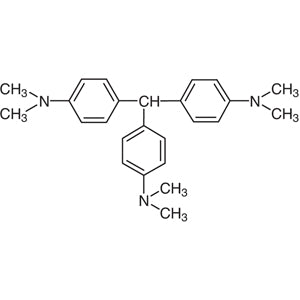
TCI M0344 Leuco Crystal Violet, commonly abbreviated as LCV, is the reduced and colorless form of the crystal violet dye. The compound belongs to the category of stains and dyes for research and experimental use, and its analytical value lies precisely in the absence of color under initial conditions. When the reagent encounters a suitable oxidizing agent, the triphenylmethane framework of LCV is oxidized back into the crystal violet cation, which carries an intense purple color. That color transition can be read visually or measured with a spectrophotometer, turning a simple chemical change into a usable analytical signal.
The characteristic that makes this reagent a preferred choice is the extraordinary color intensity of its oxidation product, which allows a test system to detect the presence of oxidants at very low levels without requiring complex instrumentation. The color response also develops quickly and remains easy to observe with the naked eye, a practical advantage for field testing and screening work alike. Because the leuco form is sensitive to oxidation by air and light, the reagent demands careful handling so that it does not turn yellow or blue before use. Its solubility is better in acidic media or in certain organic solvents than in plain water, which is a point worth planning for when preparing working solutions.
In Indonesian laboratories, TCI M0344 is typically kept as a research and screening reagent rather than a routine bulk consumable. University chemistry departments, water quality laboratories, and research institutions use it where a rapid colorimetric indication of an oxidizing species is needed and where instrumentation may be limited. Because the reagent is supplied by TCI and handled as a sensitive stain, laboratories generally order it in small quantities aligned with immediate experimental needs and store it under controlled conditions between uses.
Related TCI products
- TCI A5104 60662-33-1 Crystal Violet Nonahydrate [Ion association reagent for spectrophotometric analysis]
- TCI C2460 548-62-9 Crystal Violet [for Biochemical Research]
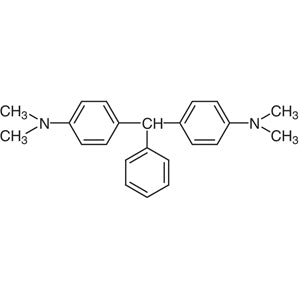
- TCI B0419 129-73-7 Leuco Malachite Green
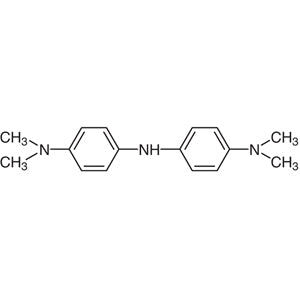
- TCI B0482 637-31-0 Bindschedler's Green Leuco Base
- TCI B0207 1249-97-4 Benzoyl Leuco Methylene Blue
- TCI A5007 14936-97-1 Xylylazo Violet I [Spectrophotometric reagent for Mg]
- Colorimetric detection of oxidizing agents: the colorless leuco form converts to intensely purple crystal violet on oxidation, giving a clear positive signal that requires no complex instrumentation to interpret.
- Spectrophotometric quantification: the strong color of the oxidation product allows absorbance measurement to be related to the extent of oxidation, supporting quantitative work in a research setting.
- Field and screening tests: the rapid, visually obvious color development makes this reagent well suited to preliminary testing outside a fully equipped laboratory environment.
- Trace-level oxidant screening: because the oxidized form is so strongly colored, test systems built on LCV can respond to oxidants present at very small concentrations.
- Research and experimental staining work: as a stains and dyes reagent, LCV supports method development and academic investigation where a redox-linked color change is the basis of the experiment.
| Brand | TCI (Tokyo Chemical Industry) |
|---|---|
| CAS number | 603-48-5 |
| Molecular formula | — |
| Purity | — |
| Category | Chemistry > Stains and Dyes (for Research and Experimental Use) > Stains and Dyes (Other) |
| Pack sizes | available in standard TCI research pack sizes; please confirm the current packaging option when ordering |
| Physical form | — |
| Storage | keep protected from light and air; see the handling section below |
- Catalog Number: M0344
Store TCI M0344 in a tightly closed original container, protected from light and from prolonged contact with air, since the leuco form is sensitive to oxidation and may discolor toward yellow or blue before use. Amber glass or an opaque, well-sealed container in a cool, dry, and well-ventilated storage area is appropriate. Handle the material in a fume hood where dust may be generated, and wear gloves, safety glasses, and a laboratory coat, as this dye stains skin, clothing, and work surfaces readily. Prepare working solutions fresh where possible, keep them away from oxidizing agents during storage, and consult the manufacturer's safety data sheet before first use.
—
Produk Terkait
-
CrystalVioletNonahydrate[Ionassociationreagentforspectrophotometricanalysis] TCI A5104
Regular price Rp 1.273.650,00Regular price -
CrystalViolet[forBiochemicalResearch] TCI C2460
Regular price Rp 823.200,00Regular price -
LeucoMalachiteGreen TCI B0419
Regular price From Rp 903.000,00Regular price -
Bindschedler'sGreenLeucoBase TCI B0482
Regular price From Rp 6.122.550,00Regular price -
BenzoylLeucoMethyleneBlue TCI B0207
Regular price From Rp 795.900,00Regular price -
XylylazoVioletI[SpectrophotometricreagentforMg] TCI A5007
Regular price From Rp 1.538.250,00Regular price -
XylylazoVioletII[SpectrophotometricreagentforMg] TCI A5006
Regular price From Rp 3.710.700,00Regular price -
TetrazoliumViolet TCI T0174
Regular price From Rp 1.644.300,00Regular price
![60662-33-1 Crystal Violet Nonahydrate [Ion association reagent for spectrophotometric analysis] - AMI Scientific](http://amiscientific.com/cdn/shop/files/TCI2510A5104.jpg?v=1767084855&width=533)
![Crystal Violet [for Biochemical Research] (CAS 548-62-9) - TCI C2460 - AMI Scientific](http://amiscientific.com/cdn/shop/files/TCI2510C2460.jpg?v=1767098360&width=533)

![14936-97-1 Xylylazo Violet I [Spectrophotometric reagent for Mg] - AMI Scientific](http://amiscientific.com/cdn/shop/files/TCI2510A5007.jpg?v=1769179450&width=533)
![523-67-1 Xylylazo Violet II [Spectrophotometric reagent for Mg] - AMI Scientific](http://amiscientific.com/cdn/shop/files/TCI2510A5006.jpg?v=1768358962&width=533)
