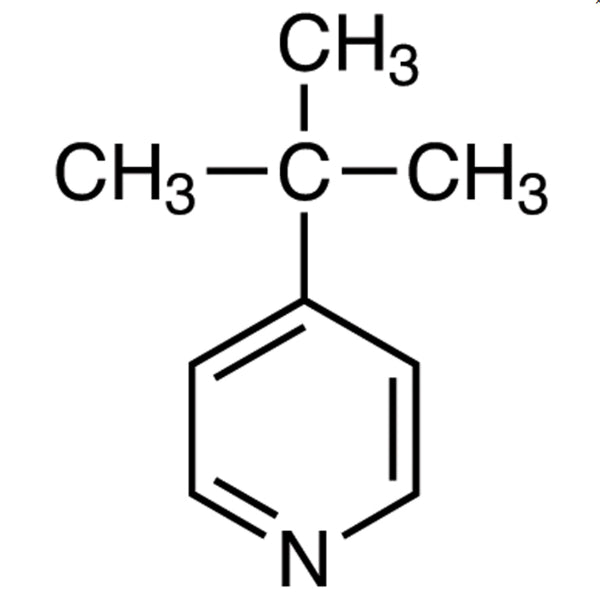
4-Tert-butylpyridine is a chemical compound widely used as a foundational building block in the synthesis of heterocyclic compounds. This compound features a pyridine ring with a tert-butyl group attached at the 4-position, contributing to its unique reactivity and structural stability. In laboratory settings, it serves as a versatile reagent for various organic reactions, particularly in the development of complex molecules. Its role is critical in both academic and industrial research, especially in the field of medicinal chemistry and materials science.
The compound’s controlled reactivity and stable molecular structure make it a preferred choice for laboratory applications. Its high boiling point and low volatility facilitate efficient separation and purification processes, enhancing the reliability of experimental outcomes. Additionally, its chemical inertness under specific conditions allows for precise control in synthetic pathways, making it an essential component in the preparation of intermediates. These properties ensure its consistent performance in diverse chemical environments.
In Indonesian laboratories, 4-tert-butylpyridine is commonly used in organic chemistry research, particularly in higher education institutions and research centers focused on heterocyclic synthesis. Its availability and high-quality standards support scientific experiments and contribute to the advancement of pharmaceutical and material sciences. The compound’s reliability and applicability in various synthetic processes make it a valuable resource for researchers in Indonesia.
TCI brochures (PDF)
- Nonvolatile Pyridine Additive for Enhanced Perovskite Solar Cell Stability 2026-07-07 · p. 1
- Hole Transport Materials for Stable Perovskite Solar Cells TOP-HTMs 2024-02-02 · p. 4
- Surface Treatment Reagent for Perovskite Solar Cells DMPESI 2024-04-05 · p. 2
- Phenylethylamine Hydroiodides for Surface Treatment of Perovskite Layer 2024-07-23 · p. 2
- Solar Cell Materials 2026-04-21 · p. 10
Related TCI products
- TCI D6024 84540-47-6 6-Hydroxy-3,4-dimethylpyridin-2(1H)-one
- TCI T3693 67490-21-5 2,4,6-Tri-tert-butylpyrimidine
- TCI A0828 42508-60-1 1-Acetonylpyridinium Chloride
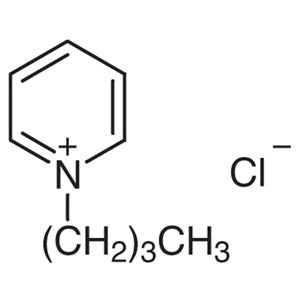
- TCI B1329 1124-64-7 1-Butylpyridinium Chloride
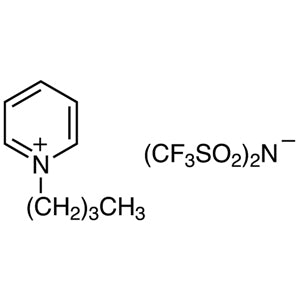
- TCI B5571 187863-42-9 1-Butylpyridinium Bis(trifluoromethanesulfonyl)imide
- TCI Z0027 168106-25-0 Zinc(II) Bis(trifluoromethanesulfonyl)imide
- Heterocyclic Compound Synthesis: This compound is ideal for the synthesis of complex heterocyclic structures due to its stable pyridine ring and reactive tert-butyl group.
- Pharmaceutical Research: It is used in the development of new drugs as a precursor for various bioactive molecules.
- Organic Reaction Studies: Its controlled reactivity makes it suitable for substitution and ring-opening reactions in organic chemistry.
- Intermediate Production: It serves as a key intermediate in the synthesis of other organic compounds with industrial applications.
- Material Science Applications: It is utilized in the creation of advanced materials due to its structural versatility and chemical stability.
| Brand | TCI |
|---|---|
| CAS number | 3978-81-2 |
| Molecular formula | — |
| Purity | — |
| Category | Chemistry > Building Blocks > Heterocyclic Building Blocks |
| Pack sizes | Available in various quantities as per standard laboratory requirements |
| Physical form | Liquid |
| Storage | Store in a cool, dry place away from light and incompatible materials |
4-Tert-butylpyridine should be stored in a cool, dry environment, away from direct sunlight and sources of heat. It is recommended to keep it in a sealed container made of materials compatible with organic solvents, such as glass or high-density polyethylene. Due to its chemical nature, it should be handled in a well-ventilated area, and appropriate personal protective equipment, including gloves and goggles, should be worn. Avoid contact with incompatible substances such as strong oxidizing agents. Regular monitoring of storage conditions ensures the compound remains stable and safe for use in laboratory settings.
—
Produk Terkait
-
6-Hydroxy-3,4-dimethylpyridin-2(1H)-one TCI D6024
Regular price From Rp 3.472.350,00Regular priceRp 2.443.350,00Sale price From Rp 3.472.350,00 -
2,4,6-Tri-tert-butylpyrimidine TCI T3693
Regular price From Rp 1.749.300,00Regular priceRp 1.239.000,00Sale price From Rp 1.749.300,00 -
1-AcetonylpyridiniumChloride TCI A0828
Regular price Rp 2.094.750,00Regular priceRp 1.464.750,00Sale price Rp 2.094.750,00 -
1-ButylpyridiniumChloride TCI B1329
Regular price From Rp 2.121.000,00Regular priceRp 1.482.600,00Sale price From Rp 2.121.000,00 -
1-ButylpyridiniumBis(trifluoromethanesulfonyl)imide TCI B5571
Regular price From Rp 2.147.250,00Regular priceRp 1.517.250,00Sale price From Rp 2.147.250,00 -
Zinc(II)Bis(trifluoromethanesulfonyl)imide TCI Z0027
Regular price From Rp 1.618.050,00Regular priceRp 1.146.600,00Sale price From Rp 1.618.050,00 -
5-Bromo-1-methylpyridin-2(1H)-one TCI B5482
Regular price Rp 2.384.550,00Regular priceRp 1.683.150,00Sale price Rp 2.384.550,00 -
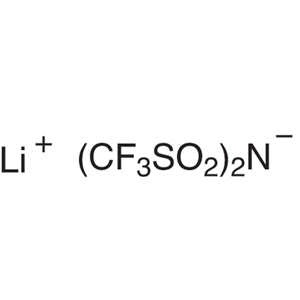
LithiumBis(trifluoromethanesulfonyl)imide TCI B2542
Regular price From Rp 1.483.650,00Regular priceRp 1.053.150,00Sale price From Rp 1.483.650,00