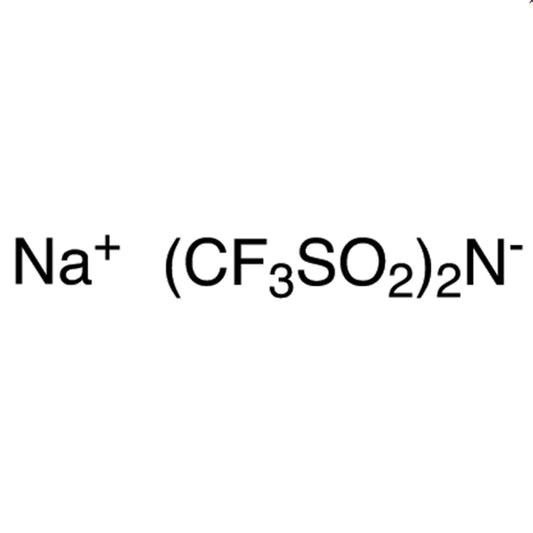
Lithium Bis(trifluoromethanesulfonyl)imide (LiBF₄) is an ionic salt widely used in modern chemical applications. It serves as a key building block in the synthesis of fluorinated compounds, particularly in reactions involving trifluorosulfonimide ions. This material is essential in laboratory settings where stability and controlled reactivity are required. Its importance extends to electrochemical applications, where it functions as an electrolyte in batteries and electrochemical cells. Due to its versatility and reliability, LiBF₄ is a staple in both organic and inorganic chemistry research.
The properties that make LiBF₄ a preferred choice include its molecular stability, high ionic conductivity, and resistance to degradation. These characteristics ensure that it remains effective under various experimental conditions. Its high melting point allows for use in high-temperature environments without significant physical changes. Additionally, LiBF₄ exhibits controlled reactivity, making it suitable for a wide range of chemical processes. These attributes make it a reliable and consistent material for laboratory use.
In Indonesian laboratories, LiBF₄ is commonly used in chemical research, especially in academic and research institutions focused on organic and electrochemical studies. It plays a vital role in the development of new materials and compounds, supporting both educational and industrial research efforts. Its availability and performance make it a standard component in many laboratory workflows across Indonesia.
TCI brochures (PDF)
- HTM Additive for Perovskite Solar Cells Achieving Effective Passivation and Doping 2026-03-12 · p. 1
- Fluorine-Free and Thermally-Stable Electrolyte for Lithium Ion Battery 2024-11-08 · p. 1
- Hole transport Material Spiro-OMeTAD 2023-10-02 · p. 1
- SEI Forming Electrolyte Additives for Lithium-Ion Batteries 2024-09-26 · p. 1
- Highly Flame-retardant Electrolyte Additive for Lithium-ion Battery TFEP 2024-12-13 · p. 1
- Hole Transport Materials for Stable Perovskite Solar Cells TOP-HTMs 2024-02-02 · p. 4
Related TCI products
- TCI L0307 119229-99-1 Lithium Bis(nonafluorobutanesulfonyl)imide
- TCI L0281 171611-11-3 Lithium Bis(fluorosulfonyl)imide
- TCI B2543 90076-67-8 Potassium Bis(trifluoromethanesulfonyl)imide
- TCI P2410 860653-59-4 Potassium (Fluorosulfonyl)(trifluoromethanesulfonyl)imide
- TCI Z0027 168106-25-0 Zinc(II) Bis(trifluoromethanesulfonyl)imide
- TCI S0989 91742-21-1 Sodium Bis(trifluoromethanesulfonyl)imide
- Electrochemical research utilizes LiBF₄ as an electrolyte due to its high ionic conductivity and stability in high-temperature environments.
- Organic synthesis benefits from LiBF₄’s role in fluorinated compound production, supporting reactions that require trifluorosulfonimide ions.
- Battery development relies on LiBF₄ for its electrochemical properties, making it suitable for advanced energy storage systems.
- Analytical chemistry employs LiBF₄ in ion mobility spectrometry and other techniques requiring stable ionic compounds.
- Materials science research uses LiBF₄ to create and test new fluorinated materials with specific chemical and physical properties.
From the TCI brochure
- Additive for the hole transport layer of perovskite solar cells (comparison baseline for OA-TFSI)
| Brand | TCI |
|---|---|
| CAS number | 90076-65-6 |
| Molecular formula | — |
| Purity | — |
| Category | Chemistry > Building Blocks > Fluorinated Building Blocks |
| Pack sizes | Available in various quantities as per standard laboratory supply |
| Physical form | Solid powder |
| Storage | Store in a cool, dry place away from moisture and direct sunlight |
LiBF₄ should be stored in a cool, dry environment to maintain its chemical stability. It is recommended to use airtight containers to prevent moisture absorption, which could affect its performance. Due to its ionic nature, it is important to handle it with care to avoid contamination. Laboratory personnel should wear appropriate personal protective equipment when working with this material. Regular inspection of storage conditions ensures that the material remains suitable for use in chemical experiments. Proper storage and handling are essential to preserve its properties and ensure safe laboratory practices.
—
Product Categories
- Battery MaterialsBattery Electrolytes [Battery Materials]Lithium Electrolytes [Battery Materials]
- Electronic MaterialsBattery MaterialsBattery Electrolytes [Battery Materials]
- Electronic MaterialsPerovskite Solar Cell (PSC) MaterialsCarrier Transport Layer Addives [Perovskite Solar Cell (PSC) Materials]
Produk Terkait
-
LithiumBis(nonafluorobutanesulfonyl)imide TCI L0307
Regular price From Rp 1.167.600,00Regular priceRp 831.600,00Sale price From Rp 1.167.600,00 -
LithiumBis(fluorosulfonyl)imide TCI L0281
Regular price From Rp 1.644.300,00Regular priceRp 1.149.750,00Sale price From Rp 1.644.300,00 -
PotassiumBis(trifluoromethanesulfonyl)imide TCI B2543
Regular price From Rp 717.150,00Regular priceRp 516.600,00Sale price From Rp 717.150,00 -
Potassium(Fluorosulfonyl)(trifluoromethanesulfonyl)imide TCI P2410
Regular price From Rp 2.041.200,00Regular priceRp 1.442.700,00Sale price From Rp 2.041.200,00 -
Zinc(II)Bis(trifluoromethanesulfonyl)imide TCI Z0027
Regular price From Rp 1.618.050,00Regular priceRp 1.146.600,00Sale price From Rp 1.618.050,00 -
SodiumBis(trifluoromethanesulfonyl)imide TCI S0989
Regular price From Rp 1.405.950,00Regular priceRp 998.550,00Sale price From Rp 1.405.950,00 -
Lithium(Fluorosulfonyl)(trifluoromethanesulfonyl)imide TCI L0295
Regular price From Rp 2.809.800,00Regular priceRp 1.980.300,00Sale price From Rp 2.809.800,00 -
Calcium(II)Bis(trifluoromethanesulfonyl)imide TCI C3263
Regular price From Rp 1.961.400,00Regular priceRp 1.387.050,00Sale price From Rp 1.961.400,00