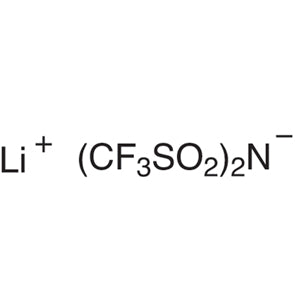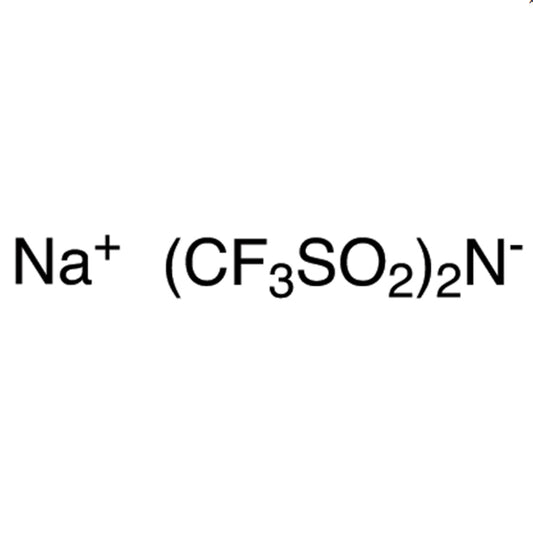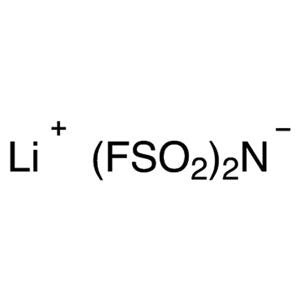
Lithium Bis(fluorosulfonyl)imide (LiBF₄) is an inorganic salt widely used in chemical reactions and catalytic processes within laboratory settings. As a key component in catalysis and inorganic chemistry, this material plays a crucial role in accelerating chemical reactions and improving the efficiency of various experimental procedures. Its strong ionic properties make it an essential reagent for both organic and inorganic synthesis, where it functions as a catalyst or a solvent. LiBF₄ is particularly valued for its ability to form highly conductive ionic solutions, which are vital in electrochemical applications and advanced catalytic systems.
One of the main reasons LiBF₄ is preferred in laboratories is its high stability under standard laboratory conditions. It exhibits excellent thermal resistance, with a high melting point, making it suitable for use in high-temperature experiments without undergoing decomposition. Additionally, its non-toxic and odorless nature ensures a safe working environment, reducing health and safety risks for laboratory personnel. These properties make it a reliable and versatile material for a wide range of chemical applications.
In Indonesian laboratories, LiBF₄ is commonly used in research related to catalysis, electrochemistry, and organic synthesis. It is a staple in academic and industrial research settings, supporting both undergraduate and postgraduate studies. Its availability through suppliers like AMI Scientific ensures that researchers have access to this essential chemical for their experiments and innovations.
Advantages (TCI brochure)
- Water content (<1000ppm) is guaranteed.
- Realizes high performance and reproducible lithium ion secondary battery.
TCI brochures (PDF)
- Fluorine-Free and Thermally-Stable Electrolyte for Lithium Ion Battery 2024-11-08 · p. 1
- SEI Forming Electrolyte Additives for Lithium-Ion Batteries 2024-09-26 · p. 1
- Highly Flame-retardant Electrolyte Additive for Lithium-ion Battery TFEP 2024-12-13 · p. 1
- High Purity and Low Water Content Sulfolane-type Electrolyte Solvent MESL 2025-06-10 · p. 1
- Practical Lithium Ion Battery Electrolytes with Low Water Content 2024-10-23 · p. 1
- Lithium Electrolytes 2026-04-06 · p. 1
Related TCI products
- TCI B2542 90076-65-6 Lithium Bis(trifluoromethanesulfonyl)imide
- TCI L0307 119229-99-1 Lithium Bis(nonafluorobutanesulfonyl)imide
- TCI P2410 860653-59-4 Potassium (Fluorosulfonyl)(trifluoromethanesulfonyl)imide
- TCI L0295 192998-62-2 Lithium (Fluorosulfonyl)(trifluoromethanesulfonyl)imide
- TCI B2543 90076-67-8 Potassium Bis(trifluoromethanesulfonyl)imide
- TCI L0146 21324-40-3 Lithium Hexafluorophosphate
- Catalysis in organic reactions due to its ability to enhance reaction rates and improve yield.
- Electrochemical applications in battery research and fuel cell development because of its high ionic conductivity.
- Inorganic synthesis processes where it acts as a solvent or catalyst for complex chemical transformations.
- Analytical chemistry for preparing ionic solutions that are stable and conductive under various experimental conditions.
- Research in materials science for developing new compounds with specific ionic properties and thermal stability.
From the TCI brochure
- Lithium ion secondary battery electrolyte
| Brand | TCI |
|---|---|
| CAS number | 171611-11-3 |
| Molecular formula | — |
| Purity | — |
| Category | Chemistry > Catalysis and Inorganic Chemistry > Metallic Salts |
| Pack sizes | Available in various quantities as per supplier specifications |
| Physical form | Solid powder |
| Storage | Store in a cool, dry place away from moisture and direct sunlight |
LiBF₄ should be stored in a cool, dry environment to maintain its chemical stability and prevent degradation. It is recommended to keep it in airtight containers to avoid exposure to moisture, which can affect its performance. Due to its non-toxic and odorless nature, it poses minimal health risks, but standard laboratory safety protocols should still be followed when handling. It is advisable to store it away from incompatible substances to ensure long-term stability. Proper labeling and secure storage are essential to prevent accidental use or contamination in a laboratory setting.
—
Product Categories
- Battery MaterialsBattery Electrolytes [Battery Materials]Lithium Electrolytes [Battery Materials]
- Electronic MaterialsBattery MaterialsBattery Electrolytes [Battery Materials]
- Electronic MaterialsPerovskite Solar Cell (PSC) MaterialsCarrier Transport Layer Addives [Perovskite Solar Cell (PSC) Materials]
Produk Terkait
-
LithiumBis(trifluoromethanesulfonyl)imide TCI B2542
Regular price From Rp 1.483.650,00Regular priceRp 1.053.150,00Sale price From Rp 1.483.650,00 -
LithiumBis(nonafluorobutanesulfonyl)imide TCI L0307
Regular price From Rp 1.167.600,00Regular priceRp 831.600,00Sale price From Rp 1.167.600,00 -
Potassium(Fluorosulfonyl)(trifluoromethanesulfonyl)imide TCI P2410
Regular price From Rp 2.041.200,00Regular priceRp 1.442.700,00Sale price From Rp 2.041.200,00 -
Lithium(Fluorosulfonyl)(trifluoromethanesulfonyl)imide TCI L0295
Regular price From Rp 2.809.800,00Regular priceRp 1.980.300,00Sale price From Rp 2.809.800,00 -
PotassiumBis(trifluoromethanesulfonyl)imide TCI B2543
Regular price From Rp 717.150,00Regular priceRp 516.600,00Sale price From Rp 717.150,00 -
LithiumHexafluorophosphate TCI L0146
Regular price From Rp 2.227.050,00Regular priceRp 1.557.150,00Sale price From Rp 2.227.050,00 -
Zinc(II)Bis(trifluoromethanesulfonyl)imide TCI Z0027
Regular price From Rp 1.618.050,00Regular priceRp 1.146.600,00Sale price From Rp 1.618.050,00 -
SodiumBis(trifluoromethanesulfonyl)imide TCI S0989
Regular price From Rp 1.405.950,00Regular priceRp 998.550,00Sale price From Rp 1.405.950,00