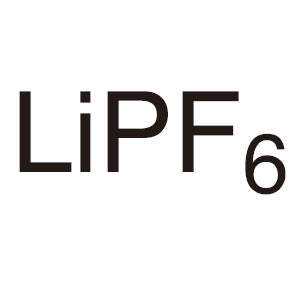
Lithium Hexafluorophosphate, widely known by the formula LiPF6, is a lithium salt that forms the backbone of electrolytes in lithium-ion battery technology. In the laboratory, this material serves as the primary source of lithium ions in the preparation of electrolyte solutions used to assemble and test experimental cells. Its role is difficult to replace because of the combination of high ionic conductivity, the ability to form a protective interphase layer on electrode surfaces, and its compatibility with the carbonate solvents that have become standard in energy storage research.
The property that makes this salt the preferred choice is the hexafluorophosphate anion, which is very weakly coordinating and electrochemically stable across the working potential range of lithium cells, allowing lithium ions to move freely without excessive side reactions. Its good solubility in carbonate solvent mixtures produces electrolytes with high conductivity. Conversely, this salt is highly sensitive to water and heat: contact with moisture can trigger decomposition that generates hazardous fluoride compounds and noticeably degrades electrolyte performance, so strictly dry conditions are essential.
In Indonesian laboratories, this material is used mainly in battery and energy storage research groups at universities and research institutes, as well as in materials development work where experimental cells are assembled and evaluated. Because the local climate is humid throughout the year, handling is normally carried out inside a glove box or a controlled dry environment, and working stock is kept small so that each container is opened as few times as possible.
Advantages (TCI brochure)
- Water content (<1000ppm) is guaranteed.
- Realizes high performance and reproducible lithium ion secondary battery.
TCI brochures (PDF)
- Fluorine-Free and Thermally-Stable Electrolyte for Lithium Ion Battery 2024-11-08 · p. 1
- SEI Forming Electrolyte Additives for Lithium-Ion Batteries 2024-09-26 · p. 1
- Highly Flame-retardant Electrolyte Additive for Lithium-ion Battery TFEP 2024-12-13 · p. 1
- High Purity and Low Water Content Sulfolane-type Electrolyte Solvent MESL 2025-06-10 · p. 1
- Practical Lithium Ion Battery Electrolytes with Low Water Content 2024-10-23 · p. 1
- Lithium Electrolytes 2026-04-06 · p. 1
Related TCI products
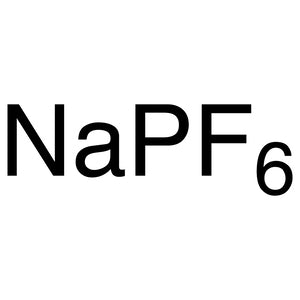
- TCI S0392 21324-39-0 Sodium Hexafluorophosphate
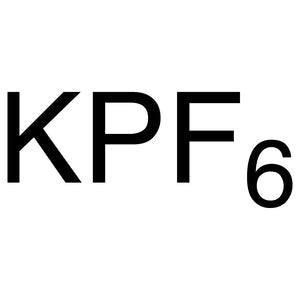
- TCI P1023 17084-13-8 Potassium Hexafluorophosphate
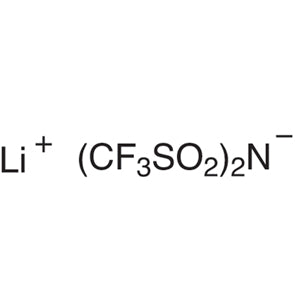
- TCI B2542 90076-65-6 Lithium Bis(trifluoromethanesulfonyl)imide
- TCI L0307 119229-99-1 Lithium Bis(nonafluorobutanesulfonyl)imide
- TCI L0281 171611-11-3 Lithium Bis(fluorosulfonyl)imide
- TCI S0981 26042-63-7 Silver Hexafluorophosphate
- Lithium-ion electrolyte formulation: supplies the conducting lithium salt dissolved in carbonate solvent mixtures, giving the high ionic conductivity that coin cell and pouch cell experiments require for meaningful results.
- Coin cell assembly and testing: provides a reproducible baseline electrolyte so that measured capacity and rate behaviour can be attributed to the electrode material under study rather than to electrolyte variation.
- Electrode interphase studies: forms a protective interphase layer on electrode surfaces, making it the reference salt for investigating passivation film formation, growth, and stability during cycling.
- Electrochemical stability window measurements: the weakly coordinating hexafluorophosphate anion resists oxidation and reduction across the working potential range, allowing clean voltammetric and impedance characterisation of cell components.
- Energy storage materials screening: serves as the standard electrolyte salt when comparing candidate cathode and anode materials, so results from different laboratories remain directly comparable to published work.
From the TCI brochure
- Lithium ion secondary battery electrolyte
| Brand | TCI |
|---|---|
| CAS number | 21324-40-3 |
| Molecular formula | — |
| Purity | — |
| Category | Chemistry > Catalysis and Inorganic Chemistry > Metallic Salts [Catalysis and Inorganic Chemistry] |
| Pack sizes | available in standard laboratory pack sizes as listed on the product page |
| Physical form | — |
| Storage | moisture-sensitive and heat-sensitive material; store under strictly dry conditions |
- Catalogue number: L0146
Store this salt in a tightly closed original container under strictly dry conditions, protected from moisture and heat, and keep it away from water sources and humid air. Transfer and weighing are best performed inside a glove box or another controlled dry environment, using dry glassware or chemically compatible plastic containers and dry handling tools. Work in a fume hood where dust or decomposition products may be released, and wear gloves, safety goggles, and a laboratory coat. Close containers immediately after use to limit moisture exposure, and consult the supplier safety data sheet before handling and for disposal of residues.
—
Product Categories
- Battery MaterialsBattery Electrolytes [Battery Materials]Lithium Electrolytes [Battery Materials]
- Electronic MaterialsBattery MaterialsBattery Electrolytes [Battery Materials]
- Electronic MaterialsPerovskite Solar Cell (PSC) MaterialsCarrier Transport Layer Addives [Perovskite Solar Cell (PSC) Materials]
Produk Terkait
-
SodiumHexafluorophosphate TCI S0392
Regular price Rp 2.121.000,00Regular priceRp 1.482.600,00Sale price Rp 2.121.000,00 -
PotassiumHexafluorophosphate TCI P1023
Regular price From Rp 689.850,00Regular priceRp 481.950,00Sale price From Rp 689.850,00 -
LithiumBis(trifluoromethanesulfonyl)imide TCI B2542
Regular price From Rp 1.483.650,00Regular priceRp 1.053.150,00Sale price From Rp 1.483.650,00 -
LithiumBis(nonafluorobutanesulfonyl)imide TCI L0307
Regular price From Rp 1.167.600,00Regular priceRp 831.600,00Sale price From Rp 1.167.600,00 -
LithiumBis(fluorosulfonyl)imide TCI L0281
Regular price From Rp 1.644.300,00Regular priceRp 1.149.750,00Sale price From Rp 1.644.300,00 -
SilverHexafluorophosphate TCI S0981
Regular price From Rp 1.829.100,00Regular priceRp 1.278.900,00Sale price From Rp 1.829.100,00 -
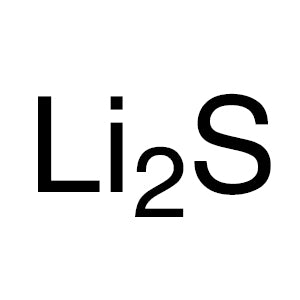
LithiumSulfide TCI L0364
Regular price From Rp 2.491.650,00Regular priceRp 1.741.950,00Sale price From Rp 2.491.650,00 -
LithiumIodide(999%,tracemetalsbasis)(Lowwatercontent) TCI L0212
Regular price From Rp 1.618.050,00Regular priceRp 1.146.600,00Sale price From Rp 1.618.050,00