1-Butylpyridinium Chloride is a chemical compound classified under the category of ionic liquids, widely utilized in laboratory settings for its unique properties. This material serves as a versatile solvent, reaction medium, or auxiliary in the synthesis of complex organic compounds. Due to its non-volatile nature and high boiling point, it is particularly suitable for continuous reaction processes or in enclosed environments. Its ionic structure allows it to function effectively as an organic solvent for various types of compounds, making it a valuable tool in modern chemical research.
The properties that make 1-Butylpyridinium Chloride a preferred choice include its non-toxic and non-flammable nature, which enhances safety compared to traditional organic solvents. It also exhibits low viscosity, enabling its use across a wide range of reaction scales, from small to large. These characteristics contribute to its reliability and efficiency in chemical applications. Additionally, its stability under various conditions ensures consistent performance in laboratory experiments.
In Indonesian laboratories, 1-Butylpyridinium Chloride is commonly used in scientific research, especially in the fields of organic chemistry and synthesis. Its role in facilitating chemical reactions and its compatibility with a variety of compounds make it an essential component in both academic and industrial research settings. Its application supports the development of new chemical processes and materials, contributing to the advancement of scientific knowledge.
TCI brochures (PDF)
- Ionic Liquids 2026-06-08 · p. 10
Related TCI products
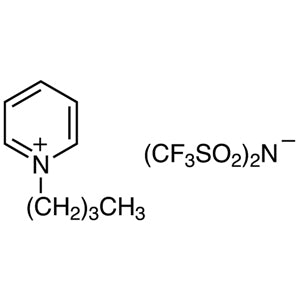
- TCI B5571 187863-42-9 1-Butylpyridinium Bis(trifluoromethanesulfonyl)imide
- TCI M3199 742086-10-8 1-Methylpyridinium Bis(trifluoromethanesulfonyl)imide
- TCI B5763 475681-62-0 1-Butyl-4-methylpyridinium Bis(trifluoromethanesulfonyl)imide
- TCI P1393 23271-47-8 1-Propylpyridinium Chloride
- TCI T2106 5810-42-4 Tetrapropylammonium Chloride
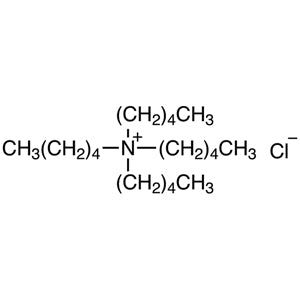
- TCI T1433 4965-17-7 Tetraamylammonium Chloride
- Organic synthesis reactions benefit from 1-Butylpyridinium Chloride as it provides a stable and non-volatile medium for complex chemical transformations.
- It is ideal for green chemistry applications due to its low toxicity and reduced environmental impact compared to conventional solvents.
- In catalytic processes, this ionic liquid supports the efficient and selective reactions required for advanced chemical transformations.
- It is used in electrochemical studies as a non-volatile electrolyte that maintains conductivity without evaporating during experiments.
- For high-temperature reactions, its high boiling point ensures it remains in liquid form, maintaining reaction conditions without phase changes.
| Brand | TCI |
|---|---|
| CAS number | 1124-64-7 |
| Molecular formula | — |
| Purity | — |
| Category | Chemistry > Specialty Synthesis > Ionic Liquids |
| Pack sizes | Available in various quantities as per supplier specifications |
| Physical form | Liquid |
| Storage | Store in a cool, dry place away from direct sunlight |
1-Butylpyridinium Chloride should be stored in a cool, dry place, away from direct sunlight and sources of heat. It is recommended to use sealed containers made of materials compatible with ionic liquids, such as glass or high-density polyethylene. Due to its non-volatile nature, it does not require special containment for vapor control. However, it should be handled with care to prevent spills or contamination. In laboratory settings, it is advisable to store it in a well-ventilated area, even though it is non-flammable. Always ensure that the container is properly labeled and that appropriate safety measures are followed when handling this material.
—
Produk Terkait
-
1-ButylpyridiniumBis(trifluoromethanesulfonyl)imide TCI B5571
Regular price From Rp 2.147.250,00Regular priceRp 1.517.250,00Sale price From Rp 2.147.250,00 -
1-MethylpyridiniumBis(trifluoromethanesulfonyl)imide TCI M3199
Regular price Rp 3.870.300,00Regular priceRp 2.721.600,00Sale price Rp 3.870.300,00 -
1-Butyl-4-methylpyridiniumBis(trifluoromethanesulfonyl)imide TCI B5763
Regular price From Rp 955.500,00Regular priceRp 683.550,00Sale price From Rp 955.500,00 -
1-PropylpyridiniumChloride TCI P1393
Regular price Rp 5.432.700,00Regular priceRp 3.798.900,00Sale price Rp 5.432.700,00 -
TetrapropylammoniumChloride TCI T2106
Regular price Rp 1.908.900,00Regular priceRp 1.350.300,00Sale price Rp 1.908.900,00 -
TetraamylammoniumChloride TCI T1433
Regular price From Rp 3.551.100,00Regular priceRp 2.499.000,00Sale price From Rp 3.551.100,00 -
1-Butyl-1-methylpyrrolidiniumChloride TCI B3358
Regular price From Rp 1.326.150,00Regular priceRp 942.900,00Sale price From Rp 1.326.150,00 -
1-Butyl-2,3-dimethylimidazoliumChloride TCI B2473
Regular price From Rp 980.700,00Regular priceRp 701.400,00Sale price From Rp 980.700,00