Benzyltrimethylammonium Chloride (BTMAC), with the CAS number 56-93-9, is a synthetic reagent widely used as a phase transfer catalyst in chemical reactions. It plays a crucial role in laboratory settings by facilitating the transfer of reactants between immiscible phases, such as polar and non-polar solvents. This ability significantly enhances reaction efficiency and reduces the need for extensive purification steps. Its ionically structured nature allows it to act as a mediator, bridging the gap between different solvent systems and promoting homogeneous reaction conditions.
BTMAC is favored for its chemical stability under normal conditions and its resistance to degradation. It is highly hygroscopic, meaning it readily absorbs moisture from the air, which necessitates careful storage. Despite this, its effectiveness in catalyzing a wide range of organic reactions makes it a reliable and versatile reagent. Its non-toxicity and ease of handling further contribute to its popularity in both academic and industrial research environments.
In Indonesian laboratories, BTMAC is commonly employed in organic chemistry research, complex compound synthesis, and catalytic method development. Its ability to enhance reaction efficiency without altering the molecular structure of reactants makes it an ideal choice for various chemical applications. It is particularly valuable in educational institutions and research facilities that require high-quality reagents for scientific experiments and innovation.
TCI brochures (PDF)
- Quaternary Ammonium Salts 2025-11-10 · p. 4
Related TCI products
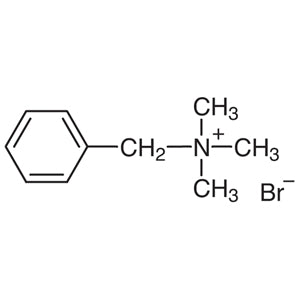
- TCI B2980 5350-41-4 Benzyltrimethylammonium Bromide
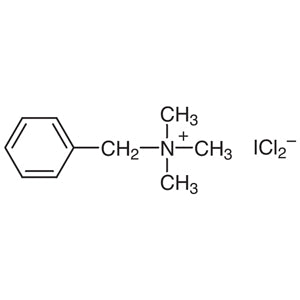
- TCI B1604 114971-52-7 Benzyltrimethylammonium Dichloroiodate
- TCI A0208 139-08-2 Benzyldimethyltetradecylammonium Chloride
- TCI T4175 1516-27-4 N,N,N-Trimethylprop-2-en-1-aminium Chloride
- TCI T2873 56375-79-2 Tributylmethylammonium Chloride (ca. 75% in water)
- TCI T2106 5810-42-4 Tetrapropylammonium Chloride
- Organic synthesis reactions benefit from BTMAC’s ability to bridge polar and non-polar phases, enhancing reaction rates and yield.
- Complex compound synthesis often utilizes BTMAC to facilitate efficient phase transfer, simplifying multi-step processes.
- Catalytic method development relies on BTMAC’s stability and effectiveness in promoting homogeneous reaction conditions.
- Educational research in chemistry laboratories uses BTMAC to demonstrate phase transfer catalysis principles in practical experiments.
- Industrial chemical processes incorporate BTMAC to improve the efficiency of reactions involving diverse solvent systems.
| Brand | TCI |
|---|---|
| CAS number | 56-93-9 |
| Molecular formula | — |
| Purity | — |
| Category | Chemistry > Synthetic Reagents > Phase Transfer Catalysts |
| Pack sizes | Available in various quantities as per standard laboratory supply |
| Physical form | Solid powder |
| Storage | Must be stored in airtight containers to prevent moisture absorption |
BTMAC should be stored in a cool, dry place away from direct sunlight and moisture. Due to its hygroscopic nature, it is essential to use airtight containers to prevent absorption of atmospheric humidity, which can affect its performance. The material should be kept in a well-ventilated area to ensure safe handling. It is recommended to use gloves and appropriate personal protective equipment when handling BTMAC to avoid skin contact. Regular inspection of storage containers is advised to ensure they remain sealed and intact. Proper labeling and storage conditions help maintain the reagent’s effectiveness and safety in laboratory environments.
—
Produk Terkait
-
BenzyltrimethylammoniumBromide TCI B2980
Regular price Rp 1.961.400,00Regular priceRp 1.387.050,00Sale price Rp 1.961.400,00 -
BenzyltrimethylammoniumDichloroiodate TCI B1604
Regular price From Rp 1.192.800,00Regular priceRp 849.450,00Sale price From Rp 1.192.800,00 -
BenzyldimethyltetradecylammoniumChloride TCI A0208
Regular price From Rp 662.550,00Regular priceRp 478.800,00Sale price From Rp 662.550,00 -
N,N,N-Trimethylprop-2-en-1-aminiumChloride TCI T4175
Regular price From Rp 1.538.250,00Regular priceRp 1.090.950,00Sale price From Rp 1.538.250,00 -
TributylmethylammoniumChloride(ca.75%inwater) TCI T2873
Regular price From Rp 900.900,00Regular priceRp 645.750,00Sale price From Rp 900.900,00 -
TetrapropylammoniumChloride TCI T2106
Regular price Rp 1.908.900,00Regular priceRp 1.350.300,00Sale price Rp 1.908.900,00 -
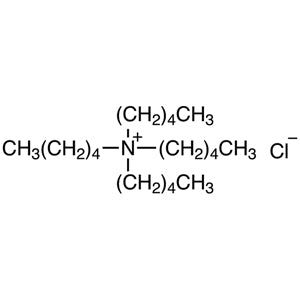
TetraamylammoniumChloride TCI T1433
Regular price From Rp 3.551.100,00Regular priceRp 2.499.000,00Sale price From Rp 3.551.100,00 -
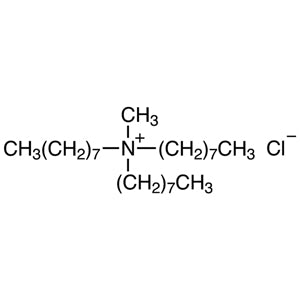
Methyltri-n-octylammoniumChloride TCI T1365
Regular price From Rp 1.483.650,00Regular priceRp 1.053.150,00Sale price From Rp 1.483.650,00