Benzyltrimethylammonium Dichloroiodate (TCI B1604) is a chemical compound widely used as a phase transfer catalyst in laboratory settings. This reagent plays a crucial role in facilitating chemical reactions between immiscible phases, such as water and organic solvents. Its ability to transfer ions between these phases enhances the efficiency and speed of chemical processes. In synthetic chemistry, it is particularly valuable for reactions that require the movement of reactive ions across different phases. Its application is essential in modern laboratory practices where complex chemical transformations are common.
The compound is known for its chemical stability and high reactivity, making it a preferred choice for various synthetic applications. Its ionic structure allows for effective ion transfer, which is critical in reactions that depend on the movement of ions between phases. The compound’s resistance to degradation under normal laboratory conditions ensures consistent performance and reliability. These properties make it suitable for a wide range of chemical reactions, especially those involving organic synthesis and catalytic processes. Its versatility and effectiveness have made it a staple in many research laboratories.
In Indonesian laboratories, Benzyltrimethylammonium Dichloroiodate is commonly used in chemical research, particularly in organic synthesis and catalytic applications. It is a key reagent in academic and industrial settings where efficient phase transfer is required. Its role in accelerating complex chemical reactions has made it an essential component in both educational and research institutions. Its widespread use highlights its importance in advancing chemical processes in the region.
TCI brochures (PDF)
- Halogenation Reagents 2026-04-03 · p. 6
- Quaternary Ammonium Salts 2025-11-10 · p. 10
Related TCI products
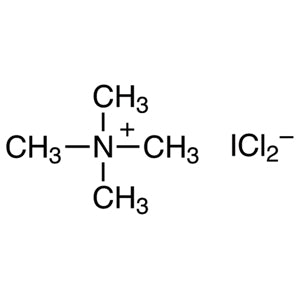
- TCI T2717 1838-41-1 Tetramethylammonium Dichloroiodate
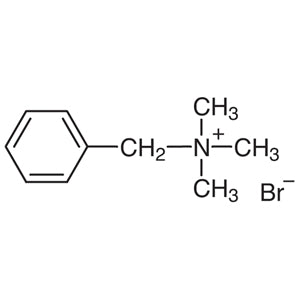
- TCI B2980 5350-41-4 Benzyltrimethylammonium Bromide
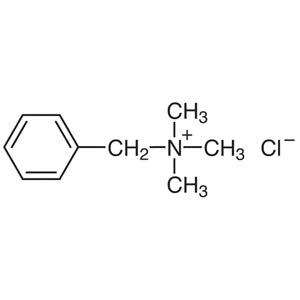
- TCI B0447 56-93-9 Benzyltrimethylammonium Chloride
- TCI B1543 121309-88-4 Benzyltrimethylammonium Tetrachloroiodate [Chlorinating Reagent]
- TCI T1382 111865-47-5 Benzyltrimethylammonium Tribromide [Brominating Reagent]
- TCI O0178 10108-86-8 n-Octyltrimethylammonium Chloride
- Organic synthesis reactions benefit from this catalyst due to its ability to transfer ions between aqueous and organic phases, enhancing reaction efficiency and yield.
- Phase transfer catalysis in heterogeneous systems is optimized by this compound, allowing for more effective mixing and reaction between immiscible phases.
- Industrial chemical processes utilize this reagent to improve the rate and selectivity of reactions involving polar and non-polar substances.
- Academic research in chemical engineering and analytical chemistry relies on this compound for its consistent performance in controlled laboratory environments.
- Catalytic processes in the development of new pharmaceutical compounds often incorporate this material to facilitate complex molecular transformations.
| Brand | TCI |
|---|---|
| CAS number | 114971-52-7 |
| Molecular formula | — |
| Purity | — |
| Category | Chemistry > Synthetic Reagents > Phase Transfer Catalysts |
| Pack sizes | Available in various quantities as per supplier specifications |
| Physical form | Solid powder |
| Storage | Store in a cool, dry place away from moisture and direct sunlight |
This compound should be stored in a cool, dry environment to maintain its chemical stability and prevent degradation. It is recommended to keep it in a sealed container to avoid exposure to moisture, which can affect its performance. Proper ventilation is essential when handling the material to minimize inhalation risks. The container should be made of a material resistant to chemical corrosion, such as glass or high-density polyethylene. Laboratory personnel should wear appropriate personal protective equipment, including gloves and safety goggles, when handling this reagent. It is important to ensure that the storage area is inaccessible to children and unauthorized individuals to maintain safety standards.
—
Product Categories
Produk Terkait
-
TetramethylammoniumDichloroiodate TCI T2717
Regular price Rp 3.074.400,00Regular priceRp 2.165.100,00Sale price Rp 3.074.400,00 -
BenzyltrimethylammoniumBromide TCI B2980
Regular price Rp 1.961.400,00Regular priceRp 1.387.050,00Sale price Rp 1.961.400,00 -
BenzyltrimethylammoniumChloride TCI B0447
Regular price From Rp 610.050,00Regular priceRp 442.050,00Sale price From Rp 610.050,00 -
BenzyltrimethylammoniumTetrachloroiodate[ChlorinatingReagent] TCI B1543
Regular price Rp 4.611.600,00Regular priceRp 3.240.300,00Sale price Rp 4.611.600,00 -
BenzyltrimethylammoniumTribromide[BrominatingReagent] TCI T1382
Regular price From Rp 875.700,00Regular priceRp 627.900,00Sale price From Rp 875.700,00 -
n-OctyltrimethylammoniumChloride TCI O0178
Regular price From Rp 1.220.100,00Regular priceRp 868.350,00Sale price From Rp 1.220.100,00 -
n-OctyltrimethylammoniumBromide TCI O0163
Regular price From Rp 1.351.350,00Regular priceRp 960.750,00Sale price From Rp 1.351.350,00 -
HexyltrimethylammoniumBromide TCI H0534
Regular price From Rp 2.411.850,00Regular priceRp 1.702.050,00Sale price From Rp 2.411.850,00