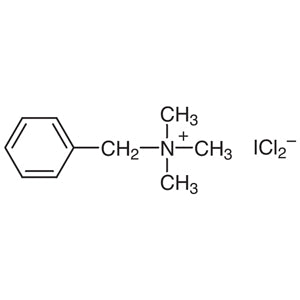
Benzyltrimethylammonium Tetrachloroiodate (TCI B1543), with CAS number 121309-88-4, is a chemical reagent widely used in laboratory settings for chlorination reactions. This compound plays a crucial role in organic synthesis, particularly in the formation of C-X (halogen) bonds, which are essential in various synthetic pathways. Its ability to introduce chlorine atoms into organic molecules makes it a valuable tool for chemists working on functional group transformations and molecular modifications. As a chlorinating agent, it is commonly employed in substitution reactions involving aromatic and aliphatic compounds.
The chemical properties of Benzyltrimethylammonium Tetrachloroiodate make it a preferred choice for laboratory applications. It exhibits high reactivity and stability, allowing it to function effectively as a chlorinating reagent under controlled conditions. Its ionic structure enables it to dissolve easily in organic solvents, enhancing its utility in diverse synthetic reactions. Additionally, its strong reactivity ensures efficient participation in chemical transformations, making it suitable for a wide range of laboratory experiments. These characteristics contribute to its reliability and effectiveness in both research and educational settings.
In Indonesian laboratories, this reagent is frequently used in chemical research and academic institutions. It is a key component in experiments focused on organic synthesis, particularly in the context of halogen substitution reactions. Its availability in the local market supports the needs of researchers and educators, facilitating access to essential reagents for scientific investigations. The compound's role in advancing chemical research in Indonesia underscores its importance in the scientific community.
TCI brochures (PDF)
- Halogenation Reagents 2026-04-03 · p. 6
- Quaternary Ammonium Salts 2025-11-10 · p. 10
Related TCI products
- TCI B1604 114971-52-7 Benzyltrimethylammonium Dichloroiodate
- TCI T1382 111865-47-5 Benzyltrimethylammonium Tribromide [Brominating Reagent]
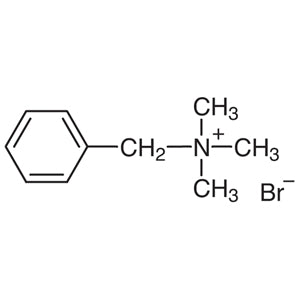
- TCI B2980 5350-41-4 Benzyltrimethylammonium Bromide
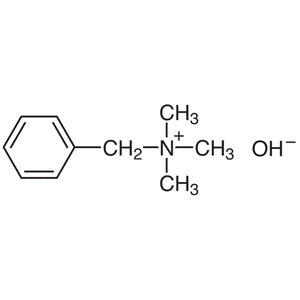
- TCI B1071 100-85-6 Benzyltrimethylammonium Hydroxide (40% in Water)
- TCI B1070 100-85-6 Benzyltrimethylammonium Hydroxide (10% in Water)
- TCI B0448 100-85-6 Benzyltrimethylammonium Hydroxide (40% in Methanol)
- Halogen Substitution Reactions: This reagent is ideal for substituting halogen atoms in aromatic and aliphatic compounds, enabling the synthesis of various organic molecules.
- Organic Synthesis Experiments: It is commonly used in laboratory settings to introduce chlorine atoms into organic structures, supporting the development of new compounds.
- Chemical Education: Its application in academic institutions aids students in understanding chlorination processes and synthetic methodologies.
- Research and Development: The reagent's effectiveness in creating C-X bonds makes it a valuable tool for advanced chemical research projects.
- Industrial Chemical Processes: It is utilized in industrial applications where controlled chlorination of organic compounds is required for product development.
| Brand | TCI |
|---|---|
| CAS number | 121309-88-4 |
| Molecular formula | — |
| Purity | — |
| Category | Chemistry > Synthetic Reagents > C-X(Halogen) Bond Formation |
| Pack sizes | Available in various quantities as per standard laboratory supply |
| Physical form | Solid powder or crystalline form |
| Storage | Store in a cool, dry place away from moisture and direct sunlight |
This reagent should be stored in a cool, dry place, away from moisture and direct sunlight to maintain its chemical integrity. It is recommended to use airtight containers to prevent exposure to air and humidity, which could affect its reactivity. Due to its chemical nature, it should be handled with appropriate personal protective equipment, such as gloves and safety goggles, to ensure laboratory safety. It is important to store it separately from incompatible substances to avoid any potential chemical reactions. Proper labeling and storage conditions are essential to ensure the reagent remains effective and safe for use in laboratory environments.
—
Produk Terkait
-
BenzyltrimethylammoniumDichloroiodate TCI B1604
Regular price From Rp 1.192.800,00Regular priceRp 849.450,00Sale price From Rp 1.192.800,00 -
BenzyltrimethylammoniumTribromide[BrominatingReagent] TCI T1382
Regular price From Rp 875.700,00Regular priceRp 627.900,00Sale price From Rp 875.700,00 -
BenzyltrimethylammoniumBromide TCI B2980
Regular price Rp 1.961.400,00Regular priceRp 1.387.050,00Sale price Rp 1.961.400,00 -
BenzyltrimethylammoniumHydroxide(40%inWater) TCI B1071
Regular price From Rp 742.350,00Regular priceRp 534.450,00Sale price From Rp 742.350,00 -
BenzyltrimethylammoniumHydroxide(10%inWater) TCI B1070
Regular price From Rp 795.900,00Regular priceRp 572.250,00Sale price From Rp 795.900,00 -
BenzyltrimethylammoniumHydroxide(40%inMethanol) TCI B0448
Regular price From Rp 582.750,00Regular priceRp 423.150,00Sale price From Rp 582.750,00 -
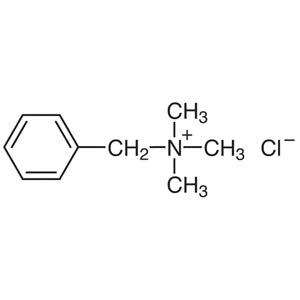
BenzyltrimethylammoniumChloride TCI B0447
Regular price From Rp 610.050,00Regular priceRp 442.050,00Sale price From Rp 610.050,00 -
BenzyltrimethylammoniumHydroxide(10%inWater) TCI B0428
Regular price Rp 1.087.800,00Regular priceRp 775.950,00Sale price Rp 1.087.800,00