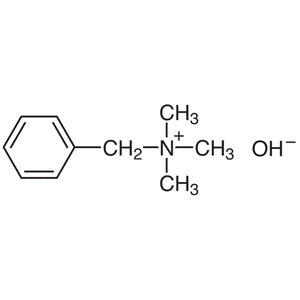
Benzyltrimethylammonium Hydroxide (40% in Methanol), also known as TCI B0448, is a synthetic reagent widely used in organic chemistry laboratories. This compound serves as a strong base, playing a crucial role in various synthetic reactions that require basic conditions. Its ability to act as an effective organic base makes it a valuable tool for chemists working on complex molecule synthesis. It is commonly used as a catalyst or reagent in reactions that involve the formation of new chemical bonds, particularly in the context of nucleophilic substitutions and other base-catalyzed processes.
One of the key properties that make this compound a preferred choice is its stability and reactivity under controlled laboratory conditions. The 40% concentration in methanol provides a balance between reactivity and safety, making it suitable for a wide range of applications. Additionally, its solubility in organic solvents enhances its utility in various experimental setups. The compound’s consistent performance and predictable behavior in chemical reactions contribute to its reliability in both academic and industrial research environments.
In Indonesian laboratories, Benzyltrimethylammonium Hydroxide is extensively used in chemical research, particularly in the fields of organic synthesis and analytical chemistry. It is a common reagent found in research and industrial laboratories, supporting a variety of experiments that require basic conditions. Its versatility and effectiveness make it an essential component in the chemical toolkit of Indonesian scientists and researchers.
TCI brochures (PDF)
- Quaternary Ammonium Salts 2025-11-10 · p. 2
Related TCI products
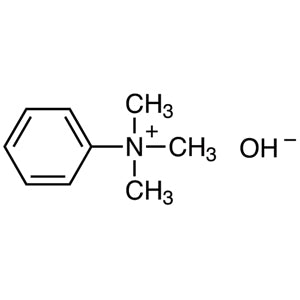
- TCI T3610 1899-02-1 Trimethylphenylammonium Hydroxide (ca. 8.5% in Methanol)
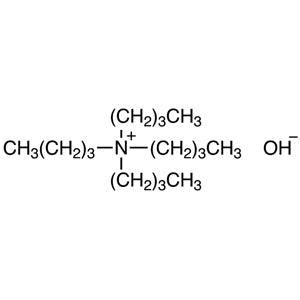
- TCI T1948 2052-49-5 Tetrabutylammonium Hydroxide (37% in Methanol)
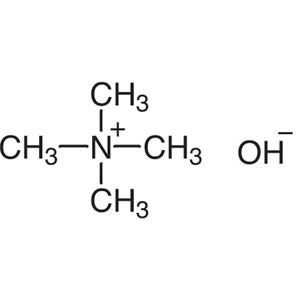
- TCI T1201 75-59-2 Tetramethylammonium Hydroxide (10% in Methanol) [for Photoresist Research]
- TCI B1071 100-85-6 Benzyltrimethylammonium Hydroxide (40% in Water)
- TCI B1070 100-85-6 Benzyltrimethylammonium Hydroxide (10% in Water)
- TCI B0428 100-85-6 Benzyltrimethylammonium Hydroxide (10% in Water)
- Organic Synthesis: This reagent is ideal for organic synthesis due to its strong basic properties, enabling efficient nucleophilic reactions and bond formation.
- Catalytic Reactions: It functions as an effective catalyst in various reactions, enhancing reaction rates and selectivity under basic conditions.
- Analytical Chemistry: Its use in analytical chemistry allows for precise pH control and reaction monitoring in complex sample analyses.
- Solvent Compatibility: The 40% methanol solution ensures compatibility with a wide range of organic solvents, facilitating diverse experimental setups.
- Base-Catalyzed Reactions: It is frequently used in base-catalyzed reactions, where maintaining a controlled basic environment is essential for reaction success.
| Brand | TCI |
|---|---|
| CAS number | 100-85-6 |
| Molecular formula | — |
| Purity | — |
| Category | Chemistry > Synthetic Reagents > Acids, Bases [Synthetic Reagents] |
| Pack sizes | 100g, 500g, 1kg |
| Physical form | Liquid |
| Storage | Store in a cool, dry place away from direct sunlight and incompatible materials. |
This compound should be stored in a cool, dry place, away from direct sunlight and incompatible materials. It is recommended to use airtight containers to prevent moisture absorption and contamination. Due to its basic nature, it should be handled with appropriate personal protective equipment, including gloves and safety goggles. It is important to ensure good ventilation when working with this reagent to avoid inhalation of vapors. Avoid contact with skin and eyes, and in case of exposure, rinse thoroughly with water. Proper labeling and storage conditions help maintain the stability and effectiveness of the reagent in laboratory settings.
—
Produk Terkait
-
TrimethylphenylammoniumHydroxide(ca.8.5%inMethanol) TCI T3610
Regular price From Rp 1.087.800,00Regular priceRp 775.950,00Sale price From Rp 1.087.800,00 -
TetrabutylammoniumHydroxide(37%inMethanol) TCI T1948
Regular price Rp 662.550,00Regular priceRp 478.800,00Sale price Rp 662.550,00 -
TetramethylammoniumHydroxide(10%inMethanol)[forPhotoresistResearch] TCI T1201
Regular price Rp 2.227.050,00Regular priceRp 1.572.900,00Sale price Rp 2.227.050,00 -
BenzyltrimethylammoniumHydroxide(40%inWater) TCI B1071
Regular price From Rp 742.350,00Regular priceRp 534.450,00Sale price From Rp 742.350,00 -
BenzyltrimethylammoniumHydroxide(10%inWater) TCI B1070
Regular price From Rp 795.900,00Regular priceRp 572.250,00Sale price From Rp 795.900,00 -
BenzyltrimethylammoniumHydroxide(10%inWater) TCI B0428
Regular price Rp 1.087.800,00Regular priceRp 775.950,00Sale price Rp 1.087.800,00 -
TetrabutylammoniumHydroxide(10%inMethanol) TCI T0717
Regular price From Rp 557.550,00Regular priceRp 405.300,00Sale price From Rp 557.550,00 -
TetramethylammoniumHydroxide(10%inMethanol) TCI T0676
Regular price From Rp 557.550,00Regular priceRp 405.300,00Sale price From Rp 557.550,00