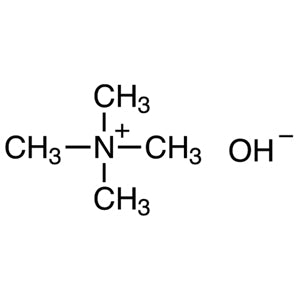
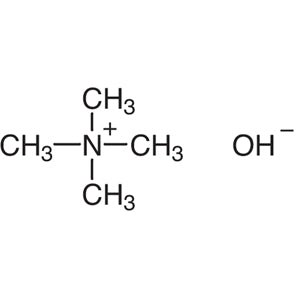
Tetramethylammonium Hydroxide (10% in Methanol) is a chemical compound commonly used in synthetic chemistry applications. It serves as a strong base and is widely utilized in laboratory settings for its ability to regulate pH levels and act as a catalyst in various chemical reactions. This reagent is particularly valuable in organic synthesis due to its high basicity and solubility in methanol. Its versatility makes it a key component in both research and industrial chemical processes.
The properties of Tetramethylammonium Hydroxide make it a preferred choice for many laboratory applications. It is stable when stored properly and has a high solubility in methanol, which enhances its usability in different reaction conditions. Its strong basic nature allows it to effectively participate in substitution reactions and precipitation processes. Additionally, its 10% concentration in methanol provides a balanced solution that is both potent and manageable, making it ideal for a wide range of chemical experiments.
In Indonesian laboratories, this reagent is frequently used in chemical research, especially in academic and research institutions. It is commonly found in organic chemistry labs, analytical chemistry departments, and synthesis research groups. Its reliability and effectiveness have made it a staple in many laboratory setups, supporting both educational and scientific endeavors.
Advantages (TCI brochure)
- On-column methylation of barbituric acids gives quantitative reaction at a 1:4 sample-reagent molar ratio
- Used for esterification of carboxylic acids and methylation of purine and pyrimidine bases
TCI brochures (PDF)
- GC Derivatization Reagents 2026-03-25 · p. 4
- Alkylation Reagents for Ester Synthesis 2026-04-06 · p. 3
- Quaternary Ammonium Salts 2025-11-10 · p. 2
- Colloidal Quantum Dot (QD) Research Reagents 2026-05-21 · p. 10
Related TCI products
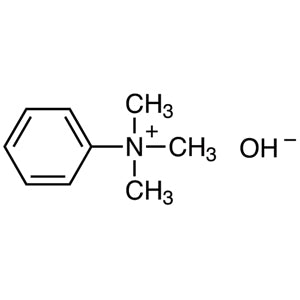
- TCI T3610 1899-02-1 Trimethylphenylammonium Hydroxide (ca. 8.5% in Methanol)
- TCI T0961 68254-41-1 3-(Trifluoromethyl)phenyltrimethylammonium Hydroxide (5% in Methanol) [for Transesterification of Glyceride]
- TCI T1460 75-59-2 Tetramethylammonium Hydroxide (ca. 25% in Water)
- TCI T0138 75-59-2 Tetramethylammonium Hydroxide (10% in Water)
- TCI T1948 2052-49-5 Tetrabutylammonium Hydroxide (37% in Methanol)
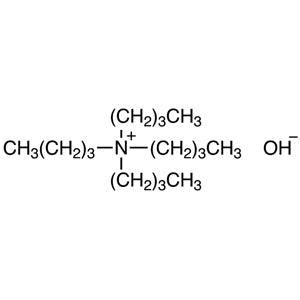
- TCI T0717 2052-49-5 Tetrabutylammonium Hydroxide (10% in Methanol)
- Organic synthesis where strong base is required for substitution reactions and functional group transformations.
- pH regulation in aqueous and organic solutions to maintain optimal reaction conditions.
- Precipitation of metal ions in qualitative and quantitative analysis procedures.
- Catalytic processes in the formation of complex organic molecules and polymers.
- Research in chemical synthesis of new compounds and pharmaceutical intermediates.
From the TCI brochure
- On-column methylation of barbituric acids (1 mL of 0.1 M methanol TMAH per 1 mg of acids)
- Esterification of carboxylic acids
- Methylation of purine and pyrimidine bases
| Brand | TCI |
|---|---|
| CAS number | 75-59-2 |
| Molecular formula | — |
| Purity | — |
| Category | Chemistry > Synthetic Reagents > Acids, Bases [Synthetic Reagents] |
| Pack sizes | Available in standard laboratory quantities as per supplier specifications |
| Physical form | Liquid solution in methanol |
| Storage | Store in a cool, dry place away from incompatible materials |
Data from the TCI brochure
| Molar ratio sample:reagent | 1:4 (on-column methylation of barbituric acids) |
|---|
Source: TCI brochure A1104 (2026-03-25)
Tetramethylammonium Hydroxide should be stored in a cool, dry place, away from direct sunlight and incompatible substances such as acids. It is recommended to use sealed containers made of materials resistant to chemical corrosion, such as glass or polyethylene. Due to its strong basic nature, it should be handled with appropriate personal protective equipment, including gloves and safety goggles. In laboratory settings, it is important to ensure proper ventilation and to avoid inhalation of vapors. Always follow standard safety protocols when handling this reagent to prevent accidental exposure or contamination.
—
Product Categories
Produk Terkait
-
TrimethylphenylammoniumHydroxide(ca.8.5%inMethanol) TCI T3610
Regular price From Rp 1.087.800,00Regular priceRp 775.950,00Sale price From Rp 1.087.800,00 -
3-(Trifluoromethyl)phenyltrimethylammoniumHydroxide(5%inMethanol)[forTransesterificationofGlyceride] TCI T0961
Regular price From Rp 4.796.400,00Regular priceRp 3.369.450,00Sale price From Rp 4.796.400,00 -
TetramethylammoniumHydroxide(ca.25%inWater) TCI T1460
Regular price From Rp 557.550,00Regular priceRp 405.300,00Sale price From Rp 557.550,00 -
TetramethylammoniumHydroxide(10%inWater) TCI T0138
Regular price From Rp 530.250,00Regular priceRp 386.400,00Sale price From Rp 530.250,00 -
TetrabutylammoniumHydroxide(37%inMethanol) TCI T1948
Regular price Rp 662.550,00Regular priceRp 478.800,00Sale price Rp 662.550,00 -
TetrabutylammoniumHydroxide(10%inMethanol) TCI T0717
Regular price From Rp 557.550,00Regular priceRp 405.300,00Sale price From Rp 557.550,00 -
TetramethylammoniumChloride TCI T0136
Regular price From Rp 530.250,00Regular priceRp 386.400,00Sale price From Rp 530.250,00 -
Methylamine(40%inMethanol,ca.9.8mol/L) TCI M1016
Regular price From Rp 637.350,00Regular priceRp 445.200,00Sale price From Rp 637.350,00