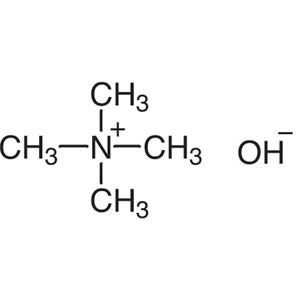
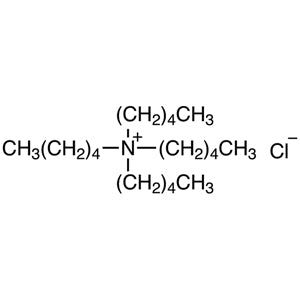
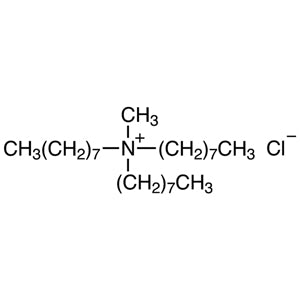
Tetramethylammonium Chloride (TCI T0136) is a chemical compound widely used as a phase transfer catalyst in various laboratory applications. It plays a crucial role in facilitating reactions that require the transfer of ions between different phases, such as polar and non-polar systems. This compound is particularly valuable in synthetic chemistry where efficient interfacial reactions are essential. Its ability to bridge these phases enhances reaction rates and improves the overall efficiency of chemical processes.
The key properties that make Tetramethylammonium Chloride a preferred choice include its strong ionic character and stability under diverse reaction conditions. These features allow it to function effectively as an ion conductor, enabling the transfer of ions across phase boundaries without altering the final product composition. Its effectiveness is further enhanced by its chemical stability and compatibility with a wide range of solvents and reaction conditions.
In Indonesian laboratories, Tetramethylammonium Chloride is commonly used in chemical research, especially in organic synthesis and catalytic processes. Its availability in the local market supports researchers in accelerating experimental procedures and reducing the time required for complex reactions. Its widespread use in academic and industrial settings highlights its importance in modern chemical research and development.
TCI brochures (PDF)
- Alkylation Reagents for Ester Synthesis 2026-04-06 · p. 3
- Quaternary Ammonium Salts 2025-11-10 · p. 3
- Colloidal Quantum Dot (QD) Research Reagents 2026-05-21 · p. 9
Related TCI products
- TCI T0676 75-59-2 Tetramethylammonium Hydroxide (10% in Methanol)
- TCI T0139 75-58-1 Tetramethylammonium Iodide
- TCI T0135 64-20-0 Tetramethylammonium Bromide
- TCI T4131 1941-24-8 Tetramethylammonium Nitrate
- TCI T2873 56375-79-2 Tributylmethylammonium Chloride (ca. 75% in water)
- TCI T2106 5810-42-4 Tetrapropylammonium Chloride
- Organic synthesis reactions benefit from Tetramethylammonium Chloride due to its ability to enhance interfacial interactions and improve reaction efficiency.
- Phase transfer catalysis applications rely on this compound to facilitate ion transfer between aqueous and organic phases, promoting faster and more selective reactions.
- Polymerization processes utilize this catalyst to improve the control of reaction kinetics and the quality of the final polymer product.
- Analytical chemistry experiments use it to improve the solubility and reactivity of compounds in multi-phase systems.
- Environmental chemistry studies incorporate it to model and study ion transfer mechanisms in complex environmental matrices.
| Brand | TCI |
|---|---|
| CAS number | 75-57-0 |
| Molecular formula | — |
| Purity | — |
| Category | Chemistry > Synthetic Reagents > Phase Transfer Catalysts |
| Pack sizes | Available in standard laboratory quantities |
| Physical form | Solid powder |
| Storage | Store in a cool, dry place away from moisture and direct sunlight |
Tetramethylammonium Chloride should be stored in a cool, dry environment to maintain its chemical stability and prevent degradation. It is recommended to use airtight containers to protect it from moisture and humidity, which can affect its performance. As an ionic compound, it is sensitive to environmental conditions, so maintaining a controlled storage area is essential. Proper labeling of containers ensures safe handling and prevents accidental exposure. Laboratory personnel should wear appropriate personal protective equipment when handling this compound to ensure safety. Regular inspection of storage conditions helps maintain the integrity of the material for consistent performance in experiments.
—
Product Categories
Produk Terkait
-
TetramethylammoniumHydroxide(10%inMethanol) TCI T0676
Regular price From Rp 557.550,00Regular priceRp 405.300,00Sale price From Rp 557.550,00 -
TetramethylammoniumIodide TCI T0139
Regular price From Rp 900.900,00Regular priceRp 645.750,00Sale price From Rp 900.900,00 -
TetramethylammoniumBromide TCI T0135
Regular price From Rp 582.750,00Regular priceRp 423.150,00Sale price From Rp 582.750,00 -
TetramethylammoniumNitrate TCI T4131
Regular price From Rp 1.140.300,00Regular priceRp 812.700,00Sale price From Rp 1.140.300,00 -
TributylmethylammoniumChloride(ca.75%inwater) TCI T2873
Regular price From Rp 900.900,00Regular priceRp 645.750,00Sale price From Rp 900.900,00 -
TetrapropylammoniumChloride TCI T2106
Regular price Rp 1.908.900,00Regular priceRp 1.350.300,00Sale price Rp 1.908.900,00 -
TetraamylammoniumChloride TCI T1433
Regular price From Rp 3.551.100,00Regular priceRp 2.499.000,00Sale price From Rp 3.551.100,00 -
Methyltri-n-octylammoniumChloride TCI T1365
Regular price From Rp 1.483.650,00Regular priceRp 1.053.150,00Sale price From Rp 1.483.650,00