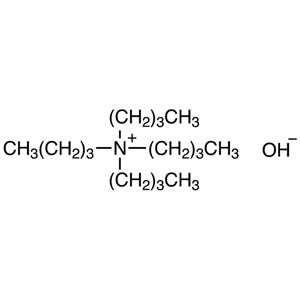
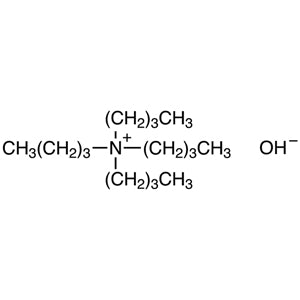
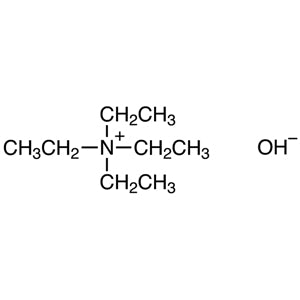
Tetrabutylammonium Hydroxide (TBAH) is a chemical compound widely used in various synthetic chemical reactions. It is a liquid reagent available in a 10% solution in methanol, making it highly convenient for laboratory use. TBAH serves as a strong base in chemical reactions, particularly in ion separation processes and reactions requiring a basic environment. Its versatility allows it to be employed in substitution reactions, deprotonation, and the synthesis of complex organic compounds.
The properties that make TBAH a preferred choice include its high stability and strong basicity without significant decomposition. It acts as an effective organic base, maintaining its integrity under various reaction conditions. Additionally, TBAH is non-toxic and free from heavy metals, enhancing its safety profile in laboratory settings. The presence of methanol as a solvent simplifies mixing and application across different experimental setups.
In Indonesian laboratories, TBAH is extensively used in chemical research and industrial applications. It is commonly found in academic and industrial settings where precise and stable base reagents are required. Its reliability and safety make it a favored choice for both researchers and professionals working in the chemical industry.
TCI brochures (PDF)
- Quaternary Ammonium Salts 2025-11-10 · p. 2
- Colloidal Quantum Dot (QD) Research Reagents 2026-05-21 · p. 10
Related TCI products
- TCI T1948 2052-49-5 Tetrabutylammonium Hydroxide (37% in Methanol)
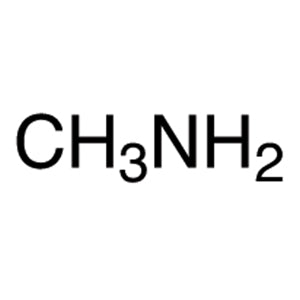
- TCI M1016 74-89-5 Methylamine (40% in Methanol, ca. 9.8mol/L)
- TCI T1685 2052-49-5 Tetrabutylammonium Hydroxide (40% in Water)
- TCI T0955 2052-49-5 Tetrabutylammonium Hydroxide (10% in Water)
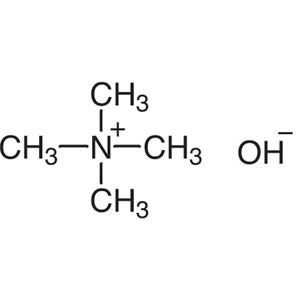
- TCI T0676 75-59-2 Tetramethylammonium Hydroxide (10% in Methanol)
- TCI T0216 2052-49-5 Tetrabutylammonium Hydroxide (10% in Water)
- Ion separation processes benefit from TBAH’s strong basicity and stability, enabling efficient extraction and purification of ions in solution.
- Organic synthesis reactions often utilize TBAH due to its ability to act as a non-nucleophilic base, preventing unwanted side reactions during complex molecule formation.
- Deprotonation reactions in synthetic chemistry rely on TBAH’s effectiveness in removing protons from organic compounds, facilitating reaction pathways.
- Analytical chemistry applications use TBAH as a reagent for pH control and buffer preparation, ensuring accurate and reproducible results.
- Environmental testing in laboratories employs TBAH for neutralizing acidic samples, aiding in the analysis of water and soil samples.
| Brand | TCI |
|---|---|
| CAS number | 2052-49-5 |
| Molecular formula | — |
| Purity | — |
| Category | Chemistry > Synthetic Reagents > Acids, Bases [Synthetic Reagents] |
| Pack sizes | 10% in methanol solution |
| Physical form | Liquid solution in methanol |
| Storage | — |
Tetrabutylammonium Hydroxide should be stored in a cool, dry place away from direct sunlight and incompatible materials. It is recommended to use airtight containers made of glass or polyethylene to prevent contamination and evaporation. Since it is a liquid solution, it should be kept in a well-ventilated area to avoid exposure to fumes. Proper labeling of containers is essential for safe handling. Laboratory personnel should wear appropriate personal protective equipment, including gloves and safety goggles, when handling this reagent. Regular inspection of storage conditions ensures the reagent remains stable and safe for use in experimental procedures.
—
Produk Terkait
-
TetrabutylammoniumHydroxide(37%inMethanol) TCI T1948
Regular price Rp 662.550,00Regular priceRp 478.800,00Sale price Rp 662.550,00 -
Methylamine(40%inMethanol,ca.9.8mol/L) TCI M1016
Regular price From Rp 637.350,00Regular priceRp 445.200,00Sale price From Rp 637.350,00 -
TetrabutylammoniumHydroxide(40%inWater) TCI T1685
Regular price From Rp 1.246.350,00Regular priceRp 887.250,00Sale price From Rp 1.246.350,00 -
TetrabutylammoniumHydroxide(10%inWater) TCI T0955
Regular price From Rp 637.350,00Regular priceRp 460.950,00Sale price From Rp 637.350,00 -
TetramethylammoniumHydroxide(10%inMethanol) TCI T0676
Regular price From Rp 557.550,00Regular priceRp 405.300,00Sale price From Rp 557.550,00 -
TetrabutylammoniumHydroxide(10%inWater) TCI T0216
Regular price Rp 1.087.800,00Regular priceRp 775.950,00Sale price Rp 1.087.800,00 -
TetrabutylammoniumHydroxide(10%inMethanol)[fornon-aqueoustitration] TCI T0041
Regular price From Rp 1.881.600,00Regular priceRp 1.331.400,00Sale price From Rp 1.881.600,00 -
TetraethylammoniumHydroxide(35%inWater) TCI T2589
Regular price From Rp 822.150,00Regular priceRp 590.100,00Sale price From Rp 822.150,00