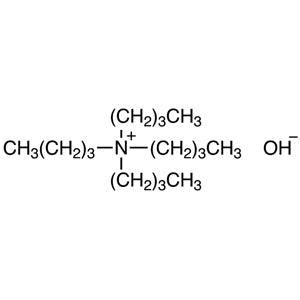
Tetrabutylammonium Hydroxide (TBAH) is a strong organic base widely used in synthetic chemistry for its reactivity and stability. As a key component in laboratory settings, TBAH plays a crucial role in facilitating various chemical reactions, including hydrolysis and organic synthesis. Its ability to act as a non-degradable base under specific conditions makes it a reliable choice for researchers aiming to achieve consistent results. This compound is particularly valuable in applications where high reactivity and chemical stability are essential.
One of the main reasons TBAH is preferred is its solubility in water and its lack of heavy metal ions, which ensures safety and purity in experimental processes. The 10% aqueous solution provides a convenient and effective form for use in a wide range of laboratory applications. Its non-toxic nature and resistance to degradation further enhance its appeal for both routine and specialized chemical work. These properties make it an ideal reagent for maintaining the integrity of chemical processes.
In Indonesian laboratories, TBAH is commonly used in organic chemistry, pharmaceutical research, and analytical chemistry. Its role in qualitative analysis and synthetic processes is well recognized, supporting both academic and industrial research. The compound's versatility and reliability make it a staple in laboratories across various scientific disciplines in Indonesia.
TCI brochures (PDF)
- Building Block for Stable Radical Materials 2025-11-27 · p. 2
- Quaternary Ammonium Salts 2025-11-10 · p. 2
- Colloidal Quantum Dot (QD) Research Reagents 2026-05-21 · p. 10
Related TCI products
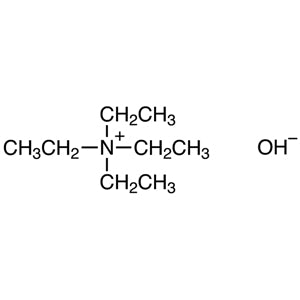
- TCI T2589 77-98-5 Tetraethylammonium Hydroxide (35% in Water)
- TCI T1948 2052-49-5 Tetrabutylammonium Hydroxide (37% in Methanol)
- TCI T1685 2052-49-5 Tetrabutylammonium Hydroxide (40% in Water)
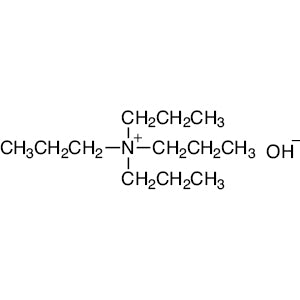
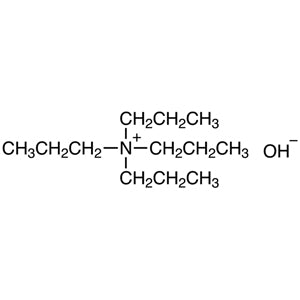
- TCI T1565 4499-86-9 Tetrapropylammonium Hydroxide (ca. 40% in Water)
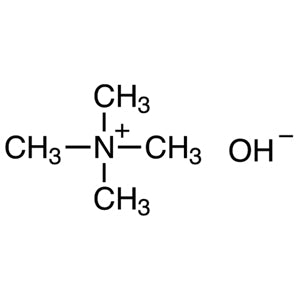
- TCI T1460 75-59-2 Tetramethylammonium Hydroxide (ca. 25% in Water)
- TCI T1020 4499-86-9 Tetrapropylammonium Hydroxide (20-25% in Water)
- Hydrolysis reactions benefit from TBAH's strong basicity, enabling efficient cleavage of ester and amide bonds in organic compounds.
- Organic synthesis relies on TBAH to catalyze or facilitate reactions that require a strong, non-nucleophilic base.
- Qualitative analysis uses TBAH to detect and identify specific functional groups in organic molecules through reaction-based tests.
- Pharmaceutical research employs TBAH in the development of new drugs, particularly in the modification of organic molecules.
- Analytical chemistry applications utilize TBAH for its stability and reactivity in preparing and analyzing complex chemical samples.
| Brand | TCI |
|---|---|
| CAS number | 2052-49-5 |
| Molecular formula | — |
| Purity | — |
| Category | Chemistry > Synthetic Reagents > Acids, Bases [Synthetic Reagents] |
| Pack sizes | 10% aqueous solution in various volumes |
| Physical form | Clear aqueous solution |
| Storage | Store in a cool, dry place away from direct sunlight |
Tetrabutylammonium Hydroxide should be stored in a cool, dry environment, away from direct sunlight and sources of heat. It is recommended to use sealed, non-reactive containers such as glass or polyethylene to prevent contamination and evaporation. Since it is a strong base, it should be handled with appropriate personal protective equipment, including gloves and goggles, to avoid skin and eye contact. In laboratory settings, it should be stored separately from acids and incompatible materials to prevent accidental reactions. Proper labeling and storage conditions ensure the safety and effectiveness of the compound during use and long-term storage.
—
Produk Terkait
-
TetraethylammoniumHydroxide(35%inWater) TCI T2589
Regular price From Rp 822.150,00Regular priceRp 590.100,00Sale price From Rp 822.150,00 -
TetrabutylammoniumHydroxide(37%inMethanol) TCI T1948
Regular price Rp 662.550,00Regular priceRp 478.800,00Sale price Rp 662.550,00 -
TetrabutylammoniumHydroxide(40%inWater) TCI T1685
Regular price From Rp 1.246.350,00Regular priceRp 887.250,00Sale price From Rp 1.246.350,00 -
TetrapropylammoniumHydroxide(ca.40%inWater) TCI T1565
Regular price From Rp 2.199.750,00Regular priceRp 1.554.000,00Sale price From Rp 2.199.750,00 -
TetramethylammoniumHydroxide(ca.25%inWater) TCI T1460
Regular price From Rp 557.550,00Regular priceRp 405.300,00Sale price From Rp 557.550,00 -
TetrapropylammoniumHydroxide(20-25%inWater) TCI T1020
Regular price From Rp 1.008.000,00Regular priceRp 720.300,00Sale price From Rp 1.008.000,00 -
TetrapropylammoniumHydroxide(10%inWater) TCI T0964
Regular price From Rp 769.650,00Regular priceRp 553.350,00Sale price From Rp 769.650,00 -
TetrabutylammoniumHydroxide(10%inMethanol) TCI T0717
Regular price From Rp 557.550,00Regular priceRp 405.300,00Sale price From Rp 557.550,00