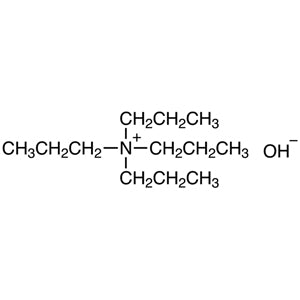
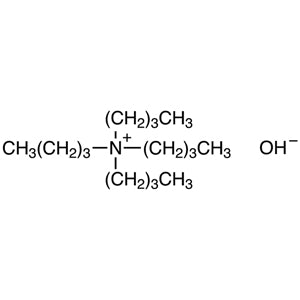
Tetrapropylammonium Hydroxide (20-25% in Water) from TCI, catalog code T1020, is a strongly basic organic solution containing the tetrapropylammonium cation and the hydroxide anion in water. In the laboratory it is best known as a structure-directing agent (SDA) in the synthesis of zeolites and other porous materials, especially MFI-type zeolites such as silicalite-1, ZSM-5, and titanium silicalite-1 (TS-1). It is also used as a strong, alkali-metal-free base in a range of reactions, making it a useful reagent for both materials chemistry and synthetic work.
Researchers choose this reagent because the tetrapropylammonium cation has a size and shape that suits the "templating" of MFI zeolite pore channels during hydrothermal crystallization. After calcination, the organic cation burns away and leaves the porous framework behind. The hydroxide form supplies the basicity needed to dissolve a silica source without introducing sodium or potassium ions, which matters when the final material must be free of alkali metals. Supplying the reagent as a solution also makes it easier to measure and dose accurately.
In Indonesia, catalysis, chemical engineering, and materials chemistry laboratories at universities and research institutions work extensively on zeolite development, for example for processing vegetable oils and biomass. In these settings, this solution is typically used as the template and base in the preparation of MFI-type catalysts and supports. It is usually handled in a fume hood, with measured volumes added to a silica-containing synthesis gel before hydrothermal treatment.
TCI brochures (PDF)
- Quaternary Ammonium Salts 2025-11-10 · p. 2
- Colloidal Quantum Dot (QD) Research Reagents 2026-05-21 · p. 10
Related TCI products
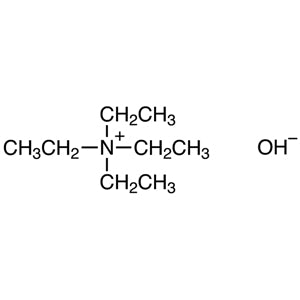
- TCI T2589 77-98-5 Tetraethylammonium Hydroxide (35% in Water)
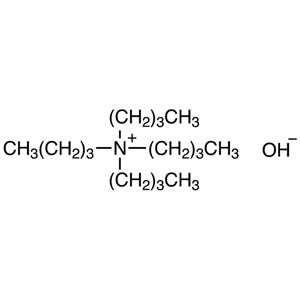
- TCI T1685 2052-49-5 Tetrabutylammonium Hydroxide (40% in Water)
- TCI T1565 4499-86-9 Tetrapropylammonium Hydroxide (ca. 40% in Water)
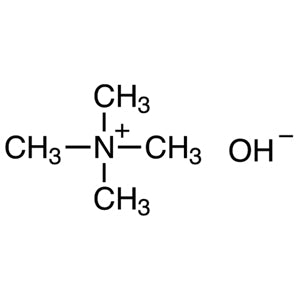
- TCI T1460 75-59-2 Tetramethylammonium Hydroxide (ca. 25% in Water)
- TCI T0964 4499-86-9 Tetrapropylammonium Hydroxide (10% in Water)
- TCI T0955 2052-49-5 Tetrabutylammonium Hydroxide (10% in Water)
- Synthesis of silicalite-1: the tetrapropylammonium cation directs the formation of the MFI framework, and the hydroxide form supplies the basicity needed to dissolve the silica source without adding alkali metals.
- Preparation of ZSM-5 zeolites: the solution acts as the structure-directing agent for the MFI topology, allowing researchers to study catalysts for processing vegetable oils and biomass.
- Synthesis of titanium silicalite-1 (TS-1): the reagent provides both templating and alkalinity, so titanium can be incorporated into the MFI framework in a metal-free alkaline environment.
- Use as a strong alkali-metal-free base: the hydroxide form suits reactions where sodium or potassium ions would interfere with the reaction or contaminate the product.
- Development of porous materials for catalysis research: the template can be removed by calcination, leaving open pore channels that support studies of catalysts and supports in chemical engineering and materials chemistry.
| Brand | TCI |
|---|---|
| CAS number | 4499-86-9 |
| Molecular formula | — |
| Purity | — |
| Category | Chemistry > Synthetic Reagents > Acids, Bases [Synthetic Reagents] |
| Pack sizes | — |
| Physical form | — |
| Storage | Keep tightly closed in a suitable container, away from incompatible materials and moisture; follow the supplier's label and safety data sheet |
- Catalog code: T1020
- Form: Aqueous solution, 20-25% in water
Store Tetrapropylammonium Hydroxide solution in its original, tightly closed container, in a cool, well-ventilated place away from acids and other incompatible materials. Because it is a strong base, use containers made of compatible materials, and keep the cap closed to limit contact with air and moisture. Handle it in a fume hood while wearing chemical-resistant gloves, safety goggles, and a laboratory coat, as it can cause serious skin and eye damage. Avoid contact with skin, eyes, and clothing. Label any secondary containers clearly, and dispose of waste according to institutional and local regulations. Always consult the supplier's safety data sheet before use.
—
Produk Terkait
-
TetraethylammoniumHydroxide(35%inWater) TCI T2589
Regular price From Rp 822.150,00Regular priceRp 590.100,00Sale price From Rp 822.150,00 -
TetrabutylammoniumHydroxide(40%inWater) TCI T1685
Regular price From Rp 1.246.350,00Regular priceRp 887.250,00Sale price From Rp 1.246.350,00 -
TetrapropylammoniumHydroxide(ca.40%inWater) TCI T1565
Regular price From Rp 2.199.750,00Regular priceRp 1.554.000,00Sale price From Rp 2.199.750,00 -
TetramethylammoniumHydroxide(ca.25%inWater) TCI T1460
Regular price From Rp 557.550,00Regular priceRp 405.300,00Sale price From Rp 557.550,00 -
TetrapropylammoniumHydroxide(10%inWater) TCI T0964
Regular price From Rp 769.650,00Regular priceRp 553.350,00Sale price From Rp 769.650,00 -
TetrabutylammoniumHydroxide(10%inWater) TCI T0955
Regular price From Rp 637.350,00Regular priceRp 460.950,00Sale price From Rp 637.350,00 -
TetrabutylammoniumHydroxide(10%inWater) TCI T0216
Regular price Rp 1.087.800,00Regular priceRp 775.950,00Sale price Rp 1.087.800,00 -
TetrapropylammoniumHydroxide(10%inWater) TCI T0171
Regular price From Rp 955.500,00Regular priceRp 683.550,00Sale price From Rp 955.500,00