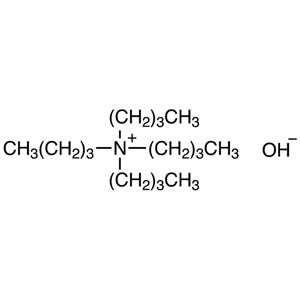
Tetrabutylammonium Hydroxide (TBAH) is a strong base widely used in synthetic chemistry applications. It is a versatile reagent that plays a crucial role in various laboratory processes, particularly where a strong base is required. TBAH is commonly employed in reactions such as esterification, hydrolysis, and substitution reactions due to its ability to provide a stable and effective basic environment. Its chemical properties make it a valuable tool for chemists working in both academic and industrial settings.
One of the key reasons TBAH is preferred over other bases is its non-corrosive nature, which enhances safety during handling. Unlike metal hydroxides, it does not cause significant damage to laboratory equipment or surfaces. Additionally, TBAH exhibits high ionization capacity, making it highly effective in reactions that require hydroxide ions. Its stability under normal conditions also ensures that it remains effective over time without degrading, which is essential for maintaining consistent results in experiments.
In Indonesian laboratories, TBAH is frequently used in both research and industrial applications. It is particularly relevant for institutions engaged in pure chemical research and manufacturing processes. Its availability in a 10% aqueous solution makes it convenient for direct use, reducing the need for additional solvents. This practicality, combined with its chemical properties, makes TBAH a preferred choice for many laboratories in Indonesia.
TCI brochures (PDF)
- Quaternary Ammonium Salts 2025-11-10 · p. 2
- Colloidal Quantum Dot (QD) Research Reagents 2026-05-21 · p. 10
Related TCI products
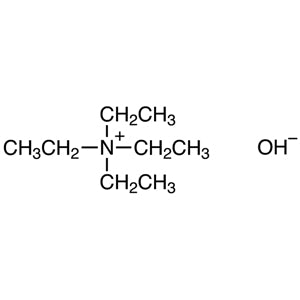
- TCI T2589 77-98-5 Tetraethylammonium Hydroxide (35% in Water)
- TCI T1948 2052-49-5 Tetrabutylammonium Hydroxide (37% in Methanol)
- TCI T1685 2052-49-5 Tetrabutylammonium Hydroxide (40% in Water)
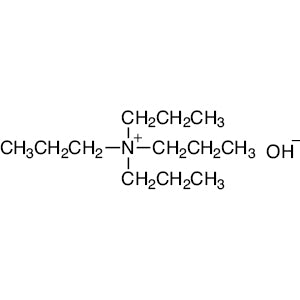
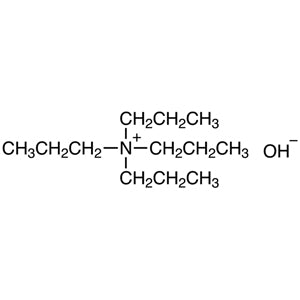
- TCI T1565 4499-86-9 Tetrapropylammonium Hydroxide (ca. 40% in Water)
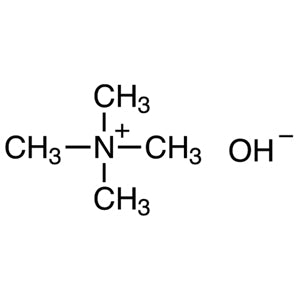
- TCI T1460 75-59-2 Tetramethylammonium Hydroxide (ca. 25% in Water)
- TCI T1020 4499-86-9 Tetrapropylammonium Hydroxide (20-25% in Water)
- Esterification reactions benefit from TBAH's ability to provide a strong basic environment, facilitating the formation of ester compounds efficiently.
- Hydrolysis reactions often require a strong base, and TBAH's stability and effectiveness make it ideal for breaking down complex molecules.
- Substitution reactions in organic chemistry rely on TBAH's high ionization capacity to drive the reaction forward with minimal side effects.
- Analytical chemistry applications use TBAH for pH adjustment and as a reagent in titration processes due to its predictable behavior in aqueous solutions.
- Industrial synthesis processes in Indonesia frequently utilize TBAH for its reliability and consistency in producing high-quality chemical products.
| Brand | TCI |
|---|---|
| CAS number | 2052-49-5 |
| Molecular formula | — |
| Purity | — |
| Category | Chemistry > Synthetic Reagents > Acids, Bases [Synthetic Reagents] |
| Pack sizes | 10% aqueous solution in various volumes |
| Physical form | Clear liquid solution |
| Storage | — |
Tetrabutylammonium Hydroxide should be stored in a cool, dry place away from direct sunlight and sources of heat. It is recommended to keep the solution in a tightly sealed container made of glass or high-density polyethylene to prevent contamination and evaporation. Since it is a strong base, it should be handled with appropriate personal protective equipment, such as gloves and goggles, to ensure safety. The solution should not be exposed to incompatible materials, such as strong acids, to avoid any potential chemical reactions. Proper labeling and storage conditions are essential to maintain the integrity and effectiveness of the reagent in laboratory settings.
—
Produk Terkait
-
TetraethylammoniumHydroxide(35%inWater) TCI T2589
Regular price From Rp 822.150,00Regular priceRp 590.100,00Sale price From Rp 822.150,00 -
TetrabutylammoniumHydroxide(37%inMethanol) TCI T1948
Regular price Rp 662.550,00Regular priceRp 478.800,00Sale price Rp 662.550,00 -
TetrabutylammoniumHydroxide(40%inWater) TCI T1685
Regular price From Rp 1.246.350,00Regular priceRp 887.250,00Sale price From Rp 1.246.350,00 -
TetrapropylammoniumHydroxide(ca.40%inWater) TCI T1565
Regular price From Rp 2.199.750,00Regular priceRp 1.554.000,00Sale price From Rp 2.199.750,00 -
TetramethylammoniumHydroxide(ca.25%inWater) TCI T1460
Regular price From Rp 557.550,00Regular priceRp 405.300,00Sale price From Rp 557.550,00 -
TetrapropylammoniumHydroxide(20-25%inWater) TCI T1020
Regular price From Rp 1.008.000,00Regular priceRp 720.300,00Sale price From Rp 1.008.000,00 -
TetrapropylammoniumHydroxide(10%inWater) TCI T0964
Regular price From Rp 769.650,00Regular priceRp 553.350,00Sale price From Rp 769.650,00 -
TetrabutylammoniumHydroxide(10%inWater) TCI T0955
Regular price From Rp 637.350,00Regular priceRp 460.950,00Sale price From Rp 637.350,00