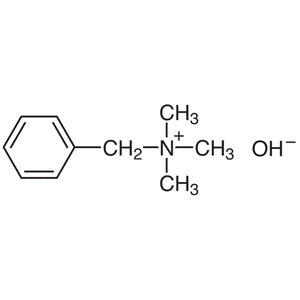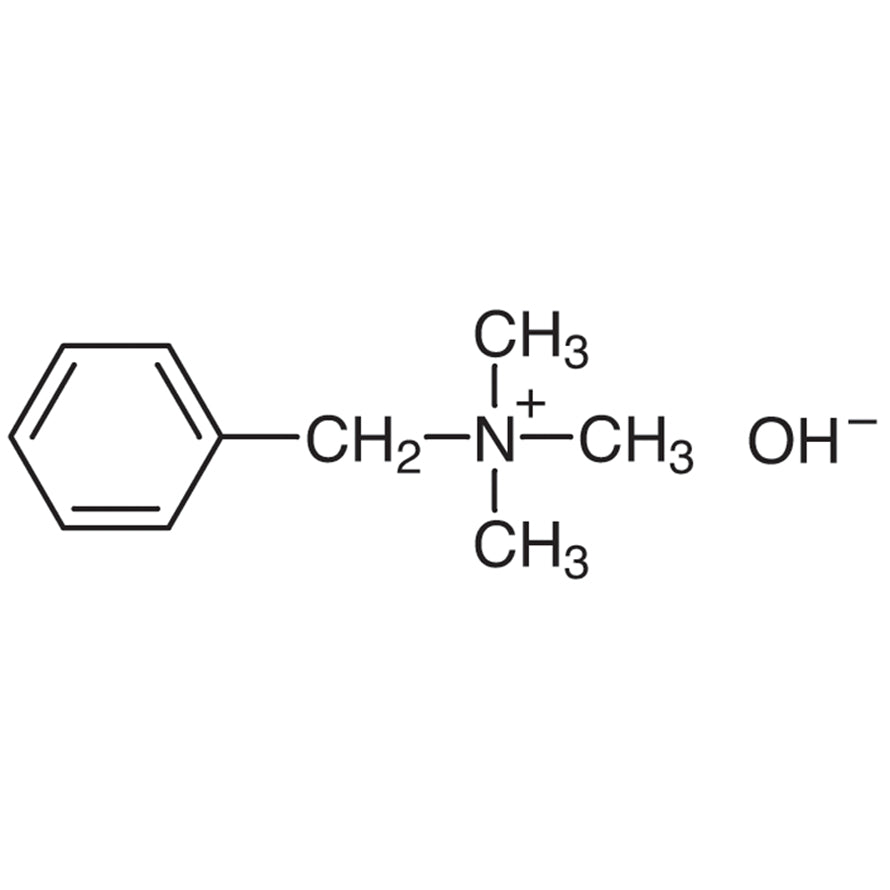
Benzyltrimethylammonium Hydroxide (40% in Water), also known as TCI B1071, is a strong base widely used in synthetic chemistry applications. This reagent is essential in laboratory settings for its ability to facilitate various chemical reactions, including precipitation, pH adjustment, and substitution reactions in organic synthesis. Its high reactivity and effectiveness make it a valuable tool for chemists working on complex molecular structures. As a synthetic reagent, it plays a crucial role in the development of new compounds and the optimization of chemical processes in both academic and industrial environments.
The chemical properties of Benzyltrimethylammonium Hydroxide make it a preferred choice for laboratory use. It is highly soluble in water, which ensures easy handling and integration into a wide range of chemical protocols. The 40% aqueous concentration provides a balance between reactivity and safety, making it suitable for both routine and specialized applications. Its stability under controlled conditions further enhances its reliability in laboratory experiments. This reagent is particularly favored for its consistent performance and compatibility with various organic and inorganic compounds.
In Indonesian laboratories, Benzyltrimethylammonium Hydroxide is commonly used in research and development activities. It is a key component in pharmaceutical and chemical industries, supporting the synthesis of new materials and compounds. Its versatility and effectiveness have made it a standard reagent in both academic and industrial settings, contributing to the advancement of chemical sciences in the region.
TCI brochures (PDF)
- Quaternary Ammonium Salts 2025-11-10 · p. 2
Related TCI products
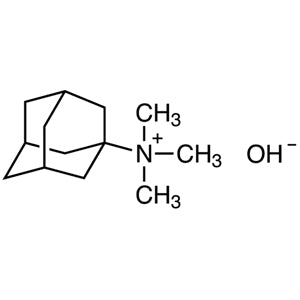
- TCI T3821 53075-09-5 N,N,N-Trimethyl-1-adamantylammonium Hydroxide (25% in Water)
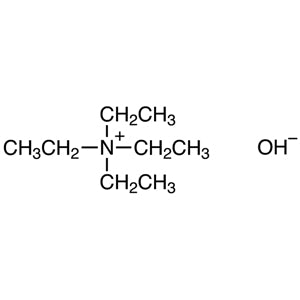
- TCI T2589 77-98-5 Tetraethylammonium Hydroxide (35% in Water)
- TCI T1685 2052-49-5 Tetrabutylammonium Hydroxide (40% in Water)
- TCI T1565 4499-86-9 Tetrapropylammonium Hydroxide (ca. 40% in Water)
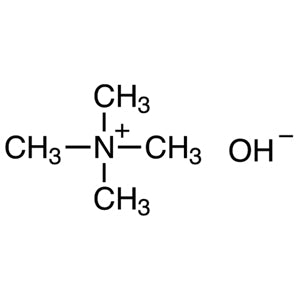
- TCI T1460 75-59-2 Tetramethylammonium Hydroxide (ca. 25% in Water)
- TCI B1070 100-85-6 Benzyltrimethylammonium Hydroxide (10% in Water)
- Organic synthesis reactions where pH adjustment and nucleophilic substitution are required.
- Precipitation processes to isolate specific compounds from complex mixtures.
- pH control in reaction systems to maintain optimal reaction conditions.
- Development of new pharmaceutical compounds through controlled chemical transformations.
- Analytical procedures requiring a strong base for titration or neutralization steps.
| Brand | TCI |
|---|---|
| CAS number | 100-85-6 |
| Molecular formula | — |
| Purity | — |
| Category | Chemistry > Synthetic Reagents > Acids, Bases [Synthetic Reagents] |
| Pack sizes | 100g, 500g, 1kg (as per standard commercial availability) |
| Physical form | Aqueous solution |
| Storage | Store in a cool, dry place away from incompatible materials |
Benzyltrimethylammonium Hydroxide should be stored in a cool, dry location, away from direct sunlight and sources of heat. It is recommended to keep the container tightly sealed to prevent moisture absorption and contamination. The solution should be stored in a well-ventilated area to minimize exposure to fumes. Due to its strong basic nature, it should be handled with appropriate personal protective equipment, such as gloves and safety goggles. Avoid contact with acids and other reactive substances to prevent unwanted chemical reactions. Always ensure proper disposal procedures are followed to maintain laboratory safety and environmental compliance.
—
Produk Terkait
-
N,N,N-Trimethyl-1-adamantylammoniumHydroxide(25%inWater) TCI T3821
Regular price From Rp 2.093.700,00Regular priceRp 1.479.450,00Sale price From Rp 2.093.700,00 -
TetraethylammoniumHydroxide(35%inWater) TCI T2589
Regular price From Rp 822.150,00Regular priceRp 590.100,00Sale price From Rp 822.150,00 -
TetrabutylammoniumHydroxide(40%inWater) TCI T1685
Regular price From Rp 1.246.350,00Regular priceRp 887.250,00Sale price From Rp 1.246.350,00 -
TetrapropylammoniumHydroxide(ca.40%inWater) TCI T1565
Regular price From Rp 2.199.750,00Regular priceRp 1.554.000,00Sale price From Rp 2.199.750,00 -
TetramethylammoniumHydroxide(ca.25%inWater) TCI T1460
Regular price From Rp 557.550,00Regular priceRp 405.300,00Sale price From Rp 557.550,00 -
BenzyltrimethylammoniumHydroxide(10%inWater) TCI B1070
Regular price From Rp 795.900,00Regular priceRp 572.250,00Sale price From Rp 795.900,00 -
BenzyltrimethylammoniumHydroxide(40%inMethanol) TCI B0448
Regular price From Rp 582.750,00Regular priceRp 423.150,00Sale price From Rp 582.750,00 -
BenzyltrimethylammoniumHydroxide(10%inWater) TCI B0428
Regular price Rp 1.087.800,00Regular priceRp 775.950,00Sale price Rp 1.087.800,00