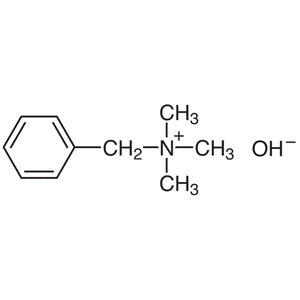
Benzyltrimethylammonium Hydroxide (10% in Water), also known as TCI B0428, is a strong base commonly used in synthetic chemistry applications. This reagent plays a crucial role in laboratory settings by facilitating hydrolysis and substitution reactions in organic compounds. Its high reactivity makes it an essential component in the synthesis of complex molecules, particularly in organic chemistry. Due to its effectiveness in promoting chemical transformations, it is widely utilized in both academic and industrial research environments.
The unique properties of Benzyltrimethylammonium Hydroxide, such as its solubility in water and stability under certain conditions, make it a preferred choice for many laboratory applications. Its 10% aqueous concentration simplifies the preparation of solutions, while its reactivity ensures efficient participation in chemical reactions. The material is also known for its resistance to degradation, which enhances its shelf life and usability. These characteristics contribute to its popularity among chemists who require reliable and consistent reagents for their experiments.
In Indonesian laboratories, Benzyltrimethylammonium Hydroxide is frequently used in chemical research, particularly in educational institutions and research organizations. It supports both teaching and innovation in the field of chemistry. Its role in accelerating reactions and its compatibility with various experimental setups make it a staple in many laboratory workflows. Its reliability and effectiveness are key factors in its continued use across different scientific disciplines.
TCI brochures (PDF)
- Quaternary Ammonium Salts 2025-11-10 · p. 2
Related TCI products
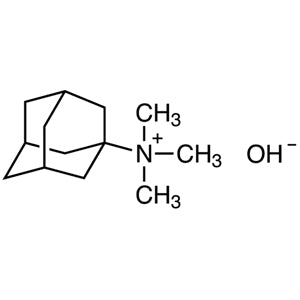
- TCI T3821 53075-09-5 N,N,N-Trimethyl-1-adamantylammonium Hydroxide (25% in Water)
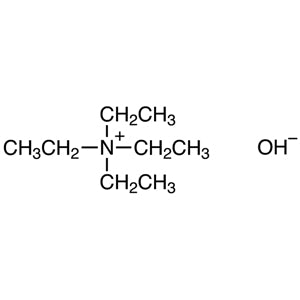
- TCI T2589 77-98-5 Tetraethylammonium Hydroxide (35% in Water)
- TCI T1685 2052-49-5 Tetrabutylammonium Hydroxide (40% in Water)
- TCI T1565 4499-86-9 Tetrapropylammonium Hydroxide (ca. 40% in Water)
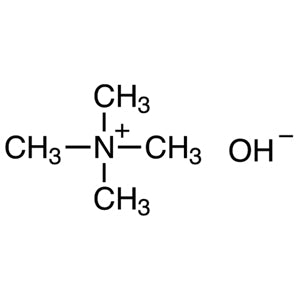
- TCI T1460 75-59-2 Tetramethylammonium Hydroxide (ca. 25% in Water)
- TCI B1071 100-85-6 Benzyltrimethylammonium Hydroxide (40% in Water)
- Synthetic Organic Chemistry – This reagent is ideal for promoting hydrolysis and substitution reactions in complex organic molecules.
- Teaching Laboratories – Its consistent performance and ease of use make it a valuable tool for demonstrating chemical reactions in educational settings.
- Industrial Research – Its stability and reactivity support the development of new chemical processes and products.
- Analytical Chemistry – It is used in pH adjustment and as a reagent in titration and other analytical techniques.
- Polymer Science – It aids in the synthesis of polymers by facilitating the necessary chemical transformations during polymerization.
| Brand | TCI |
|---|---|
| CAS number | 100-85-6 |
| Molecular formula | — |
| Purity | — |
| Category | Chemistry > Synthetic Reagents > Acids, Bases [Synthetic Reagents] |
| Pack sizes | 100 mL, 500 mL, 1 L |
| Physical form | Aqueous solution |
| Storage | Store in a cool, dry place away from direct sunlight |
This reagent should be stored in a cool, dry place, away from direct sunlight and incompatible materials. It is recommended to use airtight containers to prevent moisture absorption and contamination. Due to its strong basic nature, it should be handled with appropriate personal protective equipment, including gloves and safety goggles. Avoid contact with skin and eyes, and ensure proper ventilation in the laboratory. The solution should not be stored near acids or reactive substances to prevent unwanted chemical reactions. Regular inspection of storage conditions is advised to maintain the integrity and effectiveness of the reagent.
—
Produk Terkait
-
N,N,N-Trimethyl-1-adamantylammoniumHydroxide(25%inWater) TCI T3821
Regular price From Rp 2.093.700,00Regular priceRp 1.479.450,00Sale price From Rp 2.093.700,00 -
TetraethylammoniumHydroxide(35%inWater) TCI T2589
Regular price From Rp 822.150,00Regular priceRp 590.100,00Sale price From Rp 822.150,00 -
TetrabutylammoniumHydroxide(40%inWater) TCI T1685
Regular price From Rp 1.246.350,00Regular priceRp 887.250,00Sale price From Rp 1.246.350,00 -
TetrapropylammoniumHydroxide(ca.40%inWater) TCI T1565
Regular price From Rp 2.199.750,00Regular priceRp 1.554.000,00Sale price From Rp 2.199.750,00 -
TetramethylammoniumHydroxide(ca.25%inWater) TCI T1460
Regular price From Rp 557.550,00Regular priceRp 405.300,00Sale price From Rp 557.550,00 -
BenzyltrimethylammoniumHydroxide(40%inWater) TCI B1071
Regular price From Rp 742.350,00Regular priceRp 534.450,00Sale price From Rp 742.350,00 -
BenzyltrimethylammoniumHydroxide(10%inWater) TCI B1070
Regular price From Rp 795.900,00Regular priceRp 572.250,00Sale price From Rp 795.900,00 -
BenzyltrimethylammoniumHydroxide(40%inMethanol) TCI B0448
Regular price From Rp 582.750,00Regular priceRp 423.150,00Sale price From Rp 582.750,00