Benzyltrimethylammonium Hydroxide (10% in Water), also known as TCI B1070, is a strong base commonly used in synthetic chemistry applications. It serves as a versatile reagent in laboratory settings, facilitating a wide range of chemical reactions such as hydrolysis, substitution, and nucleophilic attacks. Its alkaline nature makes it particularly useful in the synthesis of amines, esters, and other organic compounds that require basic conditions. This reagent is a key component in many chemical processes, especially those involving the modification of organic molecules through base-catalyzed mechanisms.
The properties of Benzyltrimethylammonium Hydroxide make it a preferred choice for laboratory use. Its 10% aqueous concentration provides a convenient and manageable form for various experimental scales, while its stability under controlled conditions ensures consistent performance. The compound’s ability to react with a broad range of organic substances enhances its applicability across different synthetic pathways. Additionally, its strong basicity allows for efficient and effective reactions, making it a reliable reagent for both research and industrial applications.
In Indonesian laboratories, this reagent is widely utilized in chemical research, pharmaceutical development, and analytical chemistry. It is commonly found in academic and industrial settings where synthetic reactions and compound modifications are required. Its availability and reliability make it a staple in many laboratories across Indonesia, supporting both educational and commercial chemical processes.
TCI brochures (PDF)
- Quaternary Ammonium Salts 2025-11-10 · p. 2
Related TCI products
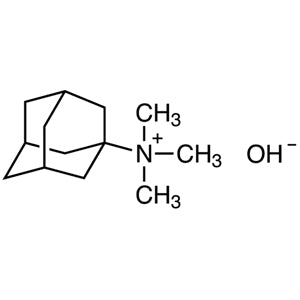
- TCI T3821 53075-09-5 N,N,N-Trimethyl-1-adamantylammonium Hydroxide (25% in Water)
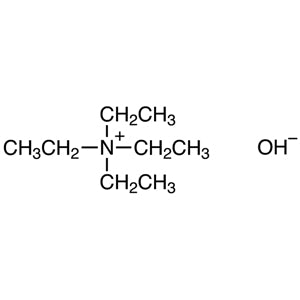
- TCI T2589 77-98-5 Tetraethylammonium Hydroxide (35% in Water)
- TCI T1685 2052-49-5 Tetrabutylammonium Hydroxide (40% in Water)
- TCI T1565 4499-86-9 Tetrapropylammonium Hydroxide (ca. 40% in Water)
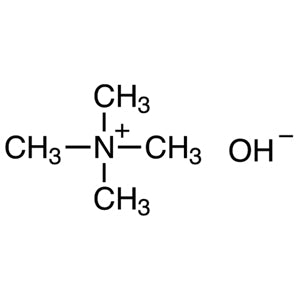
- TCI T1460 75-59-2 Tetramethylammonium Hydroxide (ca. 25% in Water)
- TCI B1071 100-85-6 Benzyltrimethylammonium Hydroxide (40% in Water)
- Used in the synthesis of amines and esters due to its strong basic properties and reactivity with organic compounds.
- Applied in hydrolysis reactions to break down complex molecules into simpler components for further analysis.
- Employed in nucleophilic substitution reactions to facilitate the replacement of functional groups in organic molecules.
- Utilized in pharmaceutical research for the development of new drugs and chemical compounds.
- Integrated into analytical procedures for the determination of acid-base equilibrium in various chemical systems.
| Brand | TCI |
|---|---|
| CAS number | 100-85-6 |
| Molecular formula | — |
| Purity | — |
| Category | Chemistry > Synthetic Reagents > Acids, Bases [Synthetic Reagents] |
| Pack sizes | 100 mL, 500 mL, 1 L (varies by supplier) |
| Physical form | Aqueous solution (10% concentration) |
| Storage | Store in a cool, dry place away from incompatible materials |
This reagent should be stored in a cool, dry location, away from direct sunlight and incompatible substances such as acids or strong oxidizers. It is recommended to use airtight containers made of glass or high-density polyethylene to prevent contamination and evaporation. Due to its strong basicity, it should be handled with appropriate personal protective equipment, including gloves, goggles, and a lab coat. In case of spillage, neutralize with an acid and clean up thoroughly. Always ensure proper ventilation when working with this material to avoid inhalation of vapors.
—
Produk Terkait
-
N,N,N-Trimethyl-1-adamantylammoniumHydroxide(25%inWater) TCI T3821
Regular price From Rp 2.093.700,00Regular priceRp 1.479.450,00Sale price From Rp 2.093.700,00 -
TetraethylammoniumHydroxide(35%inWater) TCI T2589
Regular price From Rp 822.150,00Regular priceRp 590.100,00Sale price From Rp 822.150,00 -
TetrabutylammoniumHydroxide(40%inWater) TCI T1685
Regular price From Rp 1.246.350,00Regular priceRp 887.250,00Sale price From Rp 1.246.350,00 -
TetrapropylammoniumHydroxide(ca.40%inWater) TCI T1565
Regular price From Rp 2.199.750,00Regular priceRp 1.554.000,00Sale price From Rp 2.199.750,00 -
TetramethylammoniumHydroxide(ca.25%inWater) TCI T1460
Regular price From Rp 557.550,00Regular priceRp 405.300,00Sale price From Rp 557.550,00 -
BenzyltrimethylammoniumHydroxide(40%inWater) TCI B1071
Regular price From Rp 742.350,00Regular priceRp 534.450,00Sale price From Rp 742.350,00 -
BenzyltrimethylammoniumHydroxide(40%inMethanol) TCI B0448
Regular price From Rp 582.750,00Regular priceRp 423.150,00Sale price From Rp 582.750,00 -
BenzyltrimethylammoniumHydroxide(10%inWater) TCI B0428
Regular price Rp 1.087.800,00Regular priceRp 775.950,00Sale price Rp 1.087.800,00