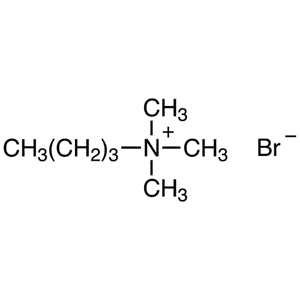
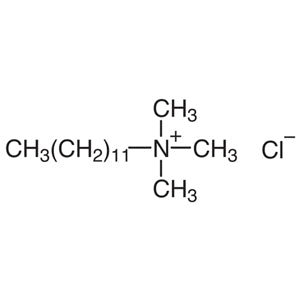
n-Octyltrimethylammonium Chloride is a chemical compound widely used as a phase transfer catalyst in various chemical reactions. It plays a critical role in laboratory settings by facilitating the transfer of reactants between immiscible phases, such as organic and aqueous solutions. This property makes it indispensable in reactions where traditional methods fail to achieve efficient mixing or interaction between different phases. Its ability to enhance reaction efficiency and reduce the need for additional solvents or complex setups makes it a valuable tool in synthetic chemistry.
The compound’s cationic structure is the key to its effectiveness as a phase transfer catalyst. It enables the movement of ions or molecules across phase boundaries, improving reaction rates and yields. Its stability under various reaction conditions and compatibility with a wide range of solvents further enhance its utility. The compound’s solubility in both polar and non-polar solvents allows it to be used in diverse experimental setups, making it a versatile reagent for chemists. Additionally, its resistance to degradation ensures consistent performance in repeated use.
In Indonesian laboratories, n-Octyltrimethylammonium Chloride is commonly used in both fundamental and applied chemical research. It is a preferred choice for researchers working on organic synthesis, catalytic processes, and electrochemical studies. Its reliability and effectiveness have made it a staple in academic and industrial research settings across Indonesia, supporting a wide range of scientific investigations.
TCI brochures (PDF)
- Quaternary Ammonium Salts 2025-11-10 · p. 3
- Colloidal Quantum Dot (QD) Research Reagents 2026-05-21 · p. 9
- Polymer Additives 2026-04-16 · p. 11
Related TCI products
- TCI O0163 2083-68-3 n-Octyltrimethylammonium Bromide
- TCI B5798 2650-51-3 Butyltrimethylammonium Bromide
- TCI T0926 4574-04-3 Trimethyltetradecylammonium Chloride
- TCI H0082 112-02-7 Hexadecyltrimethylammonium Chloride
- TCI D1306 10108-87-9 Decyltrimethylammonium Chloride
- TCI D1016 112-00-5 Dodecyltrimethylammonium Chloride
- Organic synthesis reactions benefit from this catalyst due to its ability to enhance interfacial interactions between organic and aqueous phases.
- Electrochemical studies utilize this compound as a mediator for electron transfer processes across different reaction environments.
- Catalytic reactions in biphasic systems rely on its phase transfer properties to improve reaction efficiency and product yield.
- Analytical chemistry applications use it to facilitate the extraction and separation of ions or molecules between phases.
- Industrial chemical processes incorporate it to optimize reaction conditions and reduce energy consumption in large-scale synthesis.
| Brand | TCI |
|---|---|
| CAS number | 10108-86-8 |
| Molecular formula | — |
| Purity | — |
| Category | Chemistry > Synthetic Reagents > Phase Transfer Catalysts |
| Pack sizes | Available in various quantities as per supplier specifications |
| Physical form | Solid powder or liquid, depending on formulation |
| Storage | Store in a cool, dry place away from moisture and direct sunlight |
This compound should be stored in a cool, dry environment to maintain its chemical integrity and prevent degradation. It is recommended to use airtight containers to protect it from moisture and humidity, which can affect its performance. Since it is a cationic compound, it should be handled with care to avoid contamination from other substances. In laboratory settings, it is advisable to use gloves and appropriate personal protective equipment when handling it. Proper labeling of storage containers is essential to ensure safe access and usage. Regular inspection of storage conditions is also recommended to maintain optimal quality and safety standards.
—
Product Categories
Produk Terkait
-
n-OctyltrimethylammoniumBromide TCI O0163
Regular price From Rp 1.351.350,00Regular priceRp 960.750,00Sale price From Rp 1.351.350,00 -
ButyltrimethylammoniumBromide TCI B5798
Regular price From Rp 1.351.350,00Regular priceRp 960.750,00Sale price From Rp 1.351.350,00 -
TrimethyltetradecylammoniumChloride TCI T0926
Regular price From Rp 1.008.000,00Regular priceRp 720.300,00Sale price From Rp 1.008.000,00 -
HexadecyltrimethylammoniumChloride TCI H0082
Regular price From Rp 928.200,00Regular priceRp 664.650,00Sale price From Rp 928.200,00 -
DecyltrimethylammoniumChloride TCI D1306
Regular price Rp 2.757.300,00Regular priceRp 1.943.550,00Sale price Rp 2.757.300,00 -
DodecyltrimethylammoniumChloride TCI D1016
Regular price From Rp 980.700,00Regular priceRp 701.400,00Sale price From Rp 980.700,00 -
TetradecyltrimethylammoniumBromide TCI T0906
Regular price From Rp 582.750,00Regular priceRp 423.150,00Sale price From Rp 582.750,00 -
HexyltrimethylammoniumBromide TCI H0534
Regular price From Rp 2.411.850,00Regular priceRp 1.702.050,00Sale price From Rp 2.411.850,00