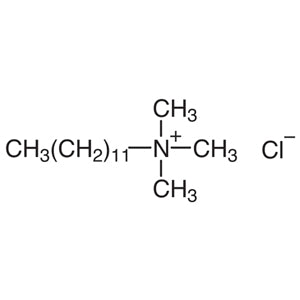
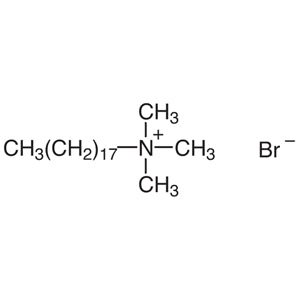
Tetradecyltrimethylammonium Bromide (TTAB) is a chemical compound widely used as a phase transfer catalyst in various laboratory applications. It plays a crucial role in facilitating reactions that require the transfer of molecules between different phases, such as from non-polar to polar environments. This compound is particularly valuable in synthetic chemistry, where it helps overcome the challenges of immiscibility between reactants, thereby enhancing reaction efficiency. Its ability to bridge multiple phases makes it an essential tool for researchers working on complex chemical processes.
The properties that make TTAB a preferred choice include its high solubility in organic solvents and its capacity to form micelles. These characteristics enable it to effectively mediate reactions that involve the movement of ions or molecules across phase boundaries. Additionally, TTAB exhibits good chemical stability under typical laboratory conditions, ensuring consistent performance and ease of handling. Its reliability and effectiveness have made it a popular choice among chemists, especially in the context of organic synthesis and analytical chemistry.
In Indonesian laboratories, TTAB is commonly used in research focused on organic synthesis and chemical analysis. Its availability and performance make it a favored reagent for both academic and industrial applications. Researchers in Indonesia rely on TTAB for its ability to simplify complex reactions and improve the efficiency of phase transfer processes. Its widespread use underscores its importance in the chemical research landscape of the region.
TCI brochures (PDF)
- Quaternary Ammonium Salts 2025-11-10 · p. 5
- Colloidal Quantum Dot (QD) Research Reagents 2026-05-21 · p. 9
- Polymer Additives 2026-04-16 · p. 11
Related TCI products
- TCI D1467 2082-84-0 Decyltrimethylammonium Bromide
- TCI D1306 10108-87-9 Decyltrimethylammonium Chloride
- TCI D1468 1119-94-4 Dodecyltrimethylammonium Bromide
- TCI D1016 112-00-5 Dodecyltrimethylammonium Chloride
- TCI H0082 112-02-7 Hexadecyltrimethylammonium Chloride
- TCI H0081 57-09-0 Hexadecyltrimethylammonium Bromide
- Organic synthesis reactions requiring phase transfer catalysts benefit from TTAB's ability to enhance interfacial interactions between immiscible phases.
- Heterogeneous catalytic processes often utilize TTAB to improve the accessibility of reactants and catalysts across different reaction phases.
- Analytical chemistry procedures involving solubilization of hydrophobic compounds find TTAB useful for its micelle-forming properties.
- Reactions involving ionic species in non-aqueous media benefit from TTAB's role in facilitating ion transfer between phases.
- Industrial-scale chemical processes that require efficient phase transfer mechanisms can leverage TTAB for its stability and effectiveness.
| Brand | TCI |
|---|---|
| CAS number | 1119-97-7 |
| Molecular formula | — |
| Purity | — |
| Category | Chemistry > Synthetic Reagents > Phase Transfer Catalysts |
| Pack sizes | Available in various quantities as per standard laboratory supply |
| Physical form | Solid powder |
| Storage | Store in a cool, dry place away from moisture and direct sunlight |
TTAB should be stored in a cool, dry environment to maintain its chemical stability and prevent degradation. It is recommended to use airtight containers to protect it from moisture and humidity, which can affect its performance. Since TTAB is a solid powder, it should be handled with care to avoid inhalation or skin contact. Proper personal protective equipment, such as gloves and safety goggles, should be worn during handling. It is important to ensure that the storage area is well-ventilated to minimize exposure to airborne particles. TTAB is generally stable under normal laboratory conditions, making it suitable for long-term storage when properly maintained.
—
Product Categories
Produk Terkait
-
DecyltrimethylammoniumBromide TCI D1467
Regular price From Rp 1.087.800,00Regular priceRp 775.950,00Sale price From Rp 1.087.800,00 -
DecyltrimethylammoniumChloride TCI D1306
Regular price Rp 2.757.300,00Regular priceRp 1.943.550,00Sale price Rp 2.757.300,00 -
DodecyltrimethylammoniumBromide TCI D1468
Regular price From Rp 928.200,00Regular priceRp 664.650,00Sale price From Rp 928.200,00 -
DodecyltrimethylammoniumChloride TCI D1016
Regular price From Rp 980.700,00Regular priceRp 701.400,00Sale price From Rp 980.700,00 -
HexadecyltrimethylammoniumChloride TCI H0082
Regular price From Rp 928.200,00Regular priceRp 664.650,00Sale price From Rp 928.200,00 -
HexadecyltrimethylammoniumBromide TCI H0081
Regular price From Rp 530.250,00Regular priceRp 386.400,00Sale price From Rp 530.250,00 -
TrimethylnonylammoniumBromide TCI T2734
Regular price Rp 1.801.800,00Regular priceRp 1.275.750,00Sale price Rp 1.801.800,00 -
TrimethylstearylammoniumBromide TCI S0364
Regular price Rp 2.013.900,00Regular priceRp 1.423.800,00Sale price Rp 2.013.900,00