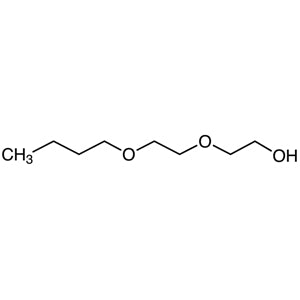
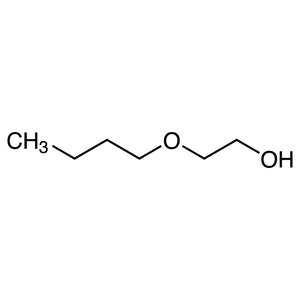
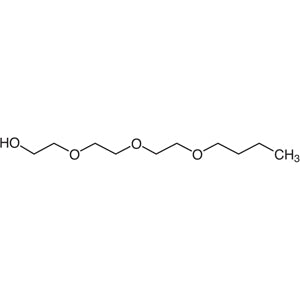
Tetraethylene Glycol Dimethyl Ether (TEGDE) is a chemical compound widely used in laboratory settings, particularly in the synthesis of organic compounds. It serves as a versatile building block in chemical reactions due to its molecular structure, which consists of a chain of ethylene glycol linked by two methyl groups. This compound is commonly employed as a solvent and a precursor in the creation of complex molecular structures. Its utility extends across various research fields, making it an essential reagent for chemists working on diverse synthetic pathways.
The properties of TEGDE make it a preferred choice in laboratory applications. It is non-reactive and has a high boiling point, which allows it to remain stable under various reaction conditions. Additionally, its ability to absorb moisture contributes to its effectiveness as a solvent in certain chemical processes. TEGDE is also non-flammable, enhancing its safety profile in laboratory environments. These characteristics make it a reliable and practical option for use in both academic and industrial research settings.
In Indonesian laboratories, TEGDE is frequently used in chemical, pharmaceutical, and industrial research. Its role in the development of new compounds and its compatibility with a wide range of chemical processes make it a valuable resource for researchers. It is commonly found in laboratories focused on organic synthesis and material science, where its unique properties support a variety of experimental needs.
TCI brochures (PDF)
- Fluorinated Ether Solvents, Glycol Ether Solvents 2025-09-19 · p. 2
Related TCI products
- TCI T1997 86259-87-2 Tetraethylene Glycol Monobenzyl Ether
- TCI T1372 23783-42-8 Tetraethylene Glycol Monomethyl Ether
- TCI T0099 112-60-7 Tetraethylene Glycol
- TCI T1996 55489-58-2 Triethylene Glycol Monobenzyl Ether
- TCI T1373 29681-21-8 Triethylene Glycol Monoisopropyl Ether
- TCI B0699 112-34-5 Diethylene Glycol Monobutyl Ether
- Organic synthesis applications benefit from TEGDE due to its stability and ability to dissolve a wide range of organic compounds, supporting complex reaction pathways.
- Pharmaceutical research utilizes TEGDE as a solvent and intermediate in the development of new drug compounds, enhancing reaction efficiency and product purity.
- Industrial chemical processes incorporate TEGDE for its non-reactive nature, allowing it to function as a safe and effective solvent in large-scale manufacturing.
- Material science experiments rely on TEGDE for its compatibility with polymer synthesis, aiding in the creation of advanced composite materials.
- Analytical chemistry procedures use TEGDE as a reference standard due to its consistent properties and minimal interference in spectroscopic and chromatographic analyses.
| Brand | TCI |
|---|---|
| CAS number | 143-24-8 |
| Molecular formula | — |
| Purity | — |
| Category | Chemistry > Building Blocks > Non-Heterocyclic Building Blocks |
| Pack sizes | Available in various quantities as per standard laboratory supply |
| Physical form | Liquid |
| Storage | Store in a cool, dry place away from direct sunlight and incompatible materials |
Tegde should be stored in a cool, dry place, away from direct sunlight and sources of heat. It is recommended to keep it in a tightly sealed container to prevent moisture absorption and contamination. Due to its non-reactive nature, it does not require special containment, but it should be kept away from strong oxidizers and acids. In laboratory settings, it is important to ensure proper ventilation when handling TEGDE to avoid inhalation of vapors. Always use appropriate personal protective equipment, such as gloves and safety goggles, to minimize exposure during handling. Its high boiling point and non-flammable properties make it relatively safe to handle, but standard laboratory safety protocols should still be followed.
—
Produk Terkait
-
TetraethyleneGlycolMonobenzylEther TCI T1997
Regular price From Rp 3.365.250,00Regular priceRp 2.368.800,00Sale price From Rp 3.365.250,00 -
TetraethyleneGlycolMonomethylEther TCI T1372
Regular price From Rp 1.881.600,00Regular priceRp 1.331.400,00Sale price From Rp 1.881.600,00 -
TetraethyleneGlycol TCI T0099
Regular price From Rp 557.550,00Regular priceRp 405.300,00Sale price From Rp 557.550,00 -
TriethyleneGlycolMonobenzylEther TCI T1996
Regular price From Rp 3.578.400,00Regular priceRp 2.517.900,00Sale price From Rp 3.578.400,00 -
TriethyleneGlycolMonoisopropylEther TCI T1373
Regular price Rp 4.531.800,00Regular priceRp 3.184.650,00Sale price Rp 4.531.800,00 -
DiethyleneGlycolMonobutylEther TCI B0699
Regular price From Rp 477.750,00Regular priceRp 333.900,00Sale price From Rp 477.750,00 -
EthyleneGlycolMonobutylEther TCI B0698
Regular price From Rp 477.750,00Regular priceRp 333.900,00Sale price From Rp 477.750,00 -
TriethyleneGlycolMonobutylEther TCI T0915
Regular price From Rp 557.550,00Regular priceRp 405.300,00Sale price From Rp 557.550,00