Bromocresol Purple TCI B0580, with the CAS number 115-40-2, is a chemical compound widely used in laboratory settings, especially in pharmaceutical development and drug discovery research. It serves as a pH indicator, capable of changing color in response to variations in the acidity or alkalinity of a solution. This property makes it essential for accurate pH measurements in various experimental procedures. Its reliability and sensitivity are key factors in its use across different scientific disciplines, ensuring consistent and reproducible results in laboratory analyses.
The compound is known for its high sensitivity and stability under specific conditions, making it a preferred choice for precise scientific applications. It exhibits a distinct color change from violet to yellow as the pH level shifts, allowing for clear visual identification of pH changes. Additionally, Bromocresol Purple dissolves well in organic solvents such as ethanol and acetone, enhancing its versatility in chemical reactions and analytical processes. Its chemical stability and predictable behavior contribute to its widespread use in both research and educational environments.
In Indonesian laboratories, Bromocresol Purple is commonly utilized in pharmacological research, analytical chemistry, and academic settings. It plays a crucial role in determining the equivalence point during acid-base titrations and is frequently used in teaching laboratories to demonstrate pH indicators and their applications. Its safety profile, being non-toxic at typical usage levels, ensures that it can be handled with proper care, making it a reliable and accessible reagent for laboratory work in Indonesia.
TCI brochures (PDF)
- Titration Reagents and TLC Stains 2026-05-07 · p. 3
Related TCI products
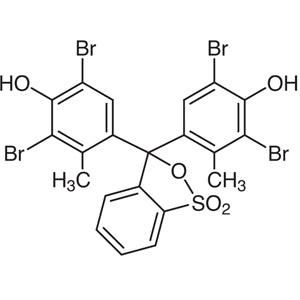
- TCI B0578 76-60-8 Bromocresol Green
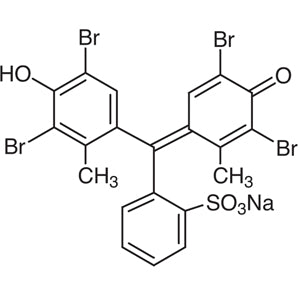
- TCI S0041 67763-24-0 Bromocresol Green Sodium Salt
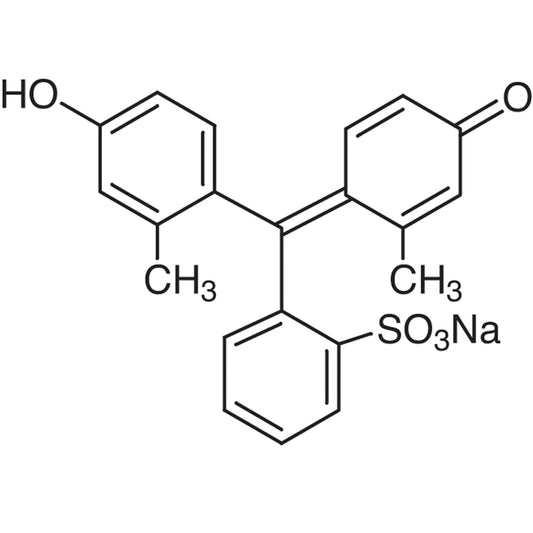
- TCI S0045 62625-31-4 Metacresol Purple Sodium Salt
- TCI M0074 2303-01-7 Metacresol Purple
- TCI B0115 115-40-2 Bromocresol Purple (0.04% in Water) [for pH Determination]
- TCI B0579 76-60-8 Bromocresol Green (0.04% in Water) [for pH Determination]
- Pharmaceutical Development: Bromocresol Purple is used to monitor pH changes during drug formulation processes, ensuring optimal conditions for chemical stability and solubility.
- Drug Discovery Research: It aids in identifying and analyzing pH-sensitive compounds, supporting the development of new therapeutic agents with precise chemical properties.
- Acid-Base Titrations: Its color-changing properties make it ideal for determining the equivalence point in titration experiments, providing accurate and visual data.
- Analytical Chemistry: It is employed in qualitative and quantitative analysis to assess the pH of various solutions, supporting accurate data collection in research settings.
- Educational Laboratories: It is widely used in teaching environments to demonstrate pH indicators and their role in chemical reactions, enhancing student understanding of basic chemistry principles.
| Brand | TCI |
|---|---|
| CAS number | 115-40-2 |
| Molecular formula | — |
| Purity | — |
| Category | Chemistry > Pharmaceutical Development and Drug Discovery Research Reagents > Albumin Binding Agents |
| Pack sizes | Available in various quantities as per standard laboratory reagent packaging |
| Physical form | Solid powder |
| Storage | Store in a cool, dry place away from direct sunlight and moisture |
Bromocresol Purple should be stored in a cool, dry environment to maintain its chemical stability and prevent degradation. It is recommended to keep the compound in a tightly sealed container to avoid exposure to moisture and air, which could affect its performance. Proper labeling of containers is essential for safe handling and identification. In laboratory settings, it is important to use appropriate personal protective equipment, such as gloves and safety goggles, when handling this reagent. While it is considered non-toxic at typical usage levels, it should still be handled with care to ensure laboratory safety. Regular inspection of storage conditions ensures that the reagent remains effective for its intended applications.
—
Product Categories
Produk Terkait
-
BromocresolGreen TCI B0578
Regular price From Rp 769.650,00Regular priceRp 553.350,00Sale price From Rp 769.650,00 -
BromocresolGreenSodiumSalt TCI S0041
Regular price From Rp 2.041.200,00Regular priceRp 1.442.700,00Sale price From Rp 2.041.200,00 -
MetacresolPurpleSodiumSalt TCI S0045
Regular price From Rp 610.050,00Regular priceRp 442.050,00Sale price From Rp 610.050,00 -
MetacresolPurple TCI M0074
Regular price From Rp 1.087.800,00Regular priceRp 775.950,00Sale price From Rp 1.087.800,00 -
BromocresolPurple(0.04%inWater)[forpHDetermination] TCI B0115
Regular price Rp 900.900,00Regular priceRp 645.750,00Sale price Rp 900.900,00 -
BromocresolGreen(0.04%inWater)[forpHDetermination] TCI B0579
Regular price Rp 822.150,00Regular priceRp 590.100,00Sale price Rp 822.150,00 -
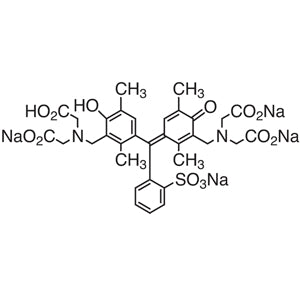
MethylxylenolBlue TCI X0052
Regular price Rp 2.359.350,00Regular priceRp 1.665.300,00Sale price Rp 2.359.350,00 -
p-XylenolBlue TCI X0016
Regular price From Rp 689.850,00Regular priceRp 497.700,00Sale price From Rp 689.850,00