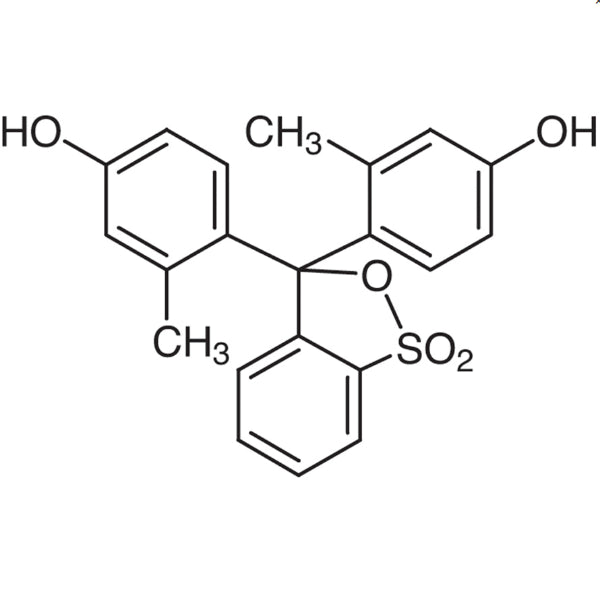
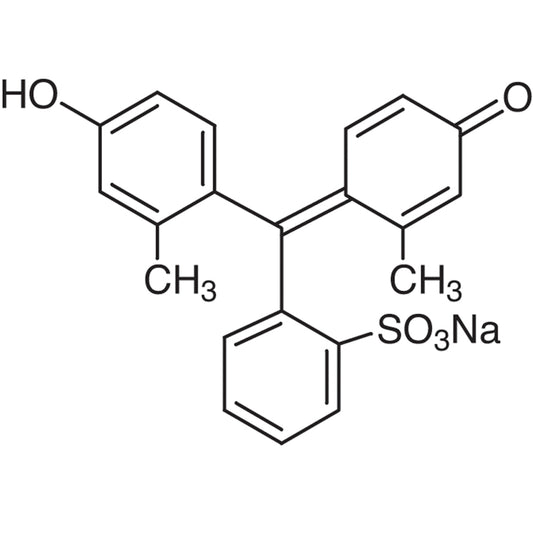
Metacresol Purple (TCI M0074), with CAS number 2303-01-7, is a chemical compound widely used in analytical chemistry, particularly in titration processes. As a chemical indicator, it plays a crucial role in identifying the endpoint of chemical reactions during acid-base or redox titrations. Its ability to change color in response to specific ions makes it an essential tool for ensuring accurate and precise analytical results. This reagent is commonly found in laboratories where quality control and analytical accuracy are paramount.
One of the key attributes that make Metacresol Purple a preferred choice is its chemical stability under controlled conditions. This stability allows for consistent performance across various analytical applications. The compound exhibits a distinct color change from purple to blue or green, which facilitates easy observation by researchers. This visual indicator is especially useful in environments where precise monitoring of reaction progress is necessary. Its reliability and reproducibility further enhance its value in laboratory settings.
In Indonesian laboratories, Metacresol Purple is frequently used in industrial, environmental, and pharmaceutical analysis. Its availability in the local market ensures that researchers and lab technicians can access this essential reagent without difficulty. The compound’s versatility and effectiveness make it a go-to option for a wide range of analytical tasks. Its role in qualitative analysis and water quality testing underscores its importance in both academic and industrial research.
TCI brochures (PDF)
- Titration Reagents and TLC Stains 2026-05-07 · p. 2
- Acid-base titration for determining the endpoint of neutralization reactions in industrial and environmental samples.
- Redox titration to monitor electron transfer reactions in pharmaceutical and chemical analysis.
- Qualitative analysis in laboratory settings to identify specific ions through color change indicators.
- Water quality testing to assess the presence of certain contaminants in environmental samples.
- Pharmaceutical research for quality control and analytical testing of drug formulations.
| Brand | TCI |
|---|---|
| CAS number | 2303-01-7 |
| Molecular formula | — |
| Purity | — |
| Category | Analytical Chemistry > Analytical Reagents > Titration Reagents |
| Pack sizes | Available in various quantities as per standard laboratory requirements |
| Physical form | Liquid |
| Storage | Store in a cool, dark place away from direct sunlight and moisture |
Metacresol Purple should be stored in a cool, dark location to maintain its chemical stability and ensure accurate performance. It is recommended to use airtight containers to prevent exposure to moisture and air, which could affect its properties. Avoid storing near strong oxidizing agents or incompatible substances to prevent chemical reactions. Keep the reagent away from heat sources to maintain its integrity. Regularly inspect storage conditions to ensure compliance with safety standards. Proper handling and storage are essential to preserve the reagent’s effectiveness and ensure safe usage in laboratory environments.
—
Produk Terkait
-
MetacresolPurpleSodiumSalt TCI S0045
Regular price From Rp 557.550,00Regular price -
BromocresolPurple TCI B0580
Regular price From Rp 505.050,00Regular price -
BromocresolPurple(0.04%inWater)[forpHDetermination] TCI B0115
Regular price Rp 848.400,00Regular price -
MethylxylenolBlue TCI X0052
Regular price Rp 2.306.850,00Regular price -
p-XylenolBlue TCI X0016
Regular price From Rp 637.350,00Regular price -
BromoxylenolBlue TCI B0998
Regular price From Rp 2.068.500,00Regular price -
EthylBis(2,4-dinitrophenyl)acetate TCI B0817
Regular price Rp 1.458.450,00Regular price -
BrilliantYellow TCI B0783
Regular price Rp 4.320.750,00Regular price

![115-40-2 Bromocresol Purple (0.04% in Water) [for pH Determination] - AMI Scientific](http://amiscientific.com/cdn/shop/files/TCI2510B0115.jpg?v=1769141533&width=533)