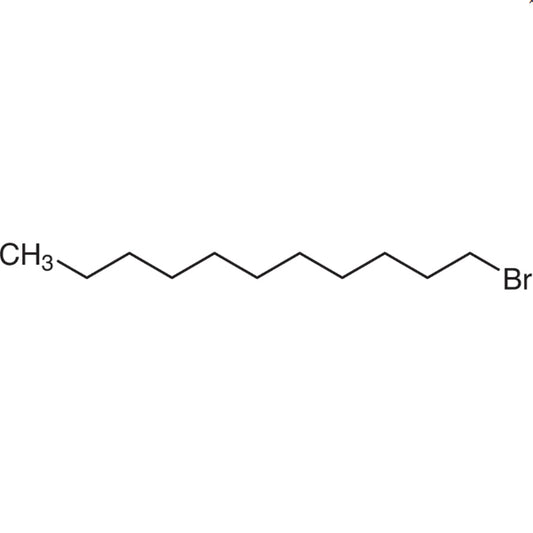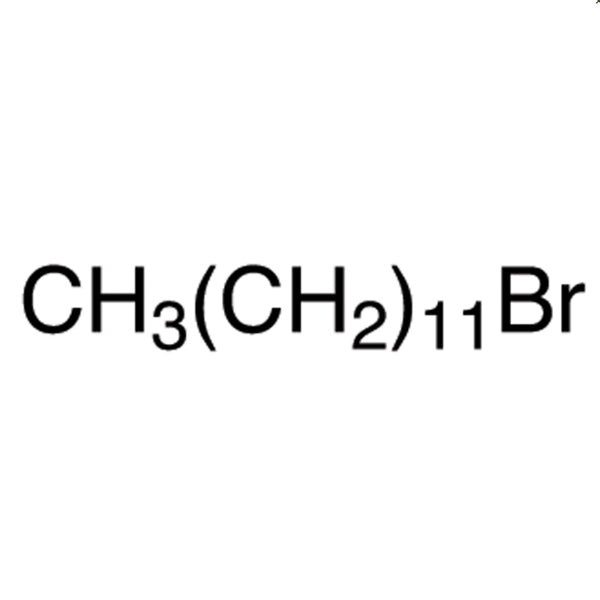
1-Bromododecane is a chemical compound widely used as a building block in various chemical reactions, particularly in the synthesis of complex organic compounds. It features a long alkyl chain with a bromo group at the terminal end, making it a versatile reagent in nucleophilic substitution reactions and bond-forming processes. Its structural simplicity and reactivity make it an essential component in the toolkit of organic chemists. In laboratory settings, it serves as a fundamental material for creating custom chemical structures, supporting research in diverse fields such as polymer science, pharmaceutical development, and surfactant synthesis.
This compound is preferred due to its stable nature and controlled reactivity, which allows for predictable outcomes in chemical reactions. Its high boiling point and low solubility in water facilitate efficient separation and isolation of products during synthesis. Additionally, its ability to react with a variety of nucleophiles, including hydroxides, amines, and alkoxides, enhances its utility across multiple synthetic pathways. These properties make it a reliable and flexible choice for both academic and industrial research applications.
In Indonesian laboratories, 1-Bromododecane is extensively used in organic chemistry research, especially in universities and research institutions focused on the synthesis of new compounds. It plays a key role in developing surfactants, polymers, and pharmaceutical intermediates. Its consistent performance and adaptability make it a staple in chemical laboratories across Indonesia, supporting both educational and applied research efforts.
TCI brochures (PDF)
- Building Blocks for Organic Semiconductor 2026-03-24 · p. 41
- Organic synthesis is a primary application where 1-Bromododecane is used to create complex molecules through nucleophilic substitution and coupling reactions.
- Surfactant development benefits from its long hydrocarbon chain, enabling the creation of surface-active agents with tailored properties.
- Polymer research utilizes this compound as a monomer or functional group modifier to design new materials with specific characteristics.
- Pharmaceutical intermediate production relies on its reactivity to synthesize drug compounds with targeted molecular structures.
- Industrial chemical formulation involves using 1-Bromododecane to create specialized compounds for applications in coatings, lubricants, and specialty chemicals.
| Brand | TCI |
|---|---|
| CAS number | 143-15-7 |
| Molecular formula | — |
| Purity | — |
| Category | Chemistry > Building Blocks > Non-Heterocyclic Building Blocks |
| Pack sizes | Available in various quantities as per supplier specifications |
| Physical form | Liquid |
| Storage | Store in a cool, dry place away from light and incompatible materials |
1-Bromododecane should be stored in a cool, dry environment, away from direct sunlight and sources of heat. It is recommended to use sealed, airtight containers made of materials compatible with organic solvents, such as glass or high-density polyethylene. Due to its low solubility in water, it should be kept separate from aqueous solutions to prevent contamination. Laboratory personnel should handle the compound with appropriate personal protective equipment, including gloves and safety goggles, to avoid skin contact or inhalation. Proper ventilation is essential when working with this material to minimize exposure risks. Always follow standard chemical safety protocols to ensure safe handling and storage practices.
—
Product Categories
Produk Terkait
-
1-Iododecane(stabilizedwithCopperchip) TCI I0494
Regular price Rp 1.378.650,00Regular priceRp 963.900,00Sale price Rp 1.378.650,00 -
1-Iodododecane(stabilizedwithCopperchip) TCI I0511
Regular price Rp 1.618.050,00Regular priceRp 1.130.850,00Sale price Rp 1.618.050,00 -
1,12-Dibromododecane TCI D1346
Regular price From Rp 1.565.550,00Regular priceRp 1.094.100,00Sale price From Rp 1.565.550,00 -
1-Chlorododecane TCI C0163
Regular price From Rp 477.750,00Regular priceRp 333.900,00Sale price From Rp 477.750,00 -
1-Bromoheptadecane TCI B0937
Regular price From Rp 3.340.050,00Regular priceRp 2.335.200,00Sale price From Rp 3.340.050,00 -
1-Bromopentadecane TCI B0936
Regular price From Rp 3.949.050,00Regular priceRp 2.761.500,00Sale price From Rp 3.949.050,00 -
1-Bromotridecane TCI B0935
Regular price From Rp 2.518.950,00Regular priceRp 1.760.850,00Sale price From Rp 2.518.950,00 -
1-Bromoundecane TCI B0934
Regular price From Rp 1.035.300,00Regular priceRp 723.450,00Sale price From Rp 1.035.300,00