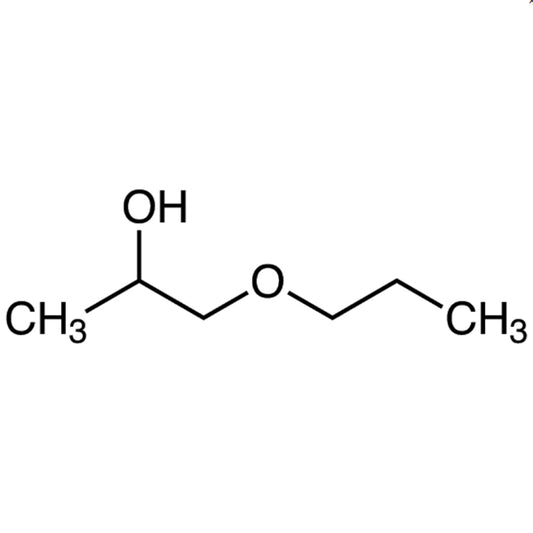
1-Bromo-2-propanol is a versatile chemical compound widely used in organic synthesis as a building block for creating complex molecular structures. It plays a crucial role in laboratory settings where researchers aim to develop new compounds or modify existing ones. This compound is particularly valuable in reactions that require the introduction of a bromine atom into a carbon chain, enabling the formation of more complex organic molecules. Its reactivity makes it an essential tool in various synthetic pathways, especially in nucleophilic substitution and bond-forming reactions.
The compound is known for its solubility in organic solvents such as ethyl acetate and ethanol, which enhances its utility in laboratory applications. Its ability to react with a variety of nucleophiles allows it to be used in multiple synthetic strategies. Additionally, the inclusion of magnesium oxide (MgO) as a stabilizer ensures that the compound remains stable under normal storage conditions, making it safer and more reliable for use in research environments. This stability also contributes to its long shelf life and consistent performance in chemical reactions.
In Indonesian laboratories, 1-Bromo-2-propanol is commonly used in organic chemistry research, particularly in projects involving the synthesis of new compounds. Its availability and reactivity make it a preferred choice for researchers working on complex molecular structures. The compound is frequently employed in academic and industrial settings where precision and reliability are essential. Its role in facilitating chemical transformations underscores its importance in the field of synthetic chemistry.
Related TCI products
- TCI P2042 1569-01-3 1-Propoxy-2-propanol (contains 2-Isopropoxy-1-propanol)
- TCI C0269 127-00-4 1-Chloro-2-propanol (contains ca. 25% 2-Chloro-1-propanol)
- TCI B0641 627-18-9 3-Bromo-1-propanol
- TCI B0932 2482-57-7 1-Bromo-2-butanol (contains ca. 30% 2-Bromo-1-butanol)
- TCI B5274 2077-19-2 2-(4-Bromophenyl)-2-propanol
- TCI B4657 25574-11-2 3-(4-Bromophenyl)-1-propanol
- Organic synthesis projects benefit from 1-Bromo-2-propanol due to its reactivity and ability to participate in nucleophilic substitution reactions, enabling the creation of complex molecular structures.
- It is ideal for developing new compounds in research settings where precise chemical modifications are required, as its bromine functionality allows for targeted synthetic transformations.
- In the preparation of functionalized alcohols, this compound serves as a key intermediate, offering a reliable starting point for further chemical modifications.
- It supports the synthesis of pharmaceutical intermediates, where its reactivity and stability make it a valuable component in drug development processes.
- The compound is well-suited for use in academic laboratories where students and researchers need a stable and reactive building block for teaching and experimental purposes.
| Brand | TCI |
|---|---|
| CAS number | 19686-73-8 |
| Molecular formula | — |
| Purity | — |
| Category | Chemistry > Building Blocks > Non-Heterocyclic Building Blocks |
| Pack sizes | Available in various quantities as per supplier specifications |
| Physical form | Liquid |
| Storage | Store in a cool, dry place away from direct sunlight and moisture |
1-Bromo-2-propanol should be stored in a cool, dry place, away from direct sunlight and moisture to maintain its stability and prevent degradation. It is recommended to use airtight containers made of glass or polyethylene to minimize exposure to air and moisture. Due to its reactivity, it should be handled in a well-ventilated area and kept away from incompatible substances such as strong bases or oxidizing agents. Proper personal protective equipment, including gloves and safety goggles, should be worn when handling this compound. Regular monitoring of storage conditions is advised to ensure the compound remains in optimal condition for laboratory use.
—
Produk Terkait
-
1-Propoxy-2-propanol(contains2-Isopropoxy-1-propanol) TCI P2042
Regular price From Rp 530.250,00Regular priceRp 386.400,00Sale price From Rp 530.250,00 -
1-Chloro-2-propanol(containsca.25%2-Chloro-1-propanol) TCI C0269
Regular price From Rp 717.150,00Regular priceRp 500.850,00Sale price From Rp 717.150,00 -
3-Bromo-1-propanol TCI B0641
Regular price From Rp 2.491.650,00Regular priceRp 1.741.950,00Sale price From Rp 2.491.650,00 -
1-Bromo-2-butanol(containsca.30%2-Bromo-1-butanol) TCI B0932
Regular price Rp 2.359.350,00Regular priceRp 1.649.550,00Sale price Rp 2.359.350,00 -
2-(4-Bromophenyl)-2-propanol TCI B5274
Regular price From Rp 1.353.450,00Regular priceRp 946.050,00Sale price From Rp 1.353.450,00 -
3-(4-Bromophenyl)-1-propanol TCI B4657
Regular price From Rp 848.400,00Regular priceRp 593.250,00Sale price From Rp 848.400,00 -
1,3-Bis[(2,2-dimethyl-1,3-dioxan-5-yl)oxy]-2-propanol TCI B3905
Regular price Rp 3.392.550,00Regular priceRp 2.387.700,00Sale price Rp 3.392.550,00 -
3-(Benzyloxy)-1-propanol TCI B3277
Regular price Rp 1.934.100,00Regular priceRp 1.368.150,00Sale price Rp 1.934.100,00