

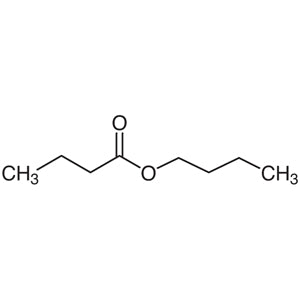
Butyl Butyrate (BB), with the CAS number 109-21-7, is a chemical compound widely used in laboratory experiments across various scientific disciplines. As an ester derived from butanol and butanoic acid, it plays a crucial role in organic synthesis and chemical reactions. Its volatility and distinct aroma make it a valuable tool in both research and industrial applications. This compound is commonly found in chemical laboratories where it is used to facilitate esterification reactions and the synthesis of more complex organic molecules.
The chemical properties of Butyl Butyrate make it a preferred choice for laboratory use. It is chemically stable and highly soluble in organic solvents such as ethanol and ethers, which is essential for many chemical processes. Its relatively low boiling point facilitates evaporation and separation during experimental procedures, making it ideal for distillation and purification techniques. Additionally, its non-toxic nature and ease of handling contribute to its popularity in laboratory settings, ensuring safety and efficiency in chemical operations.
In Indonesian laboratories, Butyl Butyrate is a common reagent used in research and development of chemical compounds. It is frequently employed in academic and industrial settings for its versatility and reliability. Its use spans across various fields, including organic chemistry, analytical chemistry, and pharmaceutical research. The compound’s consistent performance and availability make it a go-to choice for scientists and researchers in Indonesia.
TCI brochures (PDF)
- Lipids 2025-12-17 · p. 12
- Esterification Reactions – Butyl Butyrate is ideal for esterification due to its reactivity and solubility in organic solvents, facilitating the formation of ester compounds in controlled environments.
- Organic Synthesis – Its chemical stability and volatility make it a valuable intermediate in the synthesis of complex organic molecules, supporting diverse research needs.
- Analytical Chemistry – The compound’s distinct aroma and solubility properties aid in the identification and analysis of chemical substances during laboratory testing.
- Distillation and Purification – Its low boiling point allows for efficient evaporation and separation during distillation processes, simplifying purification techniques.
- Research and Development – Butyl Butyrate is widely used in R&D settings for its reliability and consistent performance in various chemical experiments.
| Brand | TCI |
|---|---|
| CAS number | 109-21-7 |
| Molecular formula | — |
| Purity | — |
| Category | Chemistry > Building Blocks > Non-Heterocyclic Building Blocks |
| Pack sizes | Available in various sizes as per supplier specifications |
| Physical form | Liquid |
| Storage | Store in a cool, dry place away from direct sunlight |
Butyl Butyrate should be stored in a cool, dry environment to maintain its chemical stability and prevent degradation. It is recommended to keep the compound in airtight containers to minimize exposure to moisture and air, which can affect its properties over time. Due to its volatility, it is important to ensure proper ventilation in the laboratory when handling this substance. Always use appropriate personal protective equipment, such as gloves and safety goggles, to avoid direct contact. The compound should be stored away from incompatible materials, such as strong oxidizers, to ensure safety in the laboratory setting. Proper handling and storage practices are essential to maintain the integrity of the compound and ensure safe laboratory operations.
—
Produk Terkait
-
sec-ButylButyrate TCI B3559
Regular price From Rp 2.050.000,00Regular priceRp 1.395.000,00Sale price From Rp 2.050.000,00 -
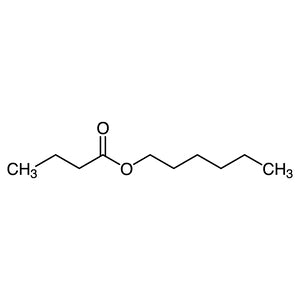
HexylButyrate TCI B1891
Regular price From Rp 1.011.000,00Regular priceRp 703.000,00Sale price From Rp 1.011.000,00 -
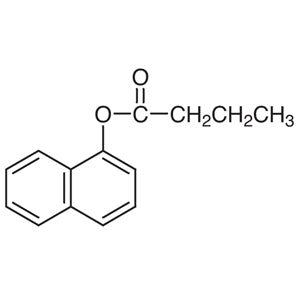
1-NaphthylButyrate TCI B1096
Regular price Rp 3.633.000,00Regular priceRp 2.471.000,00Sale price Rp 3.633.000,00 -
trans-2-HexenylButyrate TCI B1075
Regular price Rp 2.206.000,00Regular priceRp 1.501.000,00Sale price Rp 2.206.000,00 -
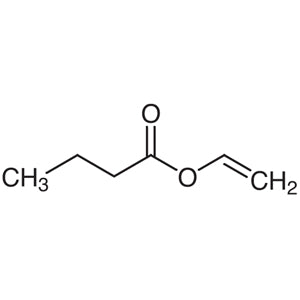
VinylButyrate(stabilizedwithMEHQ) TCI B0765
Regular price From Rp 494.000,00Regular priceRp 336.000,00Sale price From Rp 494.000,00 -
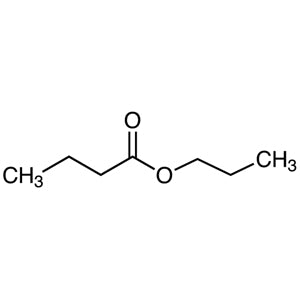
PropylButyrate TCI B0764
Regular price From Rp 494.000,00Regular priceRp 336.000,00Sale price From Rp 494.000,00 -
MethylButyrate TCI B0763
Regular price From Rp 468.000,00Regular priceRp 318.000,00Sale price From Rp 468.000,00 -
IsopropylButyrate TCI B0762
Regular price Rp 442.000,00Regular priceRp 301.000,00Sale price Rp 442.000,00