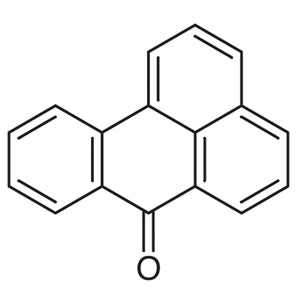
Bianthrone is a chemical compound widely used in laboratory settings for the synthesis of complex molecules. As a building block, it plays a crucial role in the development of both heterocyclic and non-heterocyclic compounds. Its versatility makes it an essential tool for organic chemists seeking to construct intricate molecular structures. In the laboratory, Bianthrone is frequently employed in reactions that require precise control over chemical reactivity and stability. Its ability to react with various functional groups enhances its applicability across a broad range of chemical processes.
Bianthrone is valued for its chemical stability and controlled reactivity, which allow for accurate and reproducible experimental outcomes. Its resistance to degradation under normal laboratory conditions ensures consistent performance in synthetic reactions. The compound’s ability to form stable intermediates during synthesis makes it a preferred choice for researchers aiming to optimize reaction pathways. Additionally, its compatibility with a variety of solvents and reagents further enhances its utility in diverse chemical applications.
In Indonesian laboratories, Bianthrone is commonly used in pharmaceutical, material science, and analytical chemistry research. It supports the development of new compounds and the study of molecular structures. Its availability in the local market ensures that researchers can access this essential reagent for their experiments. The compound’s reliability and adaptability make it a key component in the toolkit of Indonesian chemical researchers.
Related TCI products
- Organic synthesis for constructing complex molecular structures due to its reactivity and compatibility with functional groups.
- Pharmaceutical research for the development of new compounds and drug candidates through controlled chemical reactions.
- Material science applications in the creation of advanced polymers and functional materials through structural modification.
- Analytical chemistry for the characterization of compounds and the study of molecular interactions in various environments.
- Structural studies in chemistry to understand molecular behavior and reaction mechanisms in synthetic pathways.
| Brand | TCI |
|---|---|
| CAS number | 434-85-5 |
| Molecular formula | — |
| Purity | — |
| Category | Chemistry > Building Blocks > Non-Heterocyclic Building Blocks |
| Pack sizes | Available in various quantities as per standard laboratory supply options |
| Physical form | Solid |
| Storage | Store in a cool, dry place away from direct sunlight and moisture |
Bianthrone should be stored in a cool, dry environment to maintain its chemical stability. It is recommended to keep the compound in a sealed container to prevent exposure to moisture and air. Suitable storage containers include glass or plastic vessels with tight-fitting lids. Due to its chemical nature, it should be handled with appropriate personal protective equipment, such as gloves and safety goggles. Avoid contact with incompatible substances to ensure safe laboratory practices. Proper labeling of storage containers is essential for safe handling and easy identification. Regular inspection of storage conditions ensures the compound remains in optimal condition for use in experiments.
—
Produk Terkait
-
Bianthronyl TCI D1389
Regular price From Rp 1.220.100,00Regular priceRp 852.600,00Sale price From Rp 1.220.100,00 -
Benzanthrone TCI B0019
Regular price From Rp 955.500,00Regular priceRp 667.800,00Sale price From Rp 955.500,00