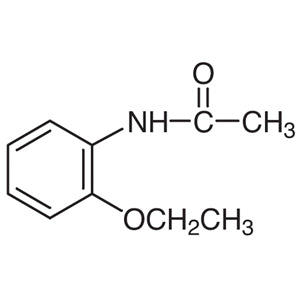
Terephthalbis(p-phenetidine) is a chemical compound widely used in electronic materials research, particularly in the development of liquid crystal (LC) materials. This compound plays a crucial role in laboratories where scientists investigate the behavior of materials under various environmental conditions. Its unique molecular structure allows for specific interactions with electric or magnetic fields, making it an essential component in advanced material studies. Due to its versatility and stability, it is frequently employed in experiments that require precise control over material properties.
The compound is preferred for its chemical stability and ability to change form in response to environmental conditions. These characteristics make it ideal for applications that demand adaptability and precision. Its complex molecular structure also contributes to its potential in applications involving dielectric properties or electromagnetic responses. As a result, it is a favored material in research settings where molecular interactions and environmental responsiveness are key factors.
In Indonesian laboratories, Terephthalbis(p-phenetidine) is commonly used in electronic material and liquid crystal research. It is particularly valuable in institutions focused on developing new technologies and advanced materials. Its role in these settings is critical for experiments that aim to explore and manipulate the optical and electronic properties of materials. This compound supports innovation in material science by enabling precise and controlled experimental outcomes.
TCI brochures (PDF)
- Liquid Crystal Materials 2026-04-01 · p. 9
Related TCI products
- TCI A0103 581-08-8 N-Acetyl-o-phenetidine
- TCI B6503 366008-67-5 2,5-Bis(trifluoromethyl)terephthalic Acid
- TCI A0554 1562-94-3 4,4'-Azoxydianisole
- TCI T3756 132123-45-6 3,4,5-Trifluorophenyl trans,trans-4'-Propylbicyclohexyl-4-carboxylate
- TCI B5364 208709-55-1 1-Butoxy-2,3-difluoro-4-(trans-4-propylcyclohexyl)benzene
- TCI B5356 174063-87-7 1,4-Bis[4-(3-acryloyloxypropoxy)benzoyloxy]-2-methylbenzene
- Liquid Crystal Material Development: This compound is ideal for creating and testing new liquid crystal materials due to its unique molecular structure and responsiveness to electric and magnetic fields.
- Electronic Material Research: It supports studies on materials with optical and electronic properties, enabling scientists to explore their behavior under different conditions.
- Environmental Response Studies: Its ability to change form in response to environmental changes makes it suitable for experiments analyzing material adaptability.
- Dielectric Property Investigations: The compound’s complex structure allows for in-depth research on dielectric behavior, essential for advanced material applications.
- Molecular Interaction Studies: It is used to study how complex molecules interact under various stimuli, contributing to the understanding of material behavior in different environments.
| Brand | TCI |
|---|---|
| CAS number | 17696-60-5 |
| Molecular formula | — |
| Purity | — |
| Category | Materials Science > Electronic Materials > Liquid Crystal (LC) Materials |
| Pack sizes | — |
| Physical form | — |
| Storage | Store in a cool, dry place away from direct sunlight |
Terephthalbis(p-phenetidine) should be stored in a cool, dry place, away from direct sunlight and sources of heat. It is recommended to use airtight containers to prevent moisture absorption and contamination. Due to its chemical stability, it does not require refrigeration but should be kept in a secure location to avoid exposure to incompatible substances. Laboratory personnel should handle the compound with care, using appropriate personal protective equipment such as gloves and safety goggles. Proper labeling of storage containers is essential to ensure safe handling and prevent accidental exposure. Regular inspection of storage conditions is advised to maintain the integrity of the compound.
—
Produk Terkait
-
N-Acetyl-o-phenetidine TCI A0103
Regular price Rp 2.677.500,00Regular priceRp 1.887.900,00Sale price Rp 2.677.500,00 -
2,5-Bis(trifluoromethyl)terephthalicAcid TCI B6503
Regular price From Rp 3.155.250,00Regular priceRp 2.206.050,00Sale price From Rp 3.155.250,00 -
4,4'-Azoxydianisole TCI A0554
Regular price From Rp 1.458.450,00Regular priceRp 1.019.550,00Sale price From Rp 1.458.450,00 -
3,4,5-Trifluorophenyltrans,trans-4'-Propylbicyclohexyl-4-carboxylate TCI T3756
Regular price From Rp 1.483.650,00Regular priceRp 1.053.150,00Sale price From Rp 1.483.650,00 -
1-Butoxy-2,3-difluoro-4-(trans-4-propylcyclohexyl)benzene TCI B5364
Regular price From Rp 1.696.800,00Regular priceRp 1.186.500,00Sale price From Rp 1.696.800,00 -
1,4-Bis[4-(3-acryloyloxypropoxy)benzoyloxy]-2-methylbenzene TCI B5356
Regular price From Rp 1.538.250,00Regular priceRp 1.090.950,00Sale price From Rp 1.538.250,00