Terephthalic Acid from TCI is an aromatic dicarboxylic acid with two carboxyl groups at the para (1,4) positions of a benzene ring. It is best known as the main monomer of polyethylene terephthalate (PET), the plastic widely used for bottles and polyester fibres. In materials research, terephthalic acid is one of the most important organic linkers for synthesising Metal-Organic Frameworks (MOFs). For this reason, TCI lists it under MOF raw materials and organic-inorganic hybrid materials, making it a core reagent for laboratories working on porous framework chemistry.
Its linear, rigid and symmetrical molecular shape makes terephthalic acid an ideal bridge between metal clusters. This linker forms ordered porous frameworks such as MOF-5 with zinc, UiO-66 with zirconium, and MIL-53 and MIL-101 with trivalent metals. Both carboxyl groups deprotonate easily and coordinate strongly with metal ions, which gives stable, well-defined structures. It has low solubility in water but dissolves in polar solvents such as DMF and DMSO, which are commonly used in solvothermal synthesis. Terephthalic acid also reacts with hydroxyl radicals to form a fluorescent product, so it is useful as an analytical probe.
In Indonesia, terephthalic acid is relevant to university research groups, materials science laboratories and polymer research teams. Researchers developing MOFs for gas adsorption, catalysis or separation studies use it as a standard linker when they synthesise and benchmark well-known frameworks. Polymer and plastics laboratories use it as a reference compound in PET-related studies. Environmental and analytical chemistry groups can use its reaction with hydroxyl radicals to study oxidation processes and advanced oxidation treatments.
TCI brochures (PDF)
- Organic Linker Molecules for Metal Organic Frameworks (MOFs) 2026-05-11 · p. 3
- Biomaterials Research Reagents 2025-02-19 · p. 22
- Monomers 2025-05-28 · p. 36
Related TCI products
- MOF synthesis: terephthalic acid is a standard linear dicarboxylate linker for building frameworks such as MOF-5, UiO-66, MIL-53 and MIL-101 with zinc, zirconium and trivalent metals.
- Solvothermal reactions: it dissolves in polar solvents such as DMF and DMSO, which suits the solvothermal methods most often used to grow crystalline porous frameworks in the laboratory.
- Coordination chemistry studies: its two easily deprotonated carboxyl groups bind strongly to metal ions, making it a useful model ligand for studying how metal clusters are bridged.
- Polymer and PET research: as the main monomer of polyethylene terephthalate, it serves as a reference compound in studies of polyester synthesis, PET materials and polyester fibres.
- Hydroxyl radical detection: terephthalic acid reacts with hydroxyl radicals to form a fluorescent product, so it works as an analytical probe in oxidation and photocatalysis experiments.
| Brand | TCI (product code T0166) |
|---|---|
| CAS number | 100-21-0 |
| Molecular formula | — |
| Purity | — |
| Category | Materials Science > Organic-Inorganic Hybrid Materials > Metal Organic Frameworks (MOF) and Their Raw Materials |
| Pack sizes | available in the TCI pack sizes listed on the product page |
| Physical form | solid; see the product label and certificate of analysis for details |
| Storage | keep tightly closed in a cool, dry place |
Store terephthalic acid in its original, tightly closed container in a cool, dry and well-ventilated area, away from heat sources, direct sunlight and incompatible materials such as strong oxidising agents. After opening, reseal the container promptly to protect the contents from moisture and contamination. Wear standard laboratory protective equipment, including safety glasses, gloves and a lab coat. Avoid creating or breathing in dust, and weigh the powder in a fume hood or a ventilated area. Before use, read the TCI Safety Data Sheet for specific hazards, first-aid measures and disposal requirements, and follow your institution's chemical safety procedures.
—
Product Categories
- Organic-Inorganic Hybrid MaterialsMetal Organic Frameworks (MOF) and Their Raw MaterialsOrganic Linker Molecules [Metal Organic Frameworks (MOFs) Precursors]
- Polymer/Macromolecule ReagentsMetal Organic Frameworks (MOF) and Their Raw MaterialsOrganic Linker Molecules [Metal Organic Frameworks (MOFs) Precursors]
- Polymer/Macromolecule ReagentsMonomersDicarboxylic Acid Monomers
- Biomaterials/Biocompatible Materials Research ReagentsMonomers and Macromonomers [Biomaterials/Biocompatible Materials Research Reagents]Dicarboxylic Acid Monomers [Biomaterials/Biocompatible Materials Research Reagents]
Produk Terkait
-
TetrafluoroterephthalicAcid TCI T0930
Regular price From Rp 980.700,00Regular priceRp 685.650,00Sale price From Rp 980.700,00 -
2-MethylterephthalicAcid TCI M3640
Regular price Rp 3.419.850,00Regular priceRp 2.390.850,00Sale price Rp 3.419.850,00 -
2,5-DimethylterephthalicAcid TCI D2208
Regular price Rp 11.448.150,00Regular priceRp 8.005.200,00Sale price Rp 11.448.150,00 -
AcetylenedicarboxylicAcid TCI A0088
Regular price From Rp 1.220.100,00Regular priceRp 868.350,00Sale price From Rp 1.220.100,00 -
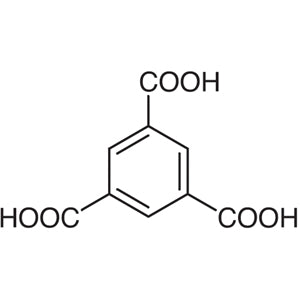
1,3,5-BenzenetricarboxylicAcid TCI B0043
Regular price From Rp 1.035.300,00Regular priceRp 723.450,00Sale price From Rp 1.035.300,00 -
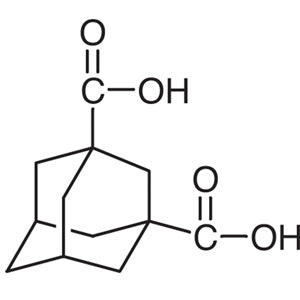
1,3-AdamantanedicarboxylicAcid TCI A1358
Regular price From Rp 1.749.300,00Regular priceRp 1.223.250,00Sale price From Rp 1.749.300,00 -
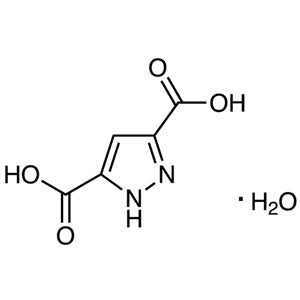
Pyrazole-3,5-dicarboxylicAcidMonohydrate TCI P1048
Regular price From Rp 1.483.650,00Regular priceRp 1.053.150,00Sale price From Rp 1.483.650,00 -
2,3-PyrazinedicarboxylicAcid TCI P0545
Regular price Rp 1.829.100,00Regular priceRp 1.294.650,00Sale price Rp 1.829.100,00