Pyrazole-3,5-dicarboxylic Acid Monohydrate from TCI is a heterocyclic pyrazole compound that carries two carboxylic acid groups at the 3 and 5 positions of the ring. It is supplied as the monohydrate. In the laboratory, this compound is widely known as an organic ligand, or linker, for the synthesis of metal-organic frameworks (MOFs) and coordination polymers. TCI lists it among its organic-inorganic hybrid materials. This placement reflects its role as a raw material for porous materials, which are being studied extensively for gas storage, separation, and catalysis.
The main appeal of this compound is its large number of coordination sites. It has two pyrazole nitrogen atoms and two carboxylic acid groups, and each of these can be deprotonated and bind to metal ions. This combination allows many different bridging modes between metal centres, which can produce one-, two-, or three-dimensional networks with a wide range of topologies. The rigid, planar pyrazole backbone helps form well-ordered crystalline structures, which matters when samples are characterised by X-ray diffraction. The carboxylic acid groups can also be esterified or amidated when the compound is used as a building block in organic synthesis.
In Indonesian laboratories, this compound is mostly used in university materials chemistry and inorganic chemistry research groups, national research institutions, and postgraduate projects on porous materials. Researchers use it to prepare new coordination polymers and MOFs. They then study the structure, porosity, and adsorption behaviour of these materials. It also suits teaching laboratories and thesis work on crystal engineering, where a well-defined, multifunctional linker from an established brand like TCI supports reproducible synthesis and reliable comparison with published work.
- Metal-organic framework synthesis: its two pyrazole nitrogens and two carboxylic acid groups let it link metal ions into extended porous networks suitable for structural and porosity studies.
- Coordination polymer research: its many possible bridging modes between metal centres allow researchers to build one-, two-, and three-dimensional networks with a range of topologies.
- Porous materials for gas storage and separation: as a MOF linker, it serves as a starting material for framework materials studied for gas uptake, selective separation, and related adsorption work.
- Crystal engineering and X-ray diffraction studies: its rigid, planar pyrazole backbone helps produce ordered crystalline products, making single-crystal and powder X-ray diffraction characterisation easier.
- Organic synthesis building block: its carboxylic acid groups can be esterified or amidated, so the compound can be converted into functionalised pyrazole derivatives for further synthetic work.
| Brand | TCI (product code P1048) |
|---|---|
| CAS number | 303180-11-2 |
| Molecular formula | — |
| Purity | — |
| Category | Materials Science > Organic-Inorganic Hybrid Materials > Metal Organic Frameworks (MOF) and Their Raw Materials |
| Pack sizes | please ask AMI Scientific for the pack sizes currently available |
| Physical form | pyrazole-3,5-dicarboxylic acid supplied as the monohydrate |
| Storage | keep tightly closed in a cool, dry place, following the manufacturer's label and Safety Data Sheet |
Keep Pyrazole-3,5-dicarboxylic Acid Monohydrate in its original, tightly closed container in a cool, dry, well-ventilated area, away from direct sunlight, heat sources, and incompatible materials such as strong bases and strong oxidising agents. Because this is a hydrate, keep it protected from excess moisture and avoid leaving the container open for long periods so the water content stays consistent. Wear standard personal protective equipment when handling it, including safety glasses, gloves, and a laboratory coat. Weigh and transfer the solid in a fume hood or a well-ventilated area to avoid breathing in dust. Clean up spills promptly and dispose of waste according to local regulations. Always read the TCI Safety Data Sheet before use for full hazard and storage information.
—
Produk Terkait
-
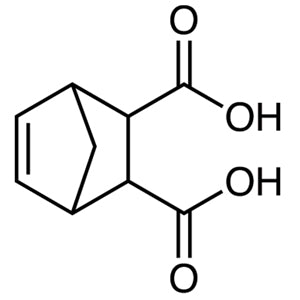
5-Norbornene-2,3-dicarboxylicAcid TCI N1029
Regular price From Rp 1.273.650,00Regular price -
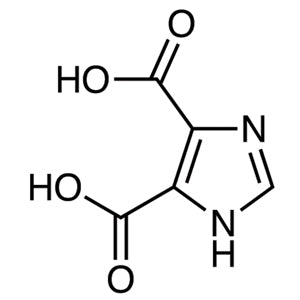
1H-Imidazole-4,5-dicarboxylicAcid TCI I0003
Regular price Rp 2.625.000,00Regular price -
Anthraquinone-2,3-dicarboxylicAcid TCI A1681
Regular price Rp 9.461.550,00Regular price -
Azobenzene-4,4'-dicarboxylicAcid TCI A1596
Regular price From Rp 3.419.850,00Regular price -
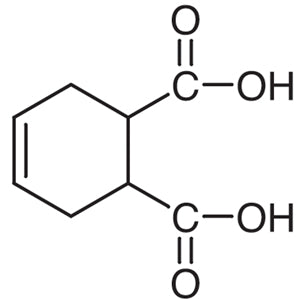
cis-4-Cyclohexene-1,2-dicarboxylicAcid TCI C0492
Regular price From Rp 875.700,00Regular price -
Bicyclo[2.2.2]octane-1,4-dicarboxylicAcid TCI B5595
Regular price Rp 4.957.050,00Regular price -
AcetylenedicarboxylicAcid TCI A0088
Regular price From Rp 1.167.600,00Regular price -
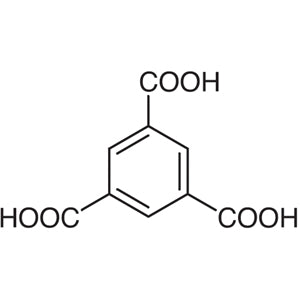
1,3,5-BenzenetricarboxylicAcid TCI B0043
Regular price From Rp 1.035.300,00Regular price


![Bicyclo[2.2.2]octane-1,4-dicarboxylic Acid (CAS 711-02-4) - TCI B5595 - AMI Scientific](http://amiscientific.com/cdn/shop/files/TCI2510B5595.jpg?v=1767092548&width=533)