Azobenzene-4,4'-dicarboxylic Acid is an organic compound widely used in scientific research, particularly in the fields of material science and chemical engineering. This compound plays a crucial role in the synthesis of metal organic frameworks (MOFs), which are advanced materials with unique structural and functional properties. In laboratory settings, it serves as a key raw material for creating complex MOF structures that exhibit high surface area and tunable porosity. Its importance lies in its ability to form stable coordination bonds with metal ions, enabling the development of materials with tailored properties for various applications.
The compound is valued for its molecular stability and reactivity, making it a preferred choice for researchers working on MOF synthesis. Its chemical structure allows for effective interaction with metal centers, facilitating the formation of robust and highly ordered frameworks. Additionally, Azobenzene-4,4'-dicarboxylic Acid demonstrates good thermal stability, which is essential for maintaining the integrity of synthesized materials under varying experimental conditions. These properties make it a reliable and versatile component in the development of advanced functional materials.
In Indonesian laboratories, Azobenzene-4,4'-dicarboxylic Acid is commonly used in research focused on the development of new materials and their applications in catalysis, gas storage, and chemical sensing. It is widely utilized by research institutions and universities to expand knowledge about the properties and potential uses of MOFs. Its availability and reliability have made it an essential tool for scientific innovation in the region.
TCI brochures (PDF)
- Organic Linker Molecules for Metal Organic Frameworks (MOFs) 2026-05-11 · p. 4
- Monomers 2025-05-28 · p. 34
Related TCI products
- TCI A1681 27485-15-0 Anthraquinone-2,3-dicarboxylic Acid
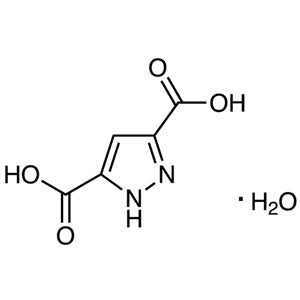
- TCI P1048 303180-11-2 Pyrazole-3,5-dicarboxylic Acid Monohydrate
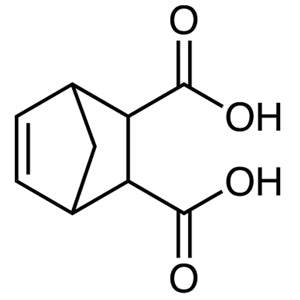
- TCI N1029 3813-52-3 5-Norbornene-2,3-dicarboxylic Acid
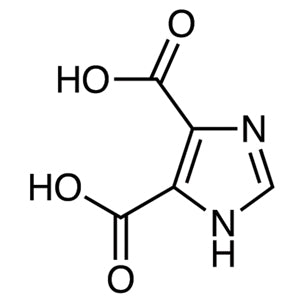
- TCI I0003 570-22-9 1H-Imidazole-4,5-dicarboxylic Acid
- TCI A1598 621-18-1 Azobenzene-3,3'-dicarboxylic Acid
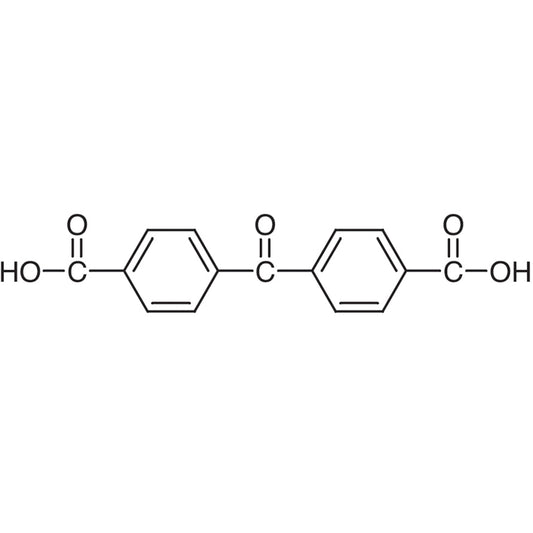
- TCI B1741 964-68-1 Benzophenone-4,4'-dicarboxylic Acid
- Metal Organic Frameworks (MOF) synthesis due to its ability to form stable coordination bonds with metal ions, enabling the creation of highly porous and functional materials.
- Catalytic reactions as a structural component in catalysts that require high surface area and tunable pore sizes for efficient reaction processes.
- Gas storage applications because of its high surface area and porosity, which allow for the adsorption of gases such as hydrogen or carbon dioxide.
- Chemical sensor development due to its molecular structure that can interact with various chemical species, enhancing sensitivity and selectivity.
- Material characterization studies as a reference compound for analyzing the structural and chemical properties of MOFs and other advanced materials.
| Brand | TCI |
|---|---|
| CAS number | 586-91-4 |
| Molecular formula | — |
| Purity | — |
| Category | Materials Science > Organic-Inorganic Hybrid Materials > Metal Organic Frameworks (MOF) and Their Raw Materials |
| Pack sizes | Available in various quantities as per standard laboratory supply specifications |
| Physical form | Solid powder |
| Storage | Store in a cool, dry place away from direct sunlight and moisture |
Azobenzene-4,4'-dicarboxylic Acid should be stored in a cool, dry environment to maintain its chemical stability and prevent degradation. It is recommended to use airtight containers to protect it from moisture and air exposure. Since it is a solid powder, it should be handled with care to avoid inhalation or skin contact. In laboratory settings, it is important to ensure proper ventilation when working with the compound. Always wear appropriate personal protective equipment, such as gloves and safety goggles, to minimize exposure risks. Proper storage and handling practices are essential to maintain the integrity of the compound and ensure safe laboratory operations.
—
Product Categories
- Organic-Inorganic Hybrid MaterialsMetal Organic Frameworks (MOF) and Their Raw MaterialsOrganic Linker Molecules [Metal Organic Frameworks (MOFs) Precursors]
- Polymer/Macromolecule ReagentsMetal Organic Frameworks (MOF) and Their Raw MaterialsOrganic Linker Molecules [Metal Organic Frameworks (MOFs) Precursors]
- Polymer/Macromolecule ReagentsMonomersDicarboxylic Acid Monomers
Produk Terkait
-
Anthraquinone-2,3-dicarboxylicAcid TCI A1681
Regular price Rp 9.461.550,00Regular priceRp 6.616.050,00Sale price Rp 9.461.550,00 -
Pyrazole-3,5-dicarboxylicAcidMonohydrate TCI P1048
Regular price From Rp 1.483.650,00Regular priceRp 1.053.150,00Sale price From Rp 1.483.650,00 -
5-Norbornene-2,3-dicarboxylicAcid TCI N1029
Regular price From Rp 1.273.650,00Regular priceRp 890.400,00Sale price From Rp 1.273.650,00 -
1H-Imidazole-4,5-dicarboxylicAcid TCI I0003
Regular price Rp 2.677.500,00Regular priceRp 1.887.900,00Sale price Rp 2.677.500,00 -
Azobenzene-3,3'-dicarboxylicAcid TCI A1598
Regular price From Rp 3.605.700,00Regular priceRp 2.521.050,00Sale price From Rp 3.605.700,00 -
Benzophenone-4,4'-dicarboxylicAcid TCI B1741
Regular price Rp 6.413.400,00Regular priceRp 4.500.300,00Sale price Rp 6.413.400,00 -
Benzophenone-2,4'-dicarboxylicAcidMonohydrate TCI B0084
Regular price Rp 3.975.300,00Regular priceRp 2.795.100,00Sale price Rp 3.975.300,00 -
3,4-Ethylenedioxythiophene-2,5-dicarboxylicAcid TCI E0743
Regular price From Rp 2.359.350,00Regular priceRp 1.665.300,00Sale price From Rp 2.359.350,00