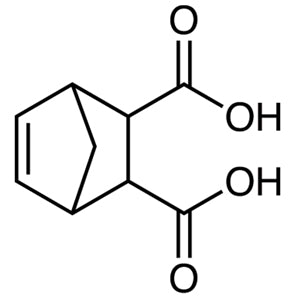
5-Norbornene-2,3-dicarboxylic Acid is a chemical compound widely used in scientific research, particularly in the field of material science. This material serves as a key raw material in the synthesis of metal organic frameworks (MOFs), which are advanced structures with diverse applications in catalysis, gas storage, and chemical sensing. In the laboratory, it plays a crucial role in the development of complex compounds that require specific reactivity and stability. Its unique molecular structure contributes to its effectiveness in various chemical processes, making it an essential component for researchers working on innovative material development.
The compound's molecular structure features a norbornene ring, which provides structural stability and enhances chemical reactivity. This characteristic makes it highly suitable for reactions that require controlled molecular interactions. Additionally, its polar nature allows it to interact effectively with a wide range of solvents and reagents, further expanding its utility in synthetic chemistry. These properties make it a preferred choice for laboratories aiming to achieve precise and reproducible results in their experiments.
In Indonesian laboratories, 5-Norbornene-2,3-dicarboxylic Acid is commonly used in academic and research institutions. It supports the development of new materials with potential applications in industrial and environmental technologies. Its availability in the local market facilitates research activities, enabling scientists to conduct experiments that contribute to technological advancements and sustainable solutions.
TCI brochures (PDF)
- Norbornene-Based Cyclic Olefin Monomers 2026-07-02 · p. 1
- Organic Linker Molecules for Metal Organic Frameworks (MOFs) 2026-05-11 · p. 3
- Biomaterials Research Reagents 2025-02-19 · p. 22
- Monomers 2025-05-28 · p. 19
Related TCI products
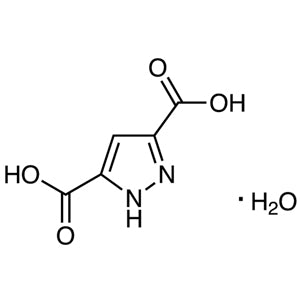
- TCI P1048 303180-11-2 Pyrazole-3,5-dicarboxylic Acid Monohydrate
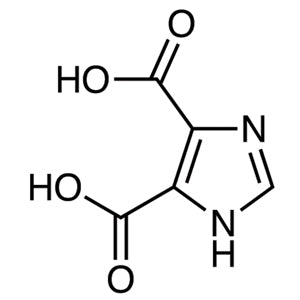
- TCI I0003 570-22-9 1H-Imidazole-4,5-dicarboxylic Acid
- TCI A1681 27485-15-0 Anthraquinone-2,3-dicarboxylic Acid
- TCI A1596 586-91-4 Azobenzene-4,4'-dicarboxylic Acid
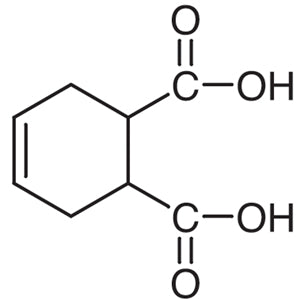
- TCI C0492 2305-26-2 cis-4-Cyclohexene-1,2-dicarboxylic Acid
- TCI B5595 711-02-4 Bicyclo[2.2.2]octane-1,4-dicarboxylic Acid
- Metal Organic Frameworks (MOFs) synthesis: This compound is ideal for constructing MOFs due to its structural stability and reactivity, enabling the creation of porous materials with high surface area.
- Catalytic reactions: Its polar nature and reactivity make it suitable for catalytic processes where precise control over reaction conditions is essential.
- Gas storage and separation: The compound's molecular structure allows it to be used in the development of materials for efficient gas adsorption and selective separation.
- Chemical sensing applications: Its ability to interact with various reagents makes it valuable in the design of sensitive and selective chemical sensors.
- Organic synthesis of advanced materials: It is frequently used in the synthesis of complex organic compounds that require specific functional groups and stability.
| Brand | TCI |
|---|---|
| CAS number | 3813-52-3 |
| Molecular formula | — |
| Purity | — |
| Category | Materials Science > Organic-Inorganic Hybrid Materials > Metal Organic Frameworks (MOF) and Their Raw Materials |
| Pack sizes | Available in various quantities as per standard laboratory supply |
| Physical form | Solid |
| Storage | Store in a cool, dry place away from moisture and direct sunlight |
This compound should be stored in a cool, dry environment to maintain its chemical integrity and prevent degradation. It is recommended to use airtight containers to protect it from moisture and contaminants. Due to its polar nature, it is important to handle it with appropriate personal protective equipment, such as gloves and safety goggles, to ensure laboratory safety. The compound should be kept away from incompatible substances to avoid any potential chemical reactions. Regular inspection of storage conditions is advised to ensure long-term stability and usability in research applications.
—
Product Categories
- Organic-Inorganic Hybrid MaterialsMetal Organic Frameworks (MOF) and Their Raw MaterialsOrganic Linker Molecules [Metal Organic Frameworks (MOFs) Precursors]
- Polymer/Macromolecule ReagentsMetal Organic Frameworks (MOF) and Their Raw MaterialsOrganic Linker Molecules [Metal Organic Frameworks (MOFs) Precursors]
- Polymer/Macromolecule ReagentsMonomersCyclic Olefin Monomers
- Polymer/Macromolecule ReagentsMonomersDicarboxylic Acid Monomers
- Biomaterials/Biocompatible Materials Research ReagentsMonomers and Macromonomers [Biomaterials/Biocompatible Materials Research Reagents]Dicarboxylic Acid Monomers [Biomaterials/Biocompatible Materials Research Reagents]
Produk Terkait
-
Pyrazole-3,5-dicarboxylicAcidMonohydrate TCI P1048
Regular price From Rp 1.483.650,00Regular priceRp 1.053.150,00Sale price From Rp 1.483.650,00 -
1H-Imidazole-4,5-dicarboxylicAcid TCI I0003
Regular price Rp 2.677.500,00Regular priceRp 1.887.900,00Sale price Rp 2.677.500,00 -
Anthraquinone-2,3-dicarboxylicAcid TCI A1681
Regular price Rp 9.461.550,00Regular priceRp 6.616.050,00Sale price Rp 9.461.550,00 -
Azobenzene-4,4'-dicarboxylicAcid TCI A1596
Regular price From Rp 3.419.850,00Regular priceRp 2.390.850,00Sale price From Rp 3.419.850,00 -
cis-4-Cyclohexene-1,2-dicarboxylicAcid TCI C0492
Regular price From Rp 875.700,00Regular priceRp 612.150,00Sale price From Rp 875.700,00 -
Bicyclo[2.2.2]octane-1,4-dicarboxylicAcid TCI B5595
Regular price Rp 4.957.050,00Regular priceRp 3.466.050,00Sale price Rp 4.957.050,00 -
AcetylenedicarboxylicAcid TCI A0088
Regular price From Rp 1.220.100,00Regular priceRp 868.350,00Sale price From Rp 1.220.100,00 -
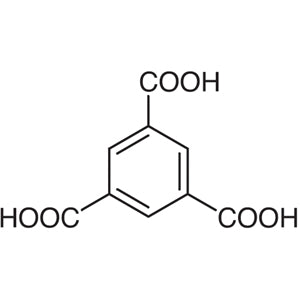
1,3,5-BenzenetricarboxylicAcid TCI B0043
Regular price From Rp 1.035.300,00Regular priceRp 723.450,00Sale price From Rp 1.035.300,00




![TCI B5595 711-02-4 Bicyclo[2.2.2]octane-1,4-dicarboxylic Acid](http://amiscientific.com/cdn/shop/files/TCI2510B5595_266ea02a-4191-4ab0-939c-2e0fbe571885.jpg?v=1792630737&width=533)
![Bicyclo[2.2.2]octane-1,4-dicarboxylic Acid (CAS 711-02-4) - TCI B5595 - AMI Scientific](http://amiscientific.com/cdn/shop/files/TCI2510B5595.jpg?v=1767092548&width=533)