Benzophenone-2,4'-dicarboxylic Acid Monohydrate is a chemical compound widely used in laboratory settings for its versatility in chemical and material science applications. As a monomer, it serves as a fundamental building block in polymer synthesis, enabling the creation of polymers with specific mechanical and thermal properties. Its presence in polymerization reactions makes it essential for developing advanced materials with tailored characteristics. This compound is commonly employed in research to achieve precise molecular structures, supporting both academic and industrial experimentation.
The compound is valued for its stable chemical structure and favorable reactivity under various reaction conditions. These properties make it a reliable choice for synthetic processes in organic and polymer chemistry. Its solubility in organic solvents further enhances its utility, allowing for efficient incorporation into complex synthesis protocols. Additionally, its consistent physical and chemical behavior ensures reproducibility in experimental results, making it a trusted material in scientific research.
In Indonesian laboratories, Benzophenone-2,4'-dicarboxylic Acid Monohydrate is frequently used in polymer-related studies and chemical synthesis projects. It is a staple in research institutions and universities, where it supports investigations into material properties and advanced chemical reactions. Its reliability and performance make it a preferred reagent for achieving accurate and consistent outcomes in experimental work.
TCI brochures (PDF)
- Monomers 2025-05-28 · p. 34
Related TCI products
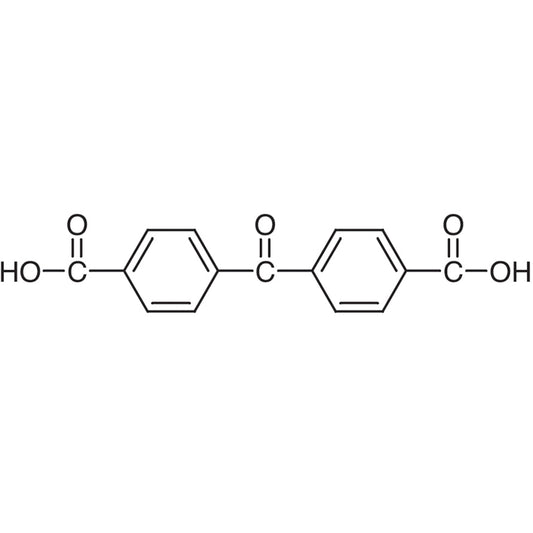
- TCI B1741 964-68-1 Benzophenone-4,4'-dicarboxylic Acid
- TCI A1681 27485-15-0 Anthraquinone-2,3-dicarboxylic Acid
- TCI A1598 621-18-1 Azobenzene-3,3'-dicarboxylic Acid
- TCI A1596 586-91-4 Azobenzene-4,4'-dicarboxylic Acid
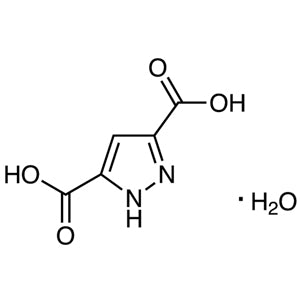
- TCI P1048 303180-11-2 Pyrazole-3,5-dicarboxylic Acid Monohydrate
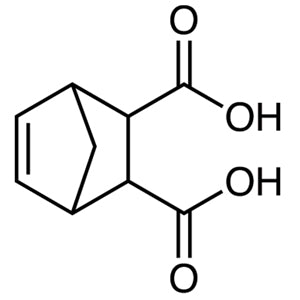
- TCI N1029 3813-52-3 5-Norbornene-2,3-dicarboxylic Acid
- Polymer synthesis applications benefit from its role as a monomer, enabling the creation of polymers with specific mechanical and thermal properties.
- Organic chemistry experiments utilize its reactivity and solubility in organic solvents for complex molecule synthesis.
- Material science research employs it to develop advanced materials with tailored characteristics for industrial and academic use.
- Structural analysis projects rely on its stable chemical structure to produce consistent molecular outcomes.
- Chemical reaction optimization in laboratories benefits from its predictable behavior under various reaction conditions.
| Brand | TCI |
|---|---|
| CAS number | 85-58-5 |
| Molecular formula | — |
| Purity | — |
| Category | Materials Science > Polymer/Macromolecule Reagents > Monomers |
| Pack sizes | Available in standard laboratory quantities |
| Physical form | Solid, crystalline |
| Storage | Store in a cool, dry place away from moisture and direct sunlight |
This compound should be stored in a cool, dry environment to maintain its chemical stability and prevent degradation. It is recommended to use airtight containers to protect it from moisture and humidity, which can affect its performance. Due to its solid form, it should be kept in a secure location away from direct sunlight and sources of heat. General laboratory precautions include handling with care to avoid contamination and ensuring proper ventilation when working with it. Its inert nature makes it relatively safe to handle, but standard laboratory safety protocols should still be followed to ensure a controlled and safe working environment.
—
Produk Terkait
-
Benzophenone-4,4'-dicarboxylicAcid TCI B1741
Regular price Rp 6.360.900,00Regular price -
Anthraquinone-2,3-dicarboxylicAcid TCI A1681
Regular price Rp 9.461.550,00Regular price -
Azobenzene-3,3'-dicarboxylicAcid TCI A1598
Regular price From Rp 3.605.700,00Regular price -
Azobenzene-4,4'-dicarboxylicAcid TCI A1596
Regular price From Rp 3.419.850,00Regular price -
Pyrazole-3,5-dicarboxylicAcidMonohydrate TCI P1048
Regular price Rp 1.483.650,00Regular priceRp 1.053.150,00Sale price Rp 1.483.650,00 -
5-Norbornene-2,3-dicarboxylicAcid TCI N1029
Regular price Rp 1.273.650,00Regular priceRp 890.400,00Sale price Rp 1.273.650,00 -
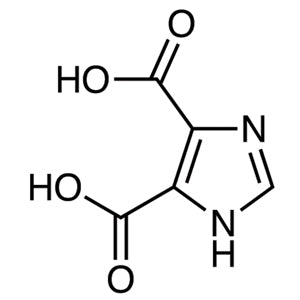
1H-Imidazole-4,5-dicarboxylicAcid TCI I0003
Regular price Rp 2.677.500,00Regular priceRp 1.887.900,00Sale price Rp 2.677.500,00 -
3,4-Ethylenedioxythiophene-2,5-dicarboxylicAcid TCI E0743
Regular price Rp 2.359.350,00Regular priceRp 1.665.300,00Sale price Rp 2.359.350,00