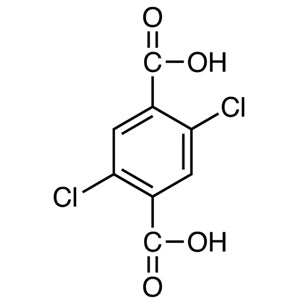
Tetrafluoroterephthalic Acid (TFP) is a chemical compound widely used in scientific and technical applications within laboratory settings. It belongs to the category of organic compounds with a complex chemical structure, particularly due to the presence of fluorine atoms, which contribute to its unique properties. In the laboratory, TFP serves as a key raw material in the synthesis of organic-inorganic hybrid materials, especially in the production of Metal Organic Frameworks (MOFs). These materials are highly versatile and have applications across various scientific disciplines.
TFP is valued for its chemical stability and controlled reactivity, making it a preferred choice for researchers aiming to create compounds with specific properties. The presence of fluorine in its molecular structure enhances its resistance to certain chemical environments and allows for the formation of strong bonds with metals. These characteristics make TFP an essential component in the development of advanced materials and complex chemical structures. Its ability to interact with metals and its chemical inertness under specific conditions further support its use in specialized laboratory applications.
In Indonesian laboratories, TFP is commonly used in scientific research focused on the development of new materials, including MOFs and composite materials. Its role in the synthesis of hybrid materials has made it a valuable resource for researchers working on innovative material science projects. The compound is also utilized in studies related to chemical reactivity and environmental stability, contributing to the advancement of scientific knowledge in the region.
TCI brochures (PDF)
- Fluorinated Monomers 2025-10-03 · p. 2
- Organic Linker Molecules for Metal Organic Frameworks (MOFs) 2026-05-11 · p. 3
- Monomers 2025-05-28 · p. 36
- Fluorination Reagents, Fluorinated Building Blocks 2026-03-18 · p. 34
Related TCI products
- Metal Organic Frameworks (MOF) synthesis: TFP is a key precursor in the creation of MOFs due to its ability to form stable metal-ligand bonds, enabling the development of porous materials with high surface area and adsorption capacity.
- Organic-inorganic hybrid material research: TFP’s chemical structure allows it to act as a bridging ligand between organic and inorganic components, facilitating the formation of hybrid materials with tailored properties.
- Environmental chemistry studies: The compound's resistance to certain chemical environments makes it suitable for experiments involving chemical stability and degradation analysis.
- Advanced material development: TFP is used in the fabrication of novel materials with enhanced mechanical and thermal properties, supporting innovation in material science.
- Chemical reactivity investigations: Its controlled reactivity allows researchers to study reaction mechanisms and develop new synthetic pathways for complex compounds.
| Brand | TCI |
|---|---|
| CAS number | 652-36-8 |
| Molecular formula | — |
| Purity | — |
| Category | Materials Science > Organic-Inorganic Hybrid Materials > Metal Organic Frameworks (MOF) and Their Raw Materials |
| Pack sizes | Available in various quantities as per standard laboratory supply |
| Physical form | Solid powder |
| Storage | Store in a cool, dry place away from moisture and direct sunlight |
Tetrafluoroterephthalic Acid should be stored in a cool, dry environment to maintain its chemical stability. It is recommended to keep the material in airtight containers to prevent exposure to moisture and air, which could affect its integrity. Due to its chemical nature, it should be handled with appropriate personal protective equipment, such as gloves and safety goggles, to ensure laboratory safety. Storage should be away from incompatible substances to avoid any potential chemical interactions. Regular inspection of storage conditions is advised to ensure the material remains in optimal condition for use in research applications.
—
Product Categories
- Organic-Inorganic Hybrid MaterialsMetal Organic Frameworks (MOF) and Their Raw MaterialsOrganic Linker Molecules [Metal Organic Frameworks (MOFs) Precursors]
- Polymer/Macromolecule ReagentsMetal Organic Frameworks (MOF) and Their Raw MaterialsOrganic Linker Molecules [Metal Organic Frameworks (MOFs) Precursors]
- Polymer/Macromolecule ReagentsMonomersDicarboxylic Acid Monomers
- Polymer/Macromolecule ReagentsMonomersFluorinated Monomers
Produk Terkait
-
TerephthalicAcid TCI T0166
Regular price From Rp 452.550,00Regular priceRp 316.050,00Sale price From Rp 452.550,00 -
TetrafluoroisophthalicAcid TCI T1374
Regular price From Rp 2.625.000,00Regular priceRp 1.835.400,00Sale price From Rp 2.625.000,00 -
2-MethylterephthalicAcid TCI M3640
Regular price Rp 3.419.850,00Regular priceRp 2.390.850,00Sale price Rp 3.419.850,00 -
2,5-Bis(trifluoromethyl)terephthalicAcid TCI B6503
Regular price From Rp 3.155.250,00Regular priceRp 2.206.050,00Sale price From Rp 3.155.250,00 -
2,5-DimethylterephthalicAcid TCI D2208
Regular price Rp 11.448.150,00Regular priceRp 8.005.200,00Sale price Rp 11.448.150,00 -
2-ChloroterephthalicAcid TCI C3875
Regular price Rp 2.174.550,00Regular priceRp 1.520.400,00Sale price Rp 2.174.550,00 -
NitroterephthalicAcid TCI N0272
Regular price From Rp 1.590.750,00Regular priceRp 1.111.950,00Sale price From Rp 1.590.750,00 -
2,5-DichloroterephthalicAcid TCI D1698
Regular price From Rp 769.650,00Regular priceRp 537.600,00Sale price From Rp 769.650,00